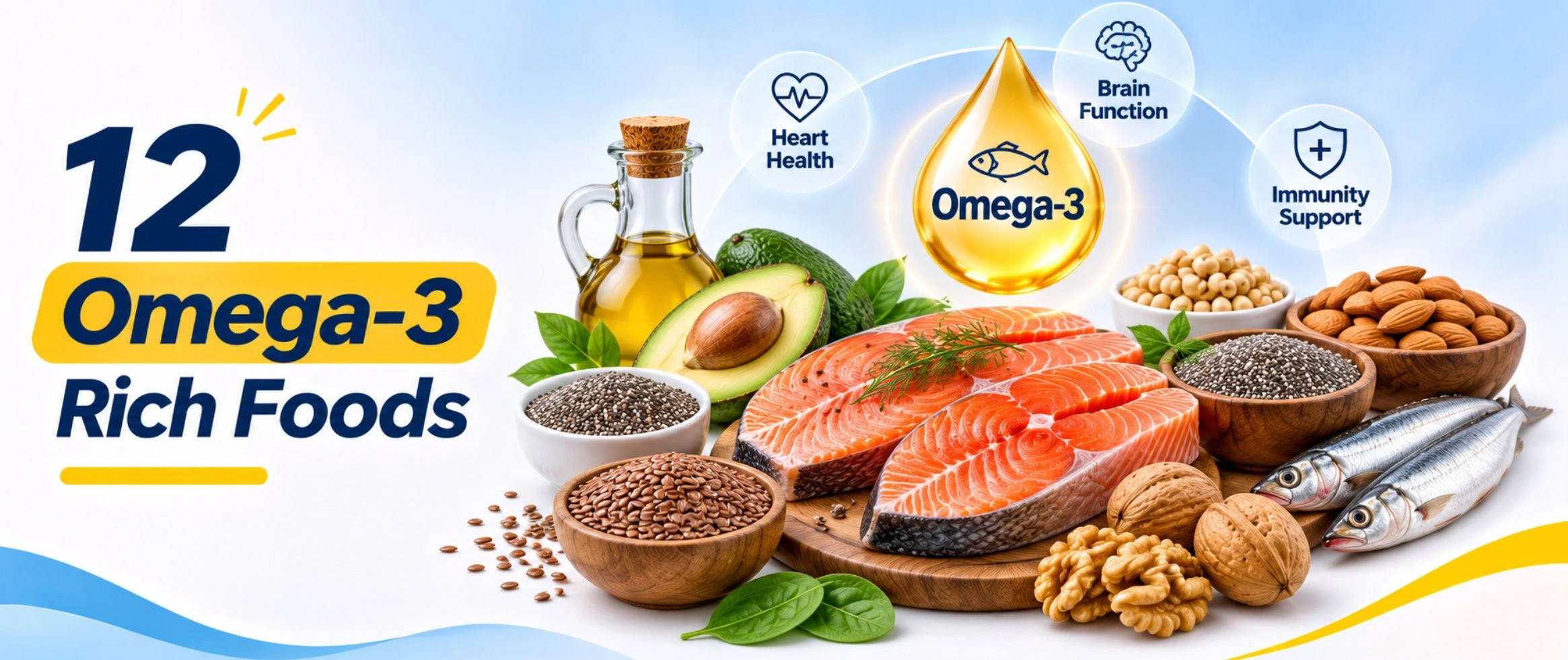
Trying to eat healthier without changing your entire routine? Start with the fats on your plate. Omega-3 fatty acids are essential for normal body function, yet some everyday diets contain very few reliable sources. The good news is that several omega-3 foods fit easily into Indian meals, from affordable seeds to familiar fish.
Here are 12 options worth knowing, along with simple ways to eat them.
There are three main types: ALA, found mainly in plants; and EPA and DHA, found mainly in oily fish and some fortified foods. Your body converts only a small amount of ALA into EPA and DHA, so these sources are not completely interchangeable.
Among the best-supported omega 3 benefits are their roles in normal brain and eye function and cardiovascular health. Eating oily fish regularly is associated with better heart health. However, omega-3 foods cannot cure heart disease, and supplements should not replace prescribed treatment.
1. Sardines
Sardines are small, oily fish that supply EPA and DHA. Fresh or tinned versions work well in a tomato-based curry, with rice or alongside a salad. Choose lower-salt canned varieties when available.
2. Indian Mackerel (Bangda)
Bangda is a familiar coastal favourite and a useful source of marine omega-3s. Grill, steam or prepare it in a lightly spiced curry rather than deep-frying. It is different from large king mackerel, which is high in mercury.
3. Salmon
Salmon provides substantial EPA and DHA, alongside protein. Bake it with lemon, pepper and herbs, or serve it with vegetables and roti. Frozen salmon can be a convenient option where fresh fish is unavailable.
4. Trout
Trout, including rainbow trout, is another fish containing EPA and DHA. It tastes good grilled with ginger and garlic. Pair it with dal and vegetables for a balanced meal rather than relying on fish alone.
5. Anchovies
These small fish deliver marine omega-3s in compact portions. Add cooked anchovies to curries or use a modest quantity in sauces. Dried and salted varieties can be high in sodium, so check the preparation.
6. Flaxseeds (Alsi)
Flaxseeds are among the most practical vegetarian choices. They provide ALA, fibre and other nutrients. Grind them before eating to make their nutrients easier to access, then stir a spoonful into curd or atta.
7. Chia Seeds
Chia seeds contain ALA and fibre. Soak them in milk or curd, or mix them into overnight oats. Start with a small amount and drink adequate fluids, especially if you are increasing your fibre intake.
8. Walnuts (Akhrot)
Walnuts are a convenient snack and a plant source of ALA. Add a small handful to breakfast, sprinkle chopped pieces over poha or pair them with fruit. They are nutritious but energy-dense, so portions matter.
9. Hemp Seeds
Hemp seeds provide ALA, protein and minerals. Their mild flavour suits smoothies, raita and salads. Use shelled, food-grade seeds from a reputable seller, and store them properly to preserve freshness.
10. Soybeans
Soybeans supply some ALA along with plant protein. Enjoy boiled soybeans or edamame in a chaat-style salad with cucumber and lemon. They contribute omega-3s, although their concentration is lower than in flaxseeds or chia.
11. Canola Oil
Canola oil contains ALA and can replace some saturated-fat-rich cooking fats. Use moderate amounts for everyday cooking. Remember that oils add calories, and switching oils does not compensate for an otherwise unbalanced diet.
12. Omega-3-Enriched Eggs
Some eggs are produced using omega-3-enriched hen feed and provide more omega-3s than standard eggs. The amount and type vary, so read the pack label. Enjoy them boiled or as a vegetable omelette.
The American Heart Association recommends two servings of fish, particularly fatty fish, each week; one serving is roughly 100 grams cooked. Vegetarians can include ALA-rich seeds, nuts and oils regularly, but these do not reliably provide the same DHA and EPA as fish. A clinician or dietitian can advise whether an algae-derived omega-3 supplement is appropriate.
If you are pregnant, breastfeeding or feeding young children, choose fish carefully because mercury levels vary. Sardines, salmon, anchovies and trout are among lower-mercury options. Anyone with high triglycerides should seek medical advice rather than self-prescribing high-dose fish oil.
You do not need an expensive diet to eat more omega-3s. Try ground alsi in your breakfast, walnuts as a snack and an oily-fish meal when suitable. Choosing a variety of foods high in omega 3 is a sustainable step towards a balanced diet.
Discover precision diagnostics with Pathkind Labs, a trusted name in diagnostic services in India. Our NABL accredited labs, equipped with advanced technology, are staffed by a certified team of over 200+ senior pathologists and 2000+ technicians. From tailored health check-ups to specialized tests in Oncology, Neurology, Gynaecology, Nephrology, and more, we've got your health covered. Skip the hassle with online booking for tests or check-ups, available for both lab visits and at-home blood collection. For a seamless experience and early detection, choose Pathkind Labs in Gurugram. Book your appointment today and experience diagnostics made easy.
© 2026 Pathkind Diagnostics Pvt. Ltd. All Rights Reserved | Unsubscribe











 Track Sample
 Upload Prescription