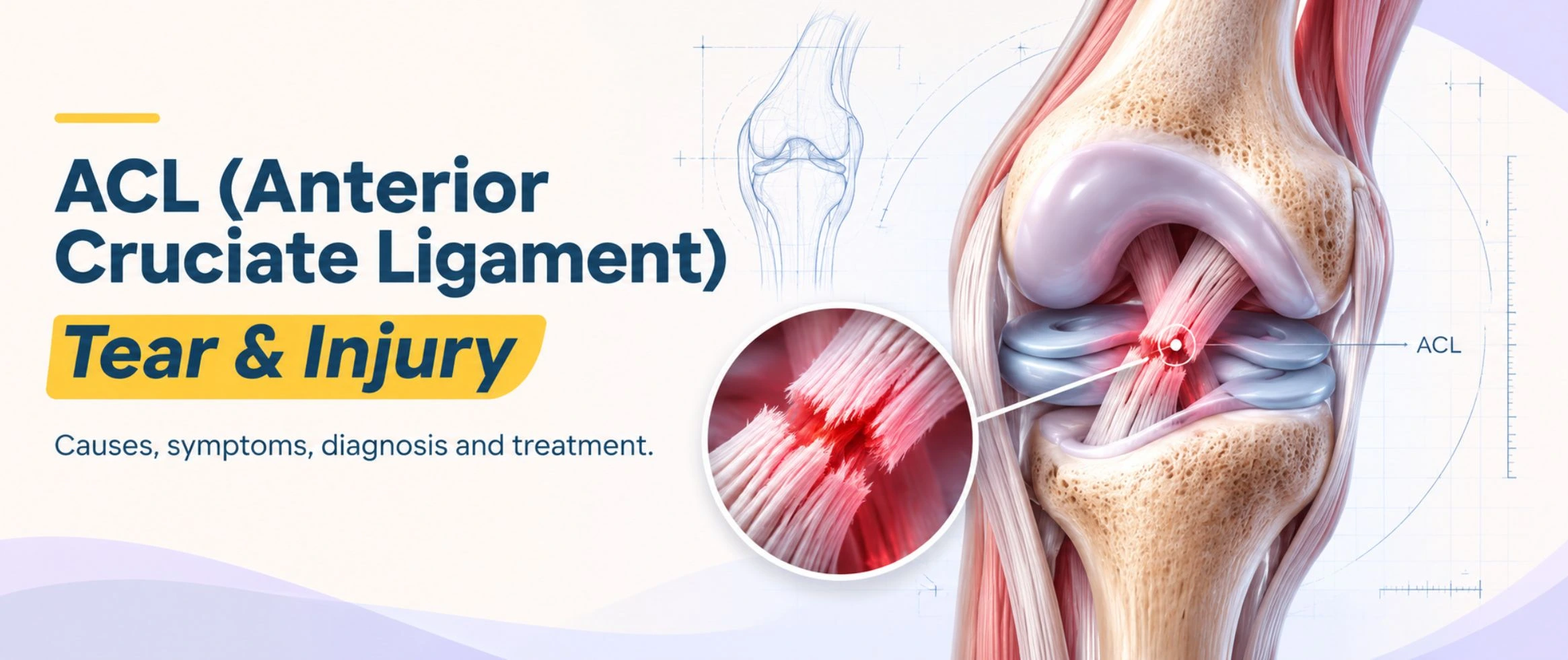
One awkward landing during a badminton game, and your knee suddenly gives way. You may hear a pop, feel sharp pain or notice swelling before you reach home. Could it be an ACL injury? The anterior cruciate ligament (ACL) is a strong band inside your knee that helps keep the joint stable when you turn, jump or change direction. A tear can affect anyone, not just professional athletes. Knowing the warning signs and available treatment options can help you protect your knee and return to everyday activities safely.
The ACL connects the thigh bone to the shin bone and helps control knee movement. An injury happens when this ligament stretches too far or tears, either partly or completely. The meniscus (knee cartilage) may also be damaged.
Even without an accident, sudden movements during cricket, football or badminton can tear it.
Typical triggers include:
The most familiar sign is a popping sensation at the time of injury. Other symptoms may include swelling within hours, pain while walking, limited knee movement and a feeling that the knee might buckle.
Being able to walk does not rule out an ACL tear. Seek prompt medical assessment if your knee swells rapidly or feels unstable. If your foot becomes cold, pale or blue after an injury, seek emergency care.
An orthopaedic specialist checks your injury history, knee movement and stability. An MRI scan can confirm ligament damage and check for a meniscus tear. An X-ray does not show the ACL itself but may be recommended to look for a fracture.
Pathkind Labs lists knee X-rays at selected radiology locations. These require medical advice; blood tests cannot diagnose ACL tears.
No. ACL injury treatment depends on the tear, your knee's stability, other injuries and how active you want to be. For some people, a structured physiotherapy programme, activity changes and temporary support are enough to manage symptoms.
Initial care may include resting from sport, applying wrapped ice, raising the leg and using crutches if advised. A physiotherapist then works on strength, balance and safe movement. Do not rush back to a match just because the pain has eased.
ACL injury surgery may be recommended for repeated knee instability, combined injuries or a return to demanding pivoting sports. Surgeons usually reconstruct the ligament using a tendon graft rather than simply stitching a complete tear. Surgery still requires months of rehabilitation; it is not a quick fix.
Recovery varies with the injury and treatment. After reconstruction, daily activities usually return before competitive sport, which may take up to a year. Your physiotherapist should guide your return based on strength, control and confidence, not the calendar alone.
For prevention, warm up, strengthen your hips and thighs, practise controlled landings and increase training gradually. Eat balanced meals with enough protein, vegetables and calcium-rich foods to support overall healing, but remember that no food can repair a torn ligament.
An ACL tear can interrupt work, travel and the sports you enjoy, but many people regain good knee function with the right care. Take swelling and instability seriously, get an orthopaedic assessment and follow your rehabilitation plan. If your doctor recommends a knee X-ray, check Pathkind Labs' radiology services for suitable locations and booking information.
Discover precision diagnostics with Pathkind Labs, a trusted name in diagnostic services in India. Our NABL accredited labs, equipped with advanced technology, are staffed by a certified team of over 200+ senior pathologists and 2000+ technicians. From tailored health check-ups to specialized tests in Oncology, Neurology, Gynaecology, Nephrology, and more, we've got your health covered. Skip the hassle with online booking for tests or check-ups, available for both lab visits and at-home blood collection. For a seamless experience and early detection, choose Pathkind Labs in Gurugram. Book your appointment today and experience diagnostics made easy.
© 2026 Pathkind Diagnostics Pvt. Ltd. All Rights Reserved | Unsubscribe











 Track Sample
 Upload Prescription