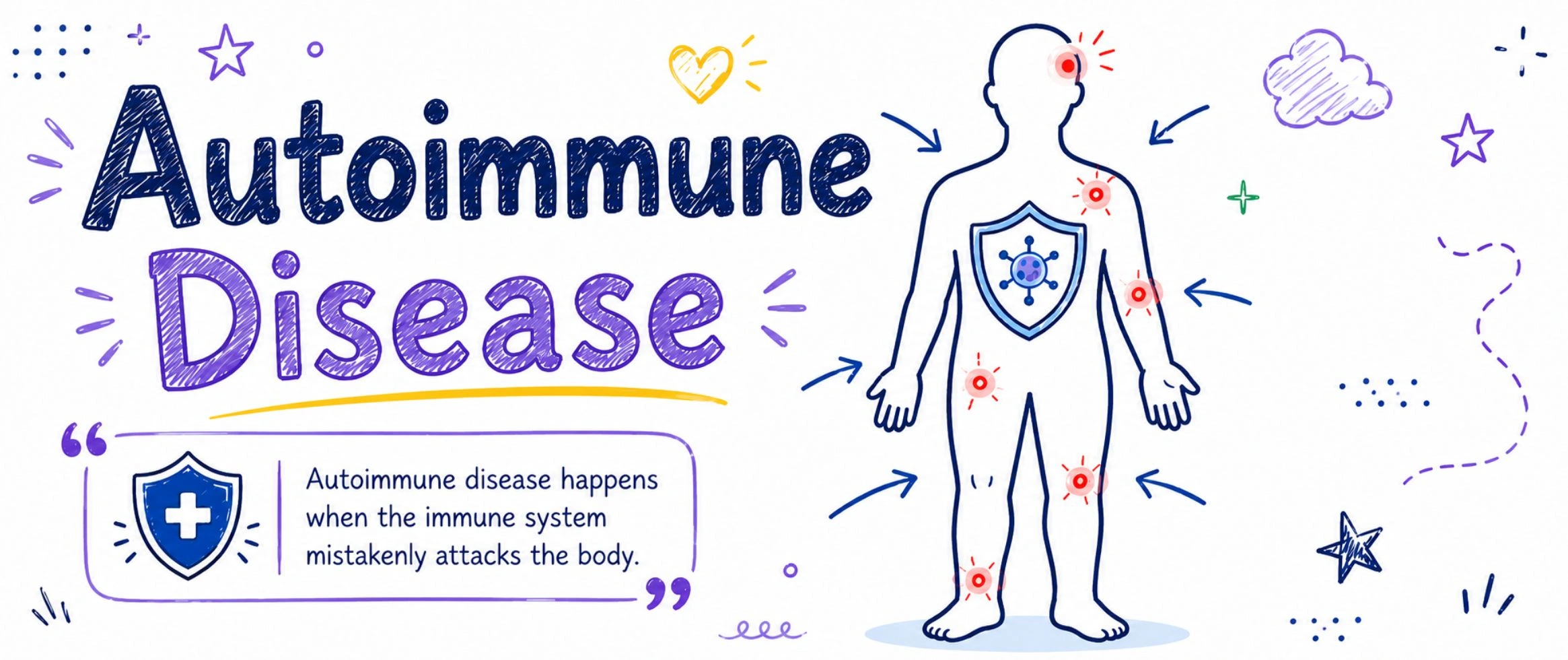
Your immune system protects you from bacteria, viruses and other harmful substances. It normally knows the difference between your own healthy cells and foreign invaders. In an autoimmune disease, this protection system becomes confused and starts attacking healthy cells, tissues or organs.
Autoimmune diseases can affect almost any part of the body. Some mainly affect one organ, such as the thyroid or pancreas. Others cause inflammation in several parts of the body, including the joints, skin, kidneys, lungs or nervous system.
Autoimmune diseases are not contagious. You cannot catch them from another person. They are also not simply caused by having a “weak” immune system. In many cases, the immune system is overactive or incorrectly directed.
The types of autoimmune diseases vary depending on the body part affected. They are often grouped into organ-specific and systemic autoimmune diseases.
Organ-Specific Autoimmune Diseases
These conditions mainly affect one organ or tissue.
For example, in Type 1 diabetes, the immune system damages insulin-producing cells in the pancreas. In Hashimoto’s disease, the thyroid is gradually affected, which may lead to tiredness, weight changes and sensitivity to cold.
Systemic Autoimmune Diseases
Systemic conditions can affect more than one organ or body system.
Common examples include:
Some people may have more than one autoimmune condition. For example, a person with autoimmune thyroid disease may also develop another immune-related condition. However, having one autoimmune disease does not mean that another disease will definitely occur.
The autoimmune disease symptoms depend on the specific condition and the body area involved. Symptoms may develop slowly, appear suddenly or come and go over time.
Common symptoms include:
Joints and muscles
Joint pain, swelling and morning stiffness are common in rheumatoid arthritis and other inflammatory conditions. The stiffness may be worse after waking up or after sitting still for a long time.
Skin
Some autoimmune diseases cause rashes, thickened skin, colour changes or increased sensitivity to sunlight. A rash that keeps returning without a clear cause should be evaluated by a doctor.
Digestive system
Celiac disease and other immune-related digestive conditions may cause bloating, abdominal pain, diarrhoea, constipation, nausea or unexplained weight loss.
Thyroid and metabolism
Autoimmune thyroid diseases may cause tiredness, changes in weight, changes in heart rate, hair loss, mood changes and sensitivity to cold or heat.
Nervous system
Certain autoimmune conditions can cause weakness, numbness, balance problems, vision changes, seizures or difficulty with memory and concentration.
It is important to remember that these symptoms are not specific to autoimmune disease. Anaemia, vitamin deficiencies, infections, hormonal conditions, stress and many other health problems may cause similar symptoms. A symptom alone cannot confirm an autoimmune condition.
There is usually no single cause of autoimmune disease. Researchers believe that genetic, immune and environmental factors may work together.
Possible influences include:
Family history and genetics
Autoimmune diseases can run in families. A person may inherit a tendency to develop an autoimmune condition, but this does not mean that the disease is certain to occur.
Infections
Some infections may affect immune-system activity and may act as triggers in people who are already genetically susceptible. This does not mean that every infection causes an autoimmune disease.
Environmental exposure
Smoking, air pollution, certain chemicals and other environmental exposures may influence the risk of some autoimmune diseases. The exact effect depends on the condition.
Hormonal factors
Many autoimmune diseases are more common in women. Hormonal changes may influence immune activity, although the relationship is complex.
Diet and gut health
Diet may influence inflammation and immune function, but there is no single food or “detox” that causes or cures autoimmune disease. Very restrictive diets should not be started without medical or nutritional advice.
Diagnosing an autoimmune disease can take time because symptoms often overlap with other conditions. Doctors usually consider:
Depending on your symptoms, a doctor may recommend:
There is no single autoimmune disease treatment because each condition affects the body differently. Treatment aims to control abnormal immune activity, reduce inflammation, relieve symptoms and prevent long-term organ damage.
Medicines to control inflammation
Doctors may prescribe anti-inflammatory medicines for joint pain, swelling and other symptoms. These medicines should be taken only as advised because some can affect the stomach, kidneys, liver or heart.
Corticosteroids
Steroids can reduce inflammation quickly. They may be used for short periods or in low doses, depending on the condition. Long-term or high-dose steroid use can cause side effects, so doctors usually monitor the dose carefully.
Disease-modifying medicines
Conditions such as rheumatoid arthritis may require disease-modifying antirheumatic drugs, commonly called DMARDs. These medicines help reduce disease activity and may prevent joint damage.
Biologic and targeted medicines
Some people with moderate or severe autoimmune disease may need biologic medicines or targeted therapies. These treatments affect specific parts of the immune system and require regular medical monitoring.
Hormone or nutrient replacement
Some autoimmune diseases reduce the body’s ability to produce important substances. Treatment may include:
Physical and occupational therapy
Physiotherapy can help maintain strength, flexibility and movement. Occupational therapy may help people adapt daily activities when joint, muscle or nerve symptoms make tasks difficult.
Surgery or specialist care
Surgery may be needed when a condition causes severe joint damage or affects a specific organ. People with autoimmune disease may need care from a rheumatologist, endocrinologist, gastroenterologist, dermatologist, neurologist or another specialist.
People often search for “how to prevent autoimmune diseases.” Unfortunately, most autoimmune diseases cannot be completely prevented because their causes are not fully understood and genetics play an important role.
However, healthy habits may support general health and reduce the risk of complications:
Speak with a healthcare professional if you have unexplained symptoms that continue for several weeks, especially:
Seek urgent medical help for severe breathing difficulty, chest pain, sudden weakness, confusion, seizures, severe dehydration or sudden loss of vision.
Autoimmune disease occurs when the immune system mistakenly attacks healthy parts of the body. The symptoms can range from fatigue and joint pain to skin changes, digestive problems, thyroid symptoms or nerve-related difficulties. Because these signs can resemble many other conditions, proper medical evaluation is important.
There are many types of autoimmune diseases, and treatment depends on the affected organ, disease severity and individual health needs. Although most autoimmune diseases cannot be completely prevented, healthy habits, timely diagnosis and regular follow-up can help protect long-term health.
This article is for general awareness and does not replace medical consultation, diagnosis or treatment from a qualified healthcare professional.
Discover precision diagnostics with Pathkind Labs, a trusted name in diagnostic services in India. Our NABL accredited labs, equipped with advanced technology, are staffed by a certified team of over 200+ senior pathologists and 2000+ technicians. From tailored health check-ups to specialized tests in Oncology, Neurology, Gynaecology, Nephrology, and more, we've got your health covered. Skip the hassle with online booking for tests or check-ups, available for both lab visits and at-home blood collection. For a seamless experience and early detection, choose Pathkind Labs in Gurugram. Book your appointment today and experience diagnostics made easy.
© 2026 Pathkind Diagnostics Pvt. Ltd. All Rights Reserved | Unsubscribe











 Track Sample
 Upload Prescription