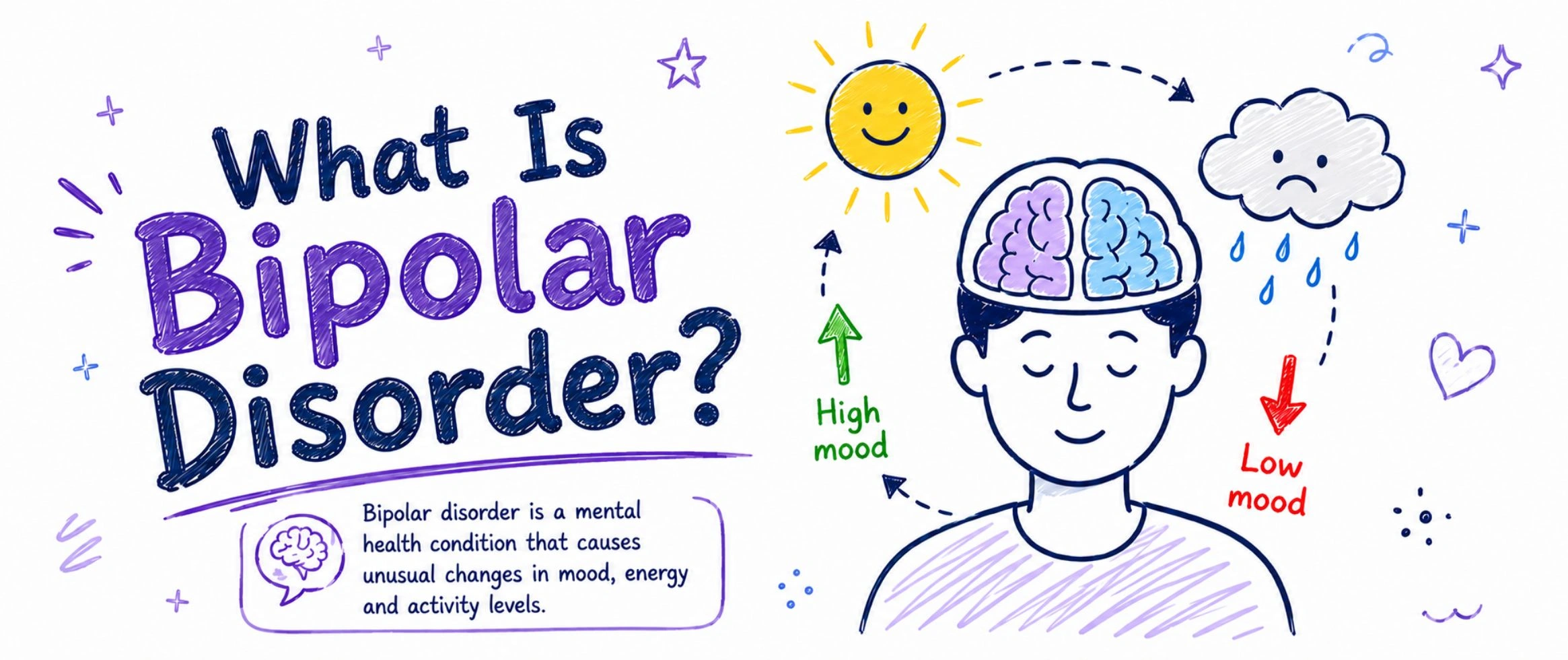
Everyone experiences changes in mood. A person may feel happy after good news or low after a difficult event. However, bipolar disorder involves mood episodes that are much more intense and last longer than ordinary mood changes. These episodes can affect sleep, energy, thinking, behaviour, relationships and daily responsibilities.
A person may feel unusually energetic and confident for several days, sleep very little and make impulsive decisions. At another time, the same person may feel deeply sad, hopeless and unable to complete simple tasks. This can be confusing for the person and their family, but bipolar disorder is a recognised medical condition that can be managed with the right care.
Bipolar disorder is a long-term mental health condition involving episodes of mania, hypomania and depression. These episodes affect a person’s mood, energy, activity level, concentration and behaviour.
It was previously called manic depression. The symptoms may appear occasionally or return over time. Some people have periods of stable mood between episodes, while others may experience frequent mood changes.
Bipolar disorder is not simply “being moody” or having a difficult personality. The symptoms are often severe enough to affect work, education, finances, relationships and physical health. However, with proper treatment and support, many people with bipolar disorder lead meaningful and productive lives. The World Health Organization states that recovery is possible with appropriate medicines and psychological or psychosocial care. World Health Organization: Bipolar Disorder
Bipolar disorder can appear in different forms. The main types include:
Bipolar I Disorder
Bipolar I disorder is diagnosed when a person has experienced at least one manic episode. Mania usually lasts at least seven days or is severe enough to require hospital care.
Depressive episodes are also common, but a person does not need to have depression to receive a diagnosis of bipolar I disorder.
Bipolar II Disorder
Bipolar II disorder includes:
Hypomania is less severe than mania, but it can still cause problems. Many people with bipolar II disorder seek help mainly because of depression, while periods of hypomania may be overlooked.
Cyclothymic Disorder
Cyclothymic disorder involves repeated periods of hypomanic and depressive symptoms that are less severe or shorter than the episodes seen in bipolar I or bipolar II disorder.
Other Bipolar and Related Disorders
Some people have bipolar symptoms that do not fit perfectly into the categories above. A mental health professional may use another specified or unspecified bipolar disorder diagnosis.
The symptoms of bipolar disorder usually occur during distinct mood episodes. These episodes may last for days or weeks, and sometimes longer.
Symptoms of Mania
Mania is a period of unusually high energy, activity or irritability. A person may not recognise that their behaviour has changed, although family members, friends or colleagues may notice it.
Common symptoms include:
For example, a person may suddenly spend their savings, make unrealistic business plans or drive recklessly. These actions are not simply signs of enthusiasm when they are extreme, unusual for the person and connected with other manic symptoms.
Symptoms of Hypomania
Hypomania has symptoms similar to mania but is less severe. A person may feel more energetic, productive, social or creative. However, changes in sleep, speech, confidence and decision-making may still be noticeable.
Hypomania does not usually cause the same level of disruption as mania, but it can still affect relationships, work and finances. It may also be followed by a depressive episode.
Symptoms of Bipolar Depression
During a depressive episode, a person may feel persistently sad, empty, hopeless or emotionally numb.
Common bipolar disorder symptoms during depression include:
A depressive episode is more than feeling sad for one day. Symptoms usually continue for much of the day, nearly every day, for at least two weeks. National Institute of Mental Health: Bipolar Disorder
Mixed Features
Some people experience manic and depressive symptoms at the same time. For example, they may feel extremely restless and energetic but also hopeless, anxious or suicidal. This combination can be particularly distressing and requires prompt medical attention.
The exact causes of bipolar disorder are not fully understood. Research suggests that it develops through a combination of genetic, biological, psychological and environmental factors.
Genetic Factors
Bipolar disorder can run in families. A person with a parent, brother or sister who has bipolar disorder may have a higher risk. However, having a family history does not mean that someone will definitely develop it.
Many genes may contribute to risk. There is no single gene that causes bipolar disorder in every person.
Brain and Biological Factors
Research has found differences in brain structure and function among some people with bipolar disorder. Changes in brain chemicals involved in mood, sleep, energy and thinking may also play a role.
These findings do not mean that bipolar disorder can be identified through one routine brain scan or blood test.
Stress and Traumatic Experiences
Stressful or traumatic events may trigger the first episode or worsen existing symptoms in someone who is already vulnerable. Examples may include:
Stress alone does not cause bipolar disorder in everyone. It may act as a trigger in people with other risk factors.
Sleep Disruption
Regular sleep is important for mood stability. Sleep deprivation, night shifts, jet lag and irregular daily routines may trigger or worsen manic symptoms in some people.
Alcohol and Drug Use
Alcohol, cannabis, cocaine and other substances can worsen mood symptoms or bring on an episode. Some medicines and medical conditions can also produce symptoms that resemble mania or depression. This is why a complete medical assessment is important.
There is no single blood test that confirms bipolar disorder. Diagnosis is based on a detailed mental health assessment.
A psychiatrist or other qualified mental health professional may ask about:
Family members may provide useful information, especially when the person does not remember or recognise changes during mania.
Doctors may also perform a physical examination or advise laboratory tests to rule out conditions that can cause similar symptoms. These may include thyroid disorders, medication effects, substance-related problems or other medical conditions.
Pathkind Labs can support clinically advised laboratory testing, but the choice of tests should come from the treating doctor. Blood tests do not diagnose bipolar disorder; they may help rule out other causes or monitor the safety of certain medicines.
The term bipolar disorder ICD-10 generally refers to the diagnostic coding system used to record bipolar affective disorders.
In the World Health Organization’s ICD-10 classification, bipolar affective disorder is included under category F31. Common codes include:
The exact code depends on the country, coding version, current episode and documentation available. A person should not select an ICD-10 code based on an online symptom search. Doctors and medical coders use the appropriate code after a clinical assessment. WHO ICD-10 Classification
Bipolar disorder usually requires long-term care. The treatment plan depends on the person’s symptoms, diagnosis, medical history, age, pregnancy status, other medicines and previous response to treatment.
Medicines
Common medicine groups used in bipolar disorder treatments include:
Lithium, valproate and some other mood stabilisers may help reduce the severity or frequency of mood episodes. Antipsychotic medicines may be used during mania, psychosis or certain depressive episodes.
Antidepressants may be prescribed for some people with bipolar depression, but they are generally not used alone because they may trigger mania or rapid cycling in some patients. Never start, stop or change a psychiatric medicine without medical advice.
Some medicines require health monitoring. For example, people taking lithium may need regular blood tests to measure lithium levels and monitor kidney and thyroid function. NHS: Lithium Monitoring
Psychotherapy
Therapy can help a person understand warning signs, manage stress and follow a treatment plan. It is often used along with medication.
Helpful approaches may include:
Therapy can also help family members learn how to communicate calmly and respond to early warning signs.
Lifestyle Support
Healthy routines do not replace medication, but they can support recovery. Helpful habits include:
A mood diary may help identify warning signs such as sleeping less, talking faster, spending more money or withdrawing from others.
Hospital or Crisis Care
Hospital treatment may be needed if a person is at immediate risk of self-harm, suicide or harm to others; is experiencing severe psychosis; cannot care for themselves; or is behaving in a dangerously impulsive manner.
Seek immediate help if someone:
In India, the Tele-MANAS mental health helpline can be reached at 14416 or 1800-89-14416. In an immediate emergency, contact local emergency services or visit the nearest hospital. Government of India: Tele-MANAS
Bipolar disorder is a treatable mental health condition that causes episodes of mania, hypomania and depression. Its symptoms can affect mood, sleep, energy, judgement, relationships and daily functioning. The causes of bipolar disorder involve a combination of genetic, biological and environmental factors, and no single blood test can confirm the diagnosis.
Discover precision diagnostics with Pathkind Labs, a trusted name in diagnostic services in India. Our NABL accredited labs, equipped with advanced technology, are staffed by a certified team of over 200+ senior pathologists and 2000+ technicians. From tailored health check-ups to specialized tests in Oncology, Neurology, Gynaecology, Nephrology, and more, we've got your health covered. Skip the hassle with online booking for tests or check-ups, available for both lab visits and at-home blood collection. For a seamless experience and early detection, choose Pathkind Labs in Gurugram. Book your appointment today and experience diagnostics made easy.
© 2026 Pathkind Diagnostics Pvt. Ltd. All Rights Reserved | Unsubscribe











 Track Sample
 Upload Prescription