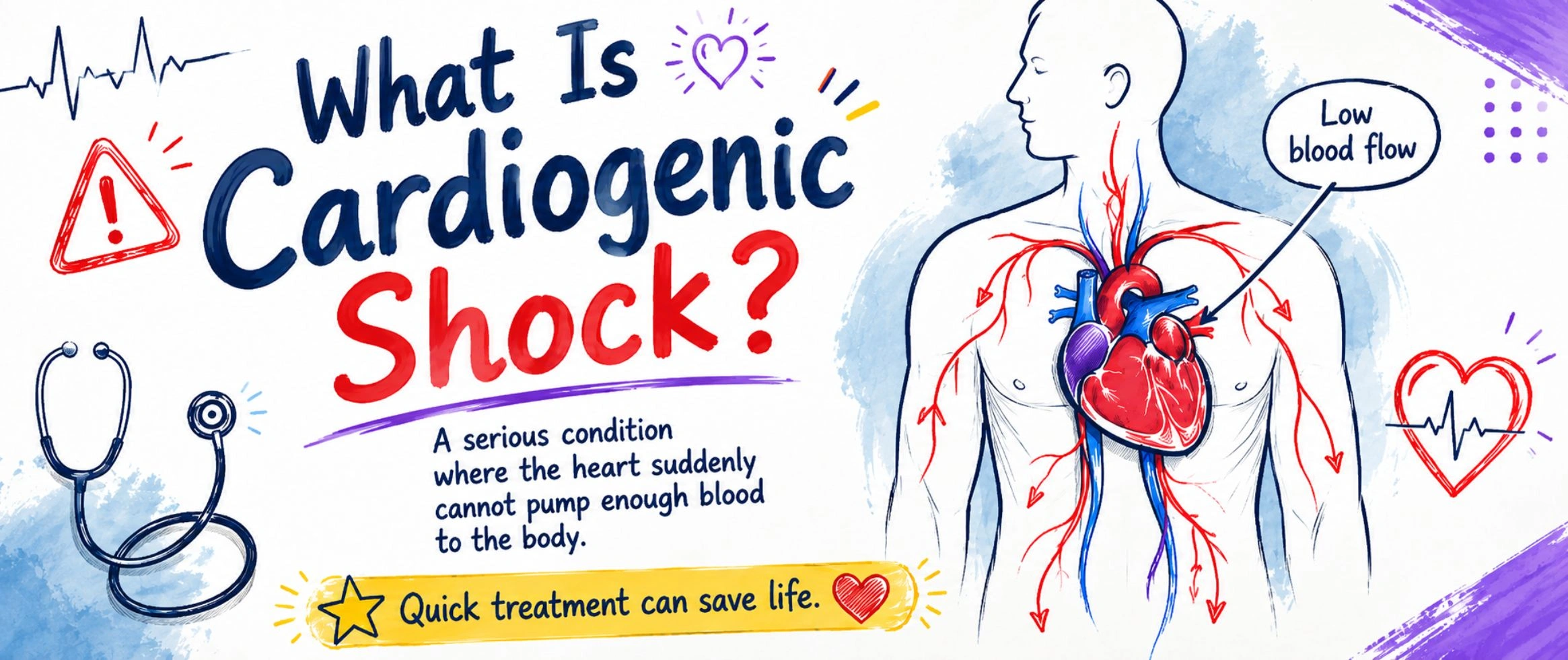
Cardiogenic shock is a life-threatening condition in which the heart suddenly becomes too weak to pump enough blood and oxygen to the brain, kidneys, lungs and other vital organs. It most often develops after a severe heart attack, but other heart problems can also cause it.
This is a medical emergency. Cardiogenic shock cannot be treated at home with rest, water or over-the-counter medicines. If someone has severe breathlessness, chest pain, confusion, fainting, cold and clammy skin or very little urine after a heart problem, call emergency services immediately. In India, call 112 or your local emergency ambulance service.
The heart works like a pump. It receives blood, fills with it and pushes it through the body. In cardiogenic shock, the heart’s pumping action becomes severely reduced. As a result, blood pressure may fall and the organs do not receive the oxygen they need.
The body may try to compensate by making the heart beat faster and narrowing the blood vessels. However, these changes may not be enough. If blood flow remains poor, organs such as the kidneys, liver and brain can become damaged.
Cardiogenic shock is different from cardiac arrest. During cardiac arrest, the heart stops pumping effectively and the person becomes unresponsive. In cardiogenic shock, the heart usually continues to beat, but it is not pumping strongly enough to support the body.
Cardiogenic shock symptoms may appear suddenly, especially after a heart attack. Not everyone experiences the same warning signs, and symptoms may become worse quickly.
Common symptoms include:
The MedlinePlus Medical Encyclopedia also lists decreased urination, cold skin, confusion, heavy sweating and a weak pulse among the important signs.
Some people may first notice symptoms of a heart attack, such as pain spreading to the arm, shoulder, back, neck or jaw. Women, older adults and people with diabetes may sometimes have less typical symptoms, such as unusual tiredness, breathlessness, nausea or discomfort in the upper abdomen.
When Should You Seek Emergency Help?
Seek emergency help immediately if a person has:
Do not wait to see whether the symptoms improve. Do not drive the person yourself if an ambulance is available. Emergency teams can begin monitoring and treatment on the way to the hospital.
The most common cause of cardiogenic shock is a major heart attack. A heart attack blocks blood flow to part of the heart muscle. If a large area of muscle is damaged, the heart may lose its ability to pump effectively.
Other causes of cardiogenic shock include:
Severe heart failure
Sudden worsening of heart failure can reduce the heart’s output. This may happen because of infection, uncontrolled blood pressure, missed medicines, kidney problems or another medical illness.
Dangerous heart rhythm problems
Very fast rhythms, such as ventricular tachycardia, or very slow rhythms, such as severe bradycardia, may prevent the heart from filling and pumping properly. Heart block can also cause a sudden fall in cardiac output.
Cardiomyopathy
Cardiomyopathy weakens or changes the heart muscle. Some types develop gradually, while others may worsen suddenly and lead to shock.
Myocarditis
Myocarditis is inflammation of the heart muscle. It may follow a viral infection or develop because of another inflammatory or immune-related condition. In severe cases, it can reduce the heart’s pumping strength.
Heart valve problems
A severely damaged or leaking heart valve can suddenly overload the heart. Valve problems may occur because of infection, degeneration, injury or complications after a heart attack.
Mechanical complications after a heart attack
A heart attack can rarely damage structures inside the heart. For example, a weakened heart muscle may tear, or a supporting muscle connected to a valve may rupture. These complications can cause sudden and severe heart failure.
Cardiac tamponade
Cardiac tamponade occurs when fluid builds-up around the heart and prevents it from filling properly. It is often classified as obstructive shock, but it can produce similar signs of dangerously low blood flow and must be treated urgently.
Risk factors for serious heart disease include high blood pressure, diabetes, high cholesterol, smoking, obesity, physical inactivity, chronic kidney disease and a family history of heart disease. Managing these conditions can lower the risk of heart attack and heart failure, although cardiogenic shock cannot always be prevented.
Doctors diagnose cardiogenic shock by combining the person’s symptoms, physical examination, blood pressure, heart rate, oxygen level and test results. The medical team must also find the cause quickly because treatment depends on what has damaged the heart.
Tests may include:
Electrocardiogram
An ECG records the electrical activity of the heart. It can help identify a heart attack, abnormal rhythm or a problem with the heart’s electrical system.
Blood tests
Blood tests may be used to check for heart muscle injury and organ damage. These may include:
A troponin test can show heart muscle injury, but no single blood test can diagnose cardiogenic shock on its own.
Echocardiogram
An echocardiogram uses ultrasound to show how well the heart is pumping. It can also identify valve problems, fluid around the heart, heart muscle damage and certain structural complications.
Chest X-ray
A chest X-ray may show fluid in the lungs, an enlarged heart or other causes of breathing difficulty.
Coronary angiography and cardiac catheterisation
If a heart attack is suspected, coronary angiography may be used to locate a blocked artery. Cardiac catheterisation can also help doctors understand pressure and blood flow inside the heart and blood vessels.
In an emergency, doctors may perform several tests at the same time. The purpose is not only to confirm cardiogenic shock but also to determine whether the patient needs an urgent procedure.
The commonly used United States ICD-10-CM code for cardiogenic shock is R57.0.
ICD-10 coding systems may differ by country, and the final code depends on the clinical documentation and local coding rules. The underlying cause, such as a heart attack or heart failure, may require additional codes. An ICD code is used for medical documentation and billing; it should not be used to self-diagnose a condition.
Cardiogenic shock treatment must begin in a hospital, usually in an emergency department or intensive care unit. The main goals are to:
Oxygen and breathing support
People with cardiogenic shock may need oxygen. If the lungs are filled with fluid or breathing becomes too difficult, doctors may use non-invasive breathing support or a ventilator.
Medicines
Doctors may use medicines to support blood pressure and improve heart contraction. Vasopressors help raise blood pressure when it is dangerously low. Inotropes can help the heart pump more strongly in selected situations.
If fluid has collected in the lungs, diuretics may be used to remove excess fluid. Medicines such as antiplatelet drugs, anticoagulants or cholesterol-lowering treatment may be given when a heart attack or blocked artery is involved.
These medicines require close monitoring because the wrong dose or combination can worsen heart rhythm, blood pressure or kidney function.
Restoring blood flow
If a blocked coronary artery caused the shock, urgent treatment to restore blood flow is often needed. This may involve coronary angioplasty and stent placement. In some cases, coronary artery bypass surgery may be required.
For patients with a heart attack complicated by cardiogenic shock, early treatment of the blocked artery is a major part of emergency care.
Treating abnormal heart rhythms
If a dangerous rhythm is responsible, doctors may use medicines, electrical cardioversion, defibrillation or a temporary pacemaker. The choice depends on the rhythm and the patient’s condition.
Treating valve or structural problems
A damaged valve, ruptured heart muscle or cardiac tamponade may require an urgent procedure or surgery. Treating the specific problem is essential because medicines alone may not correct the cause.
Mechanical circulatory support
Some patients do not improve enough with medicines and procedures. In carefully selected cases, temporary mechanical devices may help the heart pump blood. These can include intra-aortic balloon pumps, ventricular assist devices or extracorporeal membrane oxygenation.
Mechanical support is not suitable for everyone. Doctors consider the cause of shock, age, other illnesses, the chance of recovery and the patient’s treatment goals.
Advanced heart failure treatment
If cardiogenic shock results from severe, irreversible heart failure, a patient may be assessed for a long-term ventricular assist device or heart transplant. This decision is made by a specialist heart-failure team.
Cardiogenic shock therapy is not a single medicine or procedure. It is a coordinated treatment plan that may include:
Recovery depends on how quickly treatment begins, how much heart muscle has been damaged and whether other organs were affected. Some people recover after the cause is corrected. Others may have continuing heart failure and need long-term treatment.
After discharge, follow-up may include:
Routine diagnostic testing may help doctors monitor risk factors such as diabetes, cholesterol, kidney health and heart injury. Pathkind Labs can support doctor-prescribed testing, but a person with possible cardiogenic shock should go directly to a hospital emergency department rather than visiting a routine laboratory.
Cardiogenic shock occurs when the heart suddenly cannot pump enough blood to support the body. Severe breathlessness, chest pain, cold clammy skin, confusion, fainting, a weak pulse and reduced urine output should never be ignored.
Fast diagnosis and cardiogenic shock treatment can improve the chances of recovery. If these symptoms appear, seek emergency hospital care immediately.
Discover precision diagnostics with Pathkind Labs, a trusted name in diagnostic services in India. Our NABL accredited labs, equipped with advanced technology, are staffed by a certified team of over 200+ senior pathologists and 2000+ technicians. From tailored health check-ups to specialized tests in Oncology, Neurology, Gynaecology, Nephrology, and more, we've got your health covered. Skip the hassle with online booking for tests or check-ups, available for both lab visits and at-home blood collection. For a seamless experience and early detection, choose Pathkind Labs in Gurugram. Book your appointment today and experience diagnostics made easy.
© 2026 Pathkind Diagnostics Pvt. Ltd. All Rights Reserved | Unsubscribe











 Track Sample
 Upload Prescription