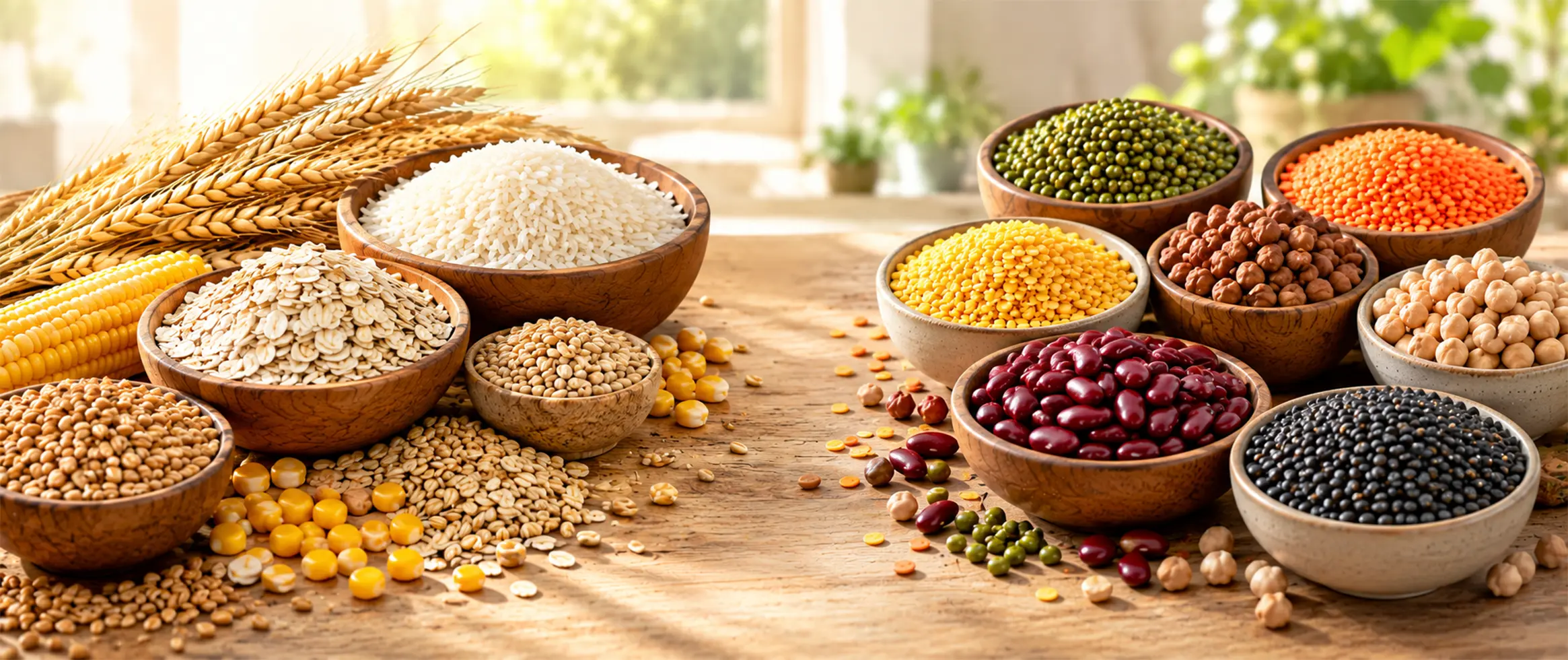
Cereals and pulses are important parts of everyday meals in India. From rice, wheat and oats to dal, chickpeas and kidney beans, these foods provide essential nutrients that help the body function properly. Although both are plant-based foods, they differ in their nutritional composition and the role they play in a balanced diet.
Understanding the difference between cereals and pulses can help you plan meals that provide enough energy, protein, fibre, vitamins and minerals. Fruits and vegetables also contribute essential nutrients, making all four food groups valuable for overall health.
Cereals are grains obtained from grass plants. They are staple foods in many countries and are commonly eaten as rice, roti, bread, porridge and other grain-based dishes.
Examples of cereals include:
Cereals are primarily sources of carbohydrates, which provide energy for daily activities. Whole grains also contain dietary fibre, B vitamins and minerals. Their nutritional value depends on the grain and how it is processed. Whole-wheat flour and brown rice, for example, generally retain more fibre than highly refined alternatives.
Pulses are the edible dry seeds of legume plants that are harvested for food. They are widely used in Indian cooking and are an important source of plant-based protein.
Examples of pulses include:
Pulses provide protein, dietary fibre, complex carbohydrates, iron, folate and other minerals. They are particularly useful for people who follow vegetarian diets and want to include more plant-based protein in their meals.
Although cereals and pulses are both plant foods, their nutritional profiles are different.
The difference between cereals and pulses does not mean one group is better than the other. They complement each other nutritionally. Combining cereals with pulses, such as rice with dal or roti with chana, helps provide a wider range of nutrients.
Benefits of Cereals
1. Provide energy: Cereals are rich in carbohydrates, the body's main source of energy for everyday activities.
2. Support digestive health: Whole grains contain fibre that supports regular bowel movements and normal digestive function.
3. Supply essential nutrients: Depending on the type, cereals provide B vitamins, iron, magnesium and other nutrients involved in energy metabolism and normal body functions.
4. Help create satisfying meals: Whole grains contain fibre and can be paired with protein-rich foods to make balanced meals.
Benefits of Pulses
1. Support muscle maintenance: Pulses provide plant-based protein, which helps the body build and maintain tissues, including muscles.
2. Support digestion: Their fibre content can help promote bowel regularity and support gut health.
3. Contribute to heart health: Pulses contain fibre and are naturally low in saturated fat. Including them in a balanced diet can support healthy eating patterns.
4. Provide iron and folate: Pulses contribute iron, which is needed for haemoglobin production, and folate, which supports cell growth and normal red blood cell formation.
Each food group supplies different nutrients. Eating a variety of these foods helps make the diet more balanced.
Fruits and vegetables provide a range of vitamins and minerals that support normal immune function, digestion, vision and other body processes. Different-coloured fruits and vegetables often contain different plant compounds, so variety is useful.
No single food group supplies everything the body needs in ideal amounts. A combination of cereals, pulses, fruits, vegetables and other nutritious foods helps meet daily nutritional requirements.
You can combine these food groups in simple, familiar meals:
Wash pulses properly and cook them thoroughly. If you experience gas or bloating after eating pulses, start with smaller portions, increase intake gradually and drink enough water.
Cereals and pulses are both essential components of a balanced diet, but they serve somewhat different nutritional purposes. Cereals mainly provide energy through carbohydrates, while pulses contribute substantial plant-based protein, fibre and minerals.
Fruits and vegetables add further vitamins, minerals, water and beneficial plant compounds. Including all four food groups in suitable portions can help improve dietary variety and support overall health. Rather than relying on one food group, aim for balanced meals that combine different foods according to your nutritional needs.
Discover precision diagnostics with Pathkind Labs, a trusted name in diagnostic services in India. Our NABL accredited labs, equipped with advanced technology, are staffed by a certified team of over 200+ senior pathologists and 2000+ technicians. From tailored health check-ups to specialized tests in Oncology, Neurology, Gynaecology, Nephrology, and more, we've got your health covered. Skip the hassle with online booking for tests or check-ups, available for both lab visits and at-home blood collection. For a seamless experience and early detection, choose Pathkind Labs in Gurugram. Book your appointment today and experience diagnostics made easy.
© 2026 Pathkind Diagnostics Pvt. Ltd. All Rights Reserved | Unsubscribe











 Track Sample
 Upload Prescription