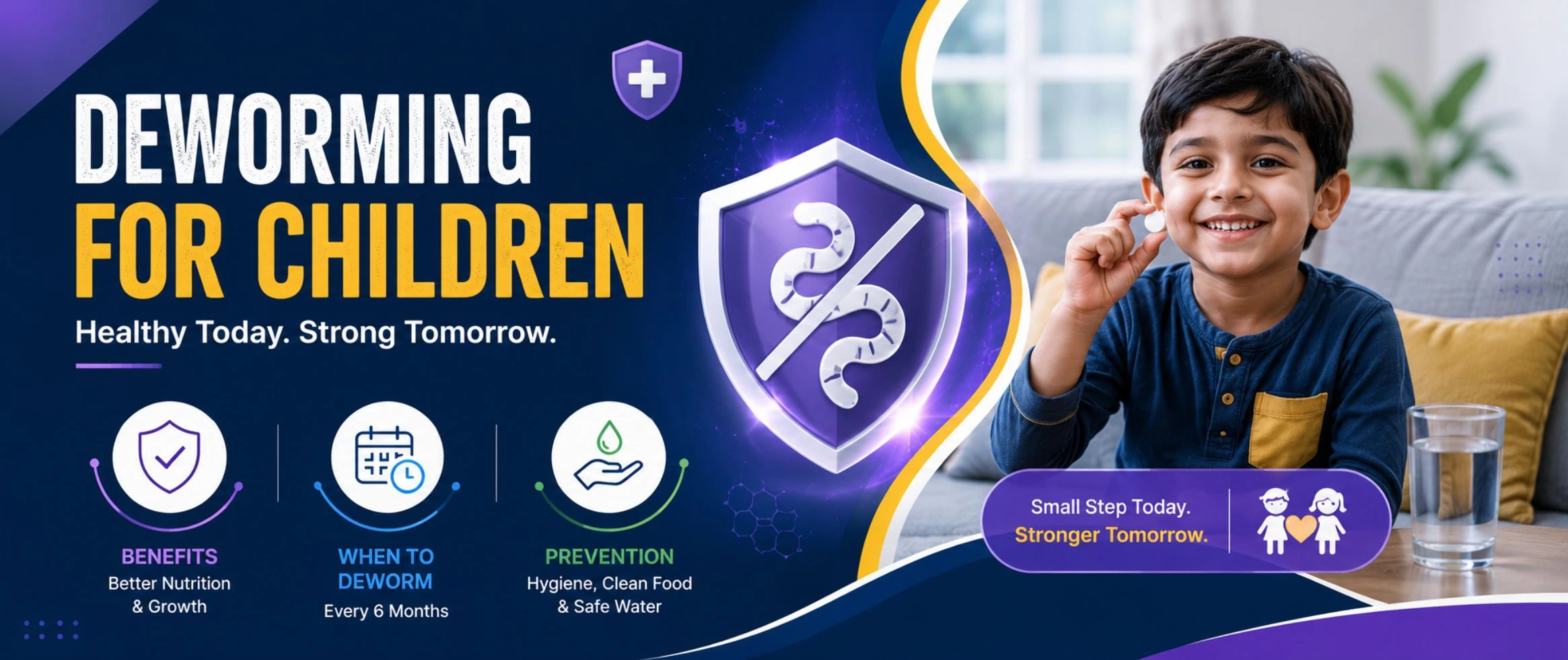
Deworming means using medicine to remove intestinal worms from the body. Children are more exposed because they often play in soil, walk barefoot, bite their nails or forget to wash their hands before eating. Worm eggs may enter through contaminated soil, food, water or unclean hands.
Common intestinal worms include roundworm, hookworm, whipworm and pinworm. A mild infection may cause no symptoms, but a heavier infection can affect a child’s comfort, nutrition and growth.
Possible symptoms include stomach pain, diarrhoea, poor appetite, nausea, tiredness, pale skin, weight loss or poor weight gain. Pinworm may cause itching around the anus, especially at night, leading to disturbed sleep. Hookworm can cause blood loss and anaemia, while a heavy roundworm infection may rarely block the intestine.
These signs are not always caused by worms. Constipation, food intolerance and stomach infections can look similar. Consult a paediatrician if symptoms are severe, keep returning or do not improve.
Deworming lowers the number of worms and reduces problems caused by a heavy infection. It may relieve abdominal discomfort, diarrhoea, night-time itching and poor appetite when worms are the cause. Treating hookworm and similar infections can also reduce the risk of anaemia, nutrient loss and poor growth.
However, deworming is not a nutritional supplement. It cannot replace balanced meals, iron-rich foods, clean water or good hygiene. Children should not receive repeated doses only to improve appetite or weight.
The schedule depends on age, symptoms, previous treatment and local infection risk. The World Health Organization recommends preventive deworming once yearly in communities where soil-transmitted worm prevalence is over 20% and twice yearly where it exceeds 50%.
In India, National Deworming Day is conducted in two rounds—10 February and 10 August—through schools and Anganwadi centres. It covers eligible children aged 1–19 years.
Under the programme, albendazole is given under supervision:
For younger children, the tablet is crushed and given carefully with water by trained personnel.
This programme schedule is not a personal prescription. Babies below one year, unwell children and those with ongoing medical conditions should be assessed before receiving medicine.
There is no single best time of the day to deworm a child. Morning, afternoon or evening may be suitable, depending on the medicine and medical advice.
What matters is giving the correct dose, supervising the child and following the medicine label, doctor’s advice or National Deworming Day instructions. Do not repeat a dose after vomiting unless a healthcare professional advises it. A special diet, fasting or laxative is usually unnecessary unless specifically prescribed.
Albendazole and mebendazole are commonly used medicines for intestinal worms. However, they do not treat every parasite in the same way. The correct deworming medicine for kids depends on the suspected worm, the child’s age and medical history. Never use leftover medicine or copy another child’s prescription.
Temporary side effects may include nausea, stomach discomfort, headache, dizziness, vomiting or diarrhoea. Seek urgent medical care for breathing difficulty, facial swelling, fainting, repeated vomiting, severe abdominal pain or a swollen abdomen.
Routine stool testing is not required before treatment given through an approved mass-deworming programme. Testing may be advised when symptoms continue, infections return frequently, blood appears in the stool or the child has poor growth or anaemia.
A stool routine and microscopic examination can identify the eggs of some intestinal worms. A doctor may also recommend a Complete Blood Count or iron studies for paleness, weakness or suspected anaemia. Pathkind Labs offers these tests, but they should be selected according to medical advice.
Deworming does not provide permanent protection. Reduce reinfection by teaching children to wash their hands after using the toilet and before eating, keeping nails short, washing fruits and vegetables, using safe drinking water, wearing footwear outdoors and using clean toilets.
For pinworm, wash bedding, towels, nightwear and underwear regularly. Bathe the child each morning and clean frequently touched surfaces. Household members may also require treatment after medical advice.
Deworming is a simple but important step in protecting children from intestinal worms and related problems such as stomach discomfort, weakness, poor appetite, anaemia and poor growth. Parents should follow age-appropriate medical advice or recognised programmes such as National Deworming Day instead of giving deworming medicine frequently on their own. Good hygiene, safe drinking water, clean food, regular handwashing and wearing footwear can help prevent reinfection. If a child has persistent stomach pain, blood in the stool, repeated vomiting, poor growth or unusual weakness, consult a doctor and consider appropriate diagnostic testing.
Discover precision diagnostics with Pathkind Labs, a trusted name in diagnostic services in India. Our NABL accredited labs, equipped with advanced technology, are staffed by a certified team of over 200+ senior pathologists and 2000+ technicians. From tailored health check-ups to specialized tests in Oncology, Neurology, Gynaecology, Nephrology, and more, we've got your health covered. Skip the hassle with online booking for tests or check-ups, available for both lab visits and at-home blood collection. For a seamless experience and early detection, choose Pathkind Labs in Gurugram. Book your appointment today and experience diagnostics made easy.
© 2026 Pathkind Diagnostics Pvt. Ltd. All Rights Reserved | Unsubscribe











 Track Sample
 Upload Prescription