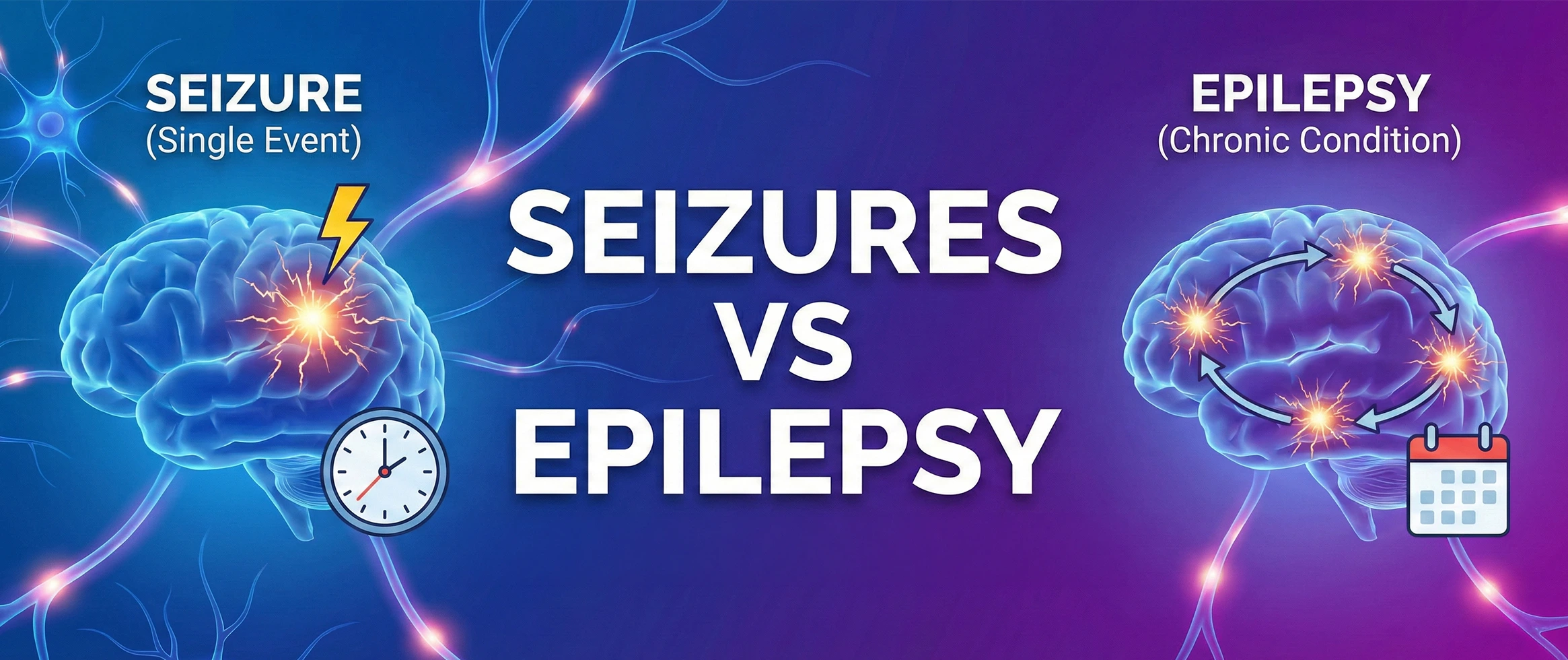
Many people use the terms seizure and epilepsy interchangeably, but they are not the same. Understanding the difference is important because a person can have a seizure without having epilepsy. At the same time, epilepsy is a long term neurological condition that involves repeated seizures.
In this guide, we explain what is the difference between epilepsy and seizures, explore epilepsy disease, discuss symptoms, causes, and available epilepsy treatments in clear and simple language.
A seizure is a sudden burst of abnormal electrical activity in the brain. This abnormal activity can affect how a person moves, behaves, feels, or responds.
Seizures may:
A seizure can last from a few seconds to a few minutes.
Importantly, a person can have a single seizure without having epilepsy.
Epilepsy is a chronic brain condition where a person has repeated, unprovoked seizures. Doctors usually diagnose epilepsy when a person has had two or more unprovoked seizures occurring more than 24 hours apart.
Epilepsy disease requires long term management and medical supervision.
Understanding epilepsy vs seizure becomes easier when comparing them directly.
In simple terms, a seizure is an event. Epilepsy is a diagnosis.
Many people wonder, what causes epilepsy. In some cases, the exact cause is unknown. However, possible causes include:
In children, high fever can cause seizures, but febrile seizures do not always mean epilepsy.
Seizures can affect different parts of the brain.
Focal Seizures
Generalized Seizures
Proper diagnosis helps determine the type and treatment plan.
Symptoms vary depending on the type.
Common seizure symptoms include:
After a seizure, a person may feel:
Epilepsy treatments aim to control seizures and improve quality of life.
Medication
Anti seizure medications are the most common treatment. Many people achieve good seizure control with the right medicine and dosage.
Lifestyle Management
Doctors may advise:
Surgery or Devices
In some cases where medication does not work, doctors may consider:
Treatment plans are personalized based on seizure type and overall health.
Epilepsy cannot always be cured, but it can often be controlled. Many people with epilepsy live normal lives with proper treatment and monitoring.
Some children may outgrow certain types of epilepsy over time.
Seek medical attention if:
Emergency care is required in prolonged seizures.
- Epilepsy is contagious
It is not contagious.
- All seizures involve shaking
Some seizures involve only staring or confusion.
- People with epilepsy cannot live normal lives
With treatment, many people lead active and productive lives.
Understanding what is the difference between epilepsy and seizures helps reduce fear and confusion. A seizure is a sudden event, while epilepsy disease refers to a long term condition involving repeated seizures.
Early diagnosis, proper medical care, and consistent epilepsy treatments can significantly improve outcomes. If you or someone experiences a first time seizure, prompt medical evaluation is important for accurate diagnosis and safe management.
Discover precision diagnostics with Pathkind Labs, a trusted name in diagnostic services in India. Our NABL accredited labs, equipped with advanced technology, are staffed by a certified team of over 200+ senior pathologists and 2000+ technicians. From tailored health check-ups to specialized tests in Oncology, Neurology, Gynaecology, Nephrology, and more, we've got your health covered. Skip the hassle with online booking for tests or check-ups, available for both lab visits and at-home blood collection. For a seamless experience and early detection, choose Pathkind Labs in Gurugram. Book your appointment today and experience diagnostics made easy.
© 2026 Pathkind Diagnostics Pvt. Ltd. All Rights Reserved | Unsubscribe











 Track Sample
 Upload Prescription