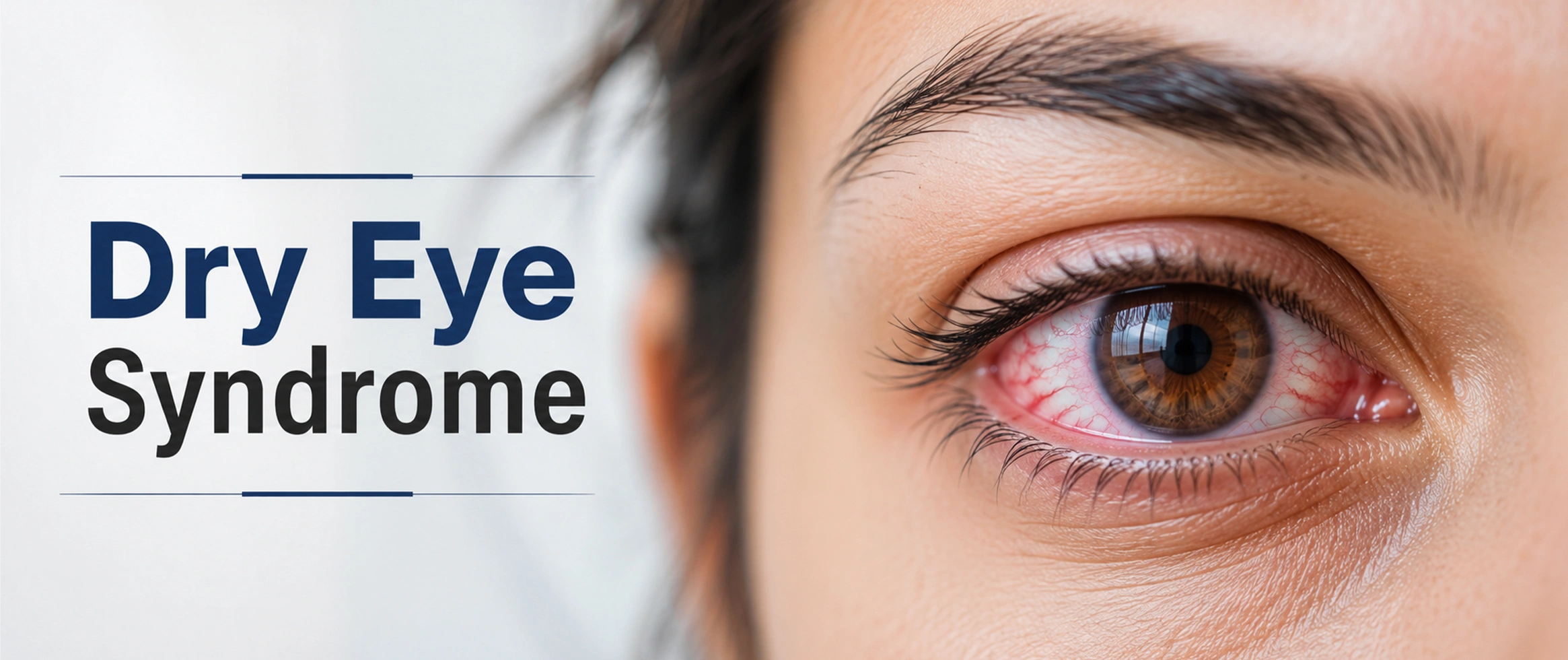
Dry eyes are a common condition that occurs when your eyes do not produce enough tears or when the tears evaporate too quickly. Tears are essential for keeping the eyes lubricated, protecting them from infections, and maintaining clear vision. When the tear film is disrupted, it can lead to discomfort, irritation, and vision problems.
Although dry eyes can affect people of all ages, they are more common among older adults, people who spend long hours in front of digital screens, and individuals with certain medical conditions.
In this blog, we explain dry eyes, common dry eye symptoms, dry eyes causes, diagnosis, and available dry eye treatment options in simple and easy-to-understand language.
Dry eyes, also known as dry eye disease, occur when your eyes cannot maintain a healthy layer of tears.
A healthy tear film has three layers:
If any of these layers are affected, dry eye symptoms may develop.
The symptoms of dry eyes can vary from mild irritation to significant discomfort.
Common Dry Eye Symptoms
Symptoms may become worse in dry weather, air-conditioned rooms, or after prolonged screen use.
Several factors can affect tear production or tear quality.
1. Ageing
As people grow older, tear production naturally decreases. Dry eyes are more common in adults over the age of 50.
2. Excessive Screen Time
Looking at computers, smartphones, or televisions for long periods reduces the frequency of blinking.
Less blinking causes tears to evaporate faster, increasing the risk of dry eyes.
3. Environmental Factors
Environmental conditions that may contribute include:
These factors increase tear evaporation.
4. Contact Lens Use
Wearing contact lenses for extended periods may reduce tear stability and contribute to dry eye symptoms.
5. Medical Conditions
Certain health conditions can increase the risk of dry eyes, including:
6. Medications
Some medicines may reduce tear production, such as:
Never stop prescribed medication without consulting your doctor.
An eye specialist can diagnose dry eyes through a comprehensive eye examination.
The evaluation may include:
In some cases, additional tests may be recommended to identify the underlying cause.
Treatment depends on the severity of symptoms and the underlying cause.
1. Artificial Tears
Artificial tear eye drops are one of the most common treatments.
They help:
Preservative-free drops may be recommended for frequent use.
2. Lifestyle Changes
Simple daily habits can significantly improve symptoms.
These include:
3. Warm Compresses
Applying a warm compress to the eyelids may help improve oil secretion from the glands around the eyes.
This can reduce tear evaporation and improve comfort.
4. Managing Underlying Conditions
Treating medical conditions such as diabetes or thyroid disorders may help improve dry eye symptoms.
Your healthcare provider may also review medications if they are contributing to dryness.
5. Prescription Treatments
For moderate to severe dry eye disease, an eye specialist may recommend:
Treatment should always be guided by an ophthalmologist.
You can reduce your risk of dry eyes by following these simple habits:
These measures can help maintain a healthy tear film.
Consult an eye specialist if you experience:
Early diagnosis can prevent complications and improve long-term eye health.
Dry eyes are a common condition that can affect comfort, vision, and daily activities. Recognising dry eye symptoms early and understanding the dry eyes causes can help you seek appropriate care before the condition worsens.
Most people experience significant improvement with simple lifestyle changes, lubricating eye drops, and proper medical treatment when needed. If symptoms persist or interfere with your daily life, consult an ophthalmologist for an accurate diagnosis and personalised dry eye treatment plan.
Discover precision diagnostics with Pathkind Labs, a trusted name in diagnostic services in India. Our NABL accredited labs, equipped with advanced technology, are staffed by a certified team of over 200+ senior pathologists and 2000+ technicians. From tailored health check-ups to specialized tests in Oncology, Neurology, Gynaecology, Nephrology, and more, we've got your health covered. Skip the hassle with online booking for tests or check-ups, available for both lab visits and at-home blood collection. For a seamless experience and early detection, choose Pathkind Labs in Gurugram. Book your appointment today and experience diagnostics made easy.
© 2026 Pathkind Diagnostics Pvt. Ltd. All Rights Reserved | Unsubscribe











 Track Sample
 Upload Prescription