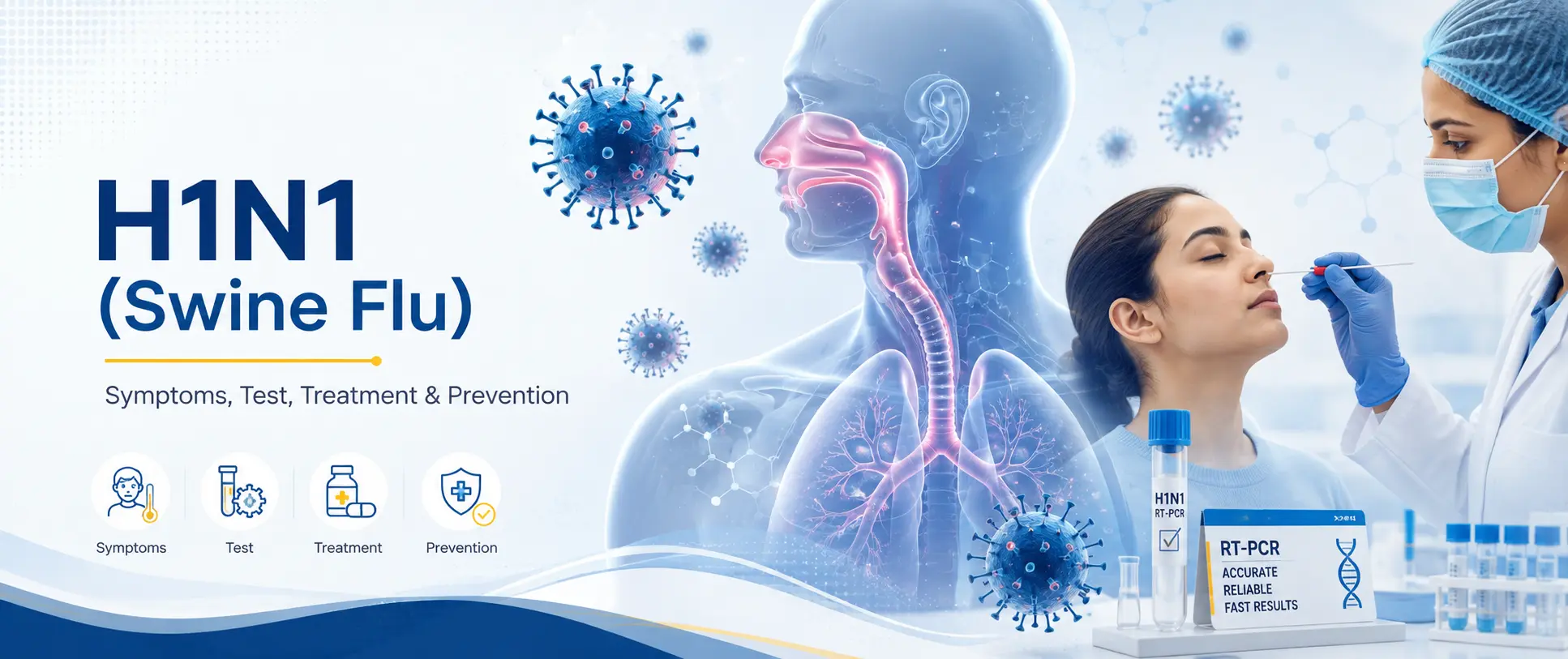
Fever, cough, body aches and tiredness can easily be mistaken for an ordinary viral infection. However, these symptoms may sometimes be caused by influenza A H1N1, commonly known as H1N1 or swine flu.
H1N1 is a contagious respiratory infection caused by an influenza A virus. The H1N1 strain that caused the 2009 influenza pandemic has continued to circulate and is now considered one of the seasonal influenza A viruses. Scientifically, it is known as influenza A(H1N1)pdm09.
For most people, influenza causes an illness from which they recover within several days to about a week. However, it can occasionally lead to serious complications, particularly in young children, older adults, pregnant women and people with certain underlying health conditions.
Understanding H1N1 symptoms, transmission, diagnosis, treatment and prevention can help you recognise when flu-like illness needs medical attention.
H1N1 is a subtype of the influenza A virus, which primarily affects the respiratory system, including the nose, throat and lungs.
The term “swine flu” became widely used during the 2009 outbreak because the newly identified virus contained genetic material related to influenza viruses found in pigs. However, the H1N1 virus circulating among humans today is primarily transmitted from person to person, just like other seasonal influenza viruses.
The descendants of the influenza A(H1N1)pdm09 virus that caused the 2009 pandemic continue to circulate as seasonal influenza viruses.
Therefore, H1N1 should not be thought of as entirely separate from “seasonal flu”—it is now one of the influenza A subtypes that can cause seasonal influenza.
H1N1 infection is caused by the influenza A(H1N1) virus.
Influenza viruses can change genetically over time. This is one reason different influenza strains may circulate during different seasons and why influenza vaccines are periodically updated.
Once the virus enters the respiratory tract, it infects cells lining the nose, throat and respiratory system. The immune system responds to the infection, resulting in symptoms such as fever, inflammation, cough, body aches and fatigue.
H1N1 spreads in much the same way as other influenza viruses.
An infected person may release virus-containing respiratory particles while:
The virus can then reach another person's nose, mouth or respiratory tract.
Influenza may also spread less commonly when someone touches a contaminated surface and then touches their nose, mouth or possibly their eyes.
Close contact in homes, schools, workplaces, public transport and crowded indoor environments can facilitate transmission.
Influenza symptoms usually begin approximately 1 to 4 days after infection, with an average incubation period of around two days.
Because the incubation period is relatively short, influenza can spread quickly within households and communities.
H1N1 symptoms are generally similar to those caused by other seasonal influenza viruses.
Common symptoms can include:
Some people, particularly children, may also experience:
Importantly, not everyone with influenza develops a fever.
Symptoms alone generally cannot determine whether someone has H1N1, another influenza strain or another respiratory infection. Laboratory testing may therefore be recommended in selected situations.
H1N1 influenza and the common cold can cause similar respiratory symptoms. However, influenza often begins more suddenly and tends to cause stronger systemic symptoms such as fever, body aches and fatigue.
These differences can provide clues, but symptoms cannot reliably confirm H1N1 infection. Other respiratory illnesses can produce very similar symptoms.
Although anyone can develop influenza, certain people have a greater risk of experiencing serious flu-related complications.
Higher-risk groups include:
People belonging to higher-risk groups should seek medical advice early if they develop symptoms suggestive of influenza.
Most people recover from uncomplicated influenza, but the infection can sometimes become severe.
Possible influenza-related complications include:
Serious influenza infection may require hospitalisation.
Early medical assessment is particularly important when symptoms are severe, rapidly worsening or occurring in someone who is already at higher risk.
Many mild influenza cases improve with rest, hydration and supportive care. However, you should seek medical advice if symptoms are severe, persistent or worsening.
Urgent medical evaluation may be required if a person develops symptoms such as:
Children may require immediate medical attention if they have difficulty breathing, poor fluid intake, unusual drowsiness or other concerning symptoms.
People who are pregnant or have chronic medical conditions should also contact their healthcare provider early if flu-like symptoms develop.
Because H1N1 symptoms overlap considerably with those of other respiratory infections, a doctor may assess several factors, including:
Not every person with mild influenza-like symptoms requires laboratory testing. In some outpatient settings, doctors may make a clinical diagnosis of influenza.
However, testing can be useful when the result is likely to influence treatment, further investigation or infection-control decisions. Influenza testing is particularly important in people being admitted to hospital with suspected influenza.
Different laboratory methods can detect influenza viruses.
One of the most important methods is molecular testing, including Reverse Transcription Polymerase Chain Reaction (RT-PCR).
RT-PCR and other molecular assays detect influenza viral RNA or nucleic acids in respiratory specimens and generally offer high sensitivity and specificity.
Depending on the specific assay used, molecular testing may:
Therefore, a test that identifies “influenza A positive” does not necessarily mean that it automatically identifies H1N1 unless the assay also performs influenza A subtyping.
Influenza molecular testing is generally performed using a respiratory sample.
Depending on the test and clinical situation, specimens may include:
Pathkind Labs currently lists an Influenza A & B Virus RT-PCR (Qualitative) test using nasal, throat or nasopharyngeal swab samples collected in viral transport medium.
Your healthcare provider can advise whether influenza testing is required and which test is appropriate based on your symptoms and clinical condition.
For respiratory swab-based influenza testing, extensive preparation is generally not required.
The exact collection process can vary depending on the test. During a nasal or nasopharyngeal swab collection, a healthcare professional collects respiratory secretions using a sterile swab.
Pathkind's currently listed Influenza A & B Virus RT-PCR test states that no special preparation is required.
Always follow the instructions provided by your healthcare professional or diagnostic centre.
The timing of sample collection can affect the ability to detect influenza.
Respiratory specimens are generally best collected as early as possible after symptoms begin, when viral levels in the respiratory tract tend to be higher.
For rapid influenza antigen tests, the CDC notes that specimens collected within approximately the first 3–4 days of illness generally provide the best performance. Molecular tests such as RT-PCR are more sensitive than conventional rapid antigen tests.
However, the decision about when and whether to test should be made by a healthcare professional based on the clinical situation.
There are several methods for detecting influenza.
RT-PCR and Other Molecular Tests
These tests detect the genetic material of the influenza virus.
Advantages can include:
Rapid Influenza Diagnostic Tests
Rapid influenza diagnostic tests generally detect influenza viral antigens.
They can provide results quickly, but are usually less sensitive than molecular methods. A negative rapid antigen result therefore does not always rule out influenza.
The appropriate test depends on symptoms, severity, availability and the treating doctor's clinical judgement.
H1N1 treatment depends on the severity of illness and the person's risk of developing complications.
Many people with uncomplicated influenza recover with supportive care such as:
Most people with seasonal influenza recover without requiring specific medical treatment.
Antiviral Medicines for H1N1
Prescription antiviral medicines may be recommended for influenza in certain circumstances.
Antiviral treatment is particularly important for people who:
Treatment should be started as early as possible when indicated. Antivirals tend to provide the greatest benefit when treatment starts early, although people with severe or hospitalised influenza may still benefit when treatment begins later.
Do not start antiviral medication without consulting a doctor. The choice of medicine, dose and duration depends on factors such as age, health status, pregnancy, disease severity and other medications.
No. H1N1 is caused by a virus, while antibiotics work against bacteria.
Antibiotics do not directly treat influenza infection. However, a doctor may prescribe antibiotics if someone develops a secondary bacterial infection alongside influenza.
Avoid self-medicating with antibiotics.
Following simple preventive measures can reduce the risk of influenza transmission.
1. Wash Your Hands Regularly
Wash your hands thoroughly with soap and water, particularly after coughing, sneezing or touching commonly used surfaces.
2. Practise Respiratory Hygiene
Cover your mouth and nose when coughing or sneezing. Use a tissue when possible and dispose of it appropriately.
3. Avoid Close Contact When You Are Ill
If you develop flu-like symptoms, minimise close contact with family members, colleagues and other people, especially those at higher risk of complications.
4. Avoid Touching Your Face
Try to avoid touching your eyes, nose and mouth unnecessarily, particularly with unwashed hands.
5. Keep Frequently Used Areas Clean
Regular cleaning of commonly touched objects and surfaces can support general respiratory infection prevention.
6. Consider Seasonal Influenza Vaccination
Annual influenza vaccination is an important preventive measure against seasonal influenza. WHO recommends vaccination as an important way to protect against influenza, particularly for people at increased risk of severe illness.
Speak with your doctor about whether an influenza vaccine is appropriate for you or your family.
Modern seasonal influenza vaccines are designed to provide protection against important influenza strains expected to circulate.
Current seasonal influenza vaccines include protection against an influenza A(H1N1) virus, along with other influenza strains.
Because influenza viruses continue to evolve, vaccine composition is regularly reviewed and updated.
Vaccination may not prevent every influenza infection, but it can help reduce the risk of illness and serious influenza-related complications.
Children can develop the same H1N1 symptoms seen in adults, including:
Vomiting and diarrhoea may occur more often in children with influenza than in adults.
Children younger than five years—particularly those younger than two years—and children with certain chronic health conditions have a higher risk of serious influenza complications.
Parents should seek medical advice if a child develops breathing difficulties, severe weakness, poor fluid intake, unusual drowsiness or worsening symptoms.
Pregnancy is associated with a greater risk of serious influenza-related complications.
Pregnant women who develop symptoms suggestive of influenza should contact their healthcare provider early rather than waiting for symptoms to become severe.
Treatment decisions during pregnancy should always be made in consultation with a qualified medical professional.
A person with influenza may be able to spread the virus before symptoms become noticeable.
People with influenza are generally most contagious during the first few days of illness. Some otherwise healthy adults may spread influenza beginning approximately one day before symptoms appear and for about five to seven days after becoming sick.
Young children and people with weakened immune systems may remain contagious for longer.
This is why staying away from others when you are unwell and practising respiratory hygiene is important.
Yes. Having had influenza previously does not provide permanent protection against all future influenza infections.
Influenza viruses undergo genetic changes over time, and several influenza strains may circulate. Immunity following previous infection may therefore not fully protect against another strain or a changed virus.
Annual influenza vaccination is one of the strategies used to provide updated protection against circulating seasonal influenza viruses.
H1N1 is an influenza A virus that can cause respiratory illness ranging from mild flu-like symptoms to serious complications. Common H1N1 symptoms include fever, cough, sore throat, body aches, headache and fatigue, but symptoms alone cannot confirm which influenza strain is responsible.
People with severe symptoms and those at higher risk—including young children, older adults, pregnant women and people with certain chronic medical conditions—should seek medical care early.
When laboratory confirmation is clinically required, molecular tests such as RT-PCR can help detect influenza viruses in respiratory samples and, depending on the assay, may help identify specific influenza A subtypes.
Early recognition, appropriate medical care, respiratory hygiene and seasonal influenza vaccination remain important ways to reduce the impact of influenza.
If you are experiencing persistent flu-like symptoms, consult your healthcare provider to determine whether laboratory testing is appropriate.
Pathkind Labs offers Influenza A & B Virus RT-PCR (Qualitative) testing using respiratory swab samples. Test availability and collection services may vary by location.
Speak with your doctor and choose the appropriate diagnostic test based on your symptoms and clinical requirements.
Disclaimer: This information is intended for general educational purposes only and should not be used as a substitute for professional medical advice, diagnosis or treatment. Always consult a qualified healthcare professional regarding symptoms, testing or treatment.
Discover precision diagnostics with Pathkind Labs, a trusted name in diagnostic services in India. Our NABL accredited labs, equipped with advanced technology, are staffed by a certified team of over 200+ senior pathologists and 2000+ technicians. From tailored health check-ups to specialized tests in Oncology, Neurology, Gynaecology, Nephrology, and more, we've got your health covered. Skip the hassle with online booking for tests or check-ups, available for both lab visits and at-home blood collection. For a seamless experience and early detection, choose Pathkind Labs in Gurugram. Book your appointment today and experience diagnostics made easy.
© 2026 Pathkind Diagnostics Pvt. Ltd. All Rights Reserved | Unsubscribe











 Track Sample
 Upload Prescription