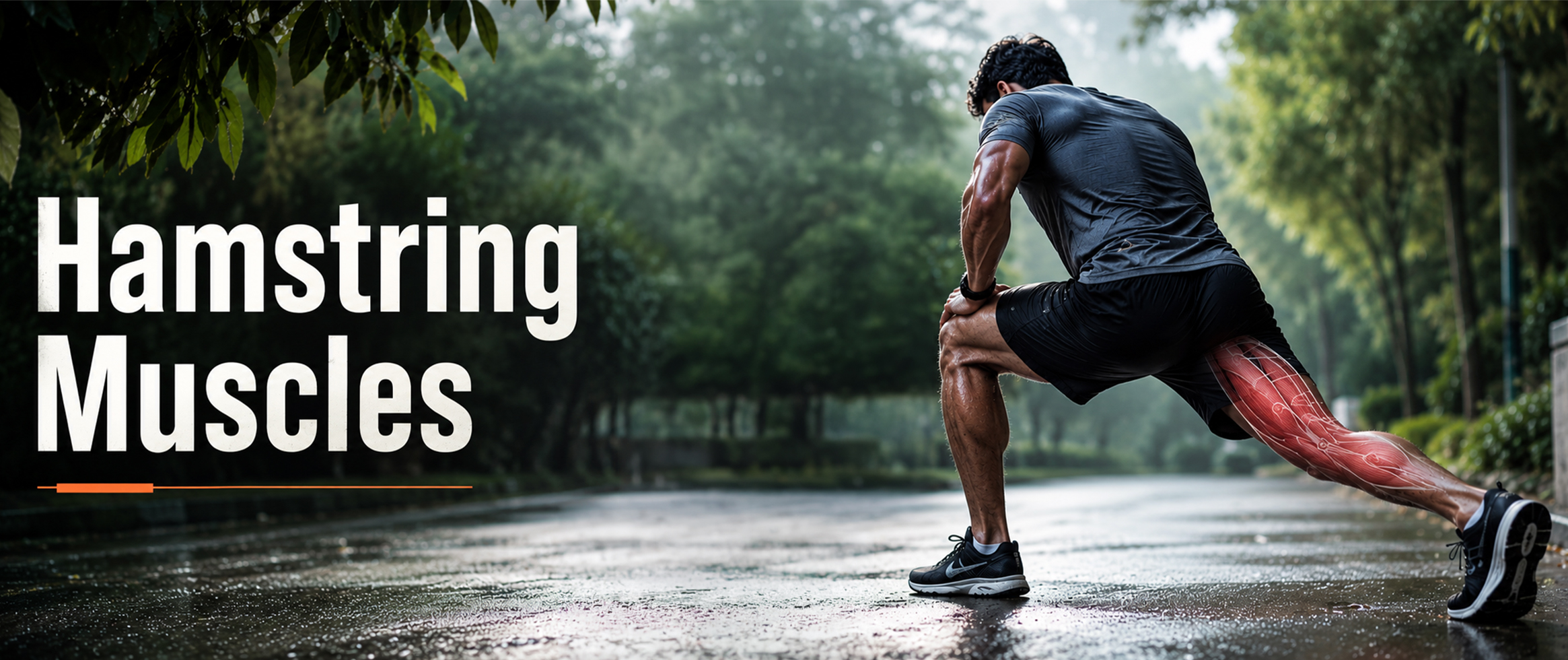
The hamstring muscles play a vital role in everyday movements such as walking, running, climbing stairs, bending the knee, and maintaining balance. Whether you're an athlete or someone with a sedentary lifestyle, healthy hamstrings are essential for mobility and lower body strength.
Hamstring injuries are among the most common muscle injuries, especially in people who participate in sports involving sprinting, jumping, or sudden changes in direction. However, even non-athletes can experience hamstring strains due to poor flexibility, muscle weakness, or improper movement.
In this blog, we'll explain the hamstring muscles, the anatomy of a hamstring, hamstring function, common injuries, diagnosis, treatment, and ways to prevent future problems.
The hamstrings are a group of three muscles located at the back of the thigh. They extend from the pelvis to just below the knee and work together to move the hip and knee joints.
These muscles are responsible for many daily activities, including standing up, walking, running, and bending the legs.
Healthy hamstrings also help maintain posture and reduce stress on the knees and lower back.
The anatomy of a hamstring includes three major muscles.
Together, these muscles attach to tendons that connect them to the pelvis and lower leg bones.
The hamstrings work closely with the quadriceps, the muscles at the front of the thigh, to ensure smooth movement and joint stability.
The primary hamstring function is to coordinate movement of the hip and knee joints.
The hamstrings help:
Without healthy hamstrings, many daily movements become difficult and uncomfortable.
Hamstring injuries usually occur when the muscles are stretched beyond their normal limit or subjected to sudden force.
The most common injuries include:
1. Hamstring Strain
A hamstring strain occurs when muscle fibres are overstretched or torn.
It is the most common hamstring injury among athletes.
2. Hamstring Tendinitis
This condition involves inflammation of the hamstring tendons due to repetitive overuse.
It commonly affects runners, cyclists, and individuals who perform repetitive lower-body movements.
3. Hamstring Tear
A severe hamstring injury may involve a partial or complete tear of the muscle.
This usually requires longer recovery and sometimes surgical treatment.
Several factors increase the risk of hamstring injuries.
Common causes include:
Even simple activities like slipping or lifting heavy objects incorrectly may strain the hamstrings.
Symptoms depend on the severity of the injury.
Common signs include:
A popping sensation at the time of injury may indicate a more serious muscle tear.
Doctors usually classify hamstring injuries into three grades.
Recovery varies depending on age, fitness level, and treatment.
A healthcare professional will usually diagnose the injury through:
If a severe injury is suspected, imaging tests may be recommended, such as:
These tests help determine the location and severity of the injury.
Treatment depends on the severity of the injury.
1. Rest
Avoid activities that worsen the pain.
Short-term rest allows the injured muscle fibres to begin healing.
2. Ice Therapy
Applying an ice pack for 15 to 20 minutes several times a day during the first 48 hours may help reduce pain and swelling.
Always wrap the ice pack in a cloth before applying it to the skin.
3. Compression
Using an elastic compression bandage may help reduce swelling and provide support.
4. Elevation
Keeping the injured leg elevated above heart level when resting may reduce swelling.
5. Pain Relief
Your doctor may recommend pain-relieving medication if needed.
Avoid self-medicating without professional advice.
6. Physiotherapy
Once the pain decreases, physiotherapy becomes an important part of recovery.
Exercises may include:
Following the rehabilitation plan reduces the risk of re-injury.
7. Surgery
Surgery is usually considered only for complete muscle or tendon tears or when conservative treatment is unsuccessful.
Simple preventive measures can help reduce the risk of injury.
Before Exercise
During Training
After Exercise
Regular flexibility and strengthening exercises help maintain healthy muscles.
Seek medical attention if you experience:
Early diagnosis and treatment can help prevent long-term complications.
The hamstring muscles play a crucial role in movement, balance, and lower body strength. Understanding the anatomy of a hamstring and normal hamstring function can help you recognise injuries early and take appropriate steps toward recovery.
Most mild hamstring injuries improve with rest, physiotherapy, and gradual rehabilitation. Maintaining flexibility, strengthening the leg muscles, and warming up before physical activity can significantly reduce the risk of future injuries.
Discover precision diagnostics with Pathkind Labs, a trusted name in diagnostic services in India. Our NABL accredited labs, equipped with advanced technology, are staffed by a certified team of over 200+ senior pathologists and 2000+ technicians. From tailored health check-ups to specialized tests in Oncology, Neurology, Gynaecology, Nephrology, and more, we've got your health covered. Skip the hassle with online booking for tests or check-ups, available for both lab visits and at-home blood collection. For a seamless experience and early detection, choose Pathkind Labs in Gurugram. Book your appointment today and experience diagnostics made easy.
© 2026 Pathkind Diagnostics Pvt. Ltd. All Rights Reserved | Unsubscribe











 Track Sample
 Upload Prescription