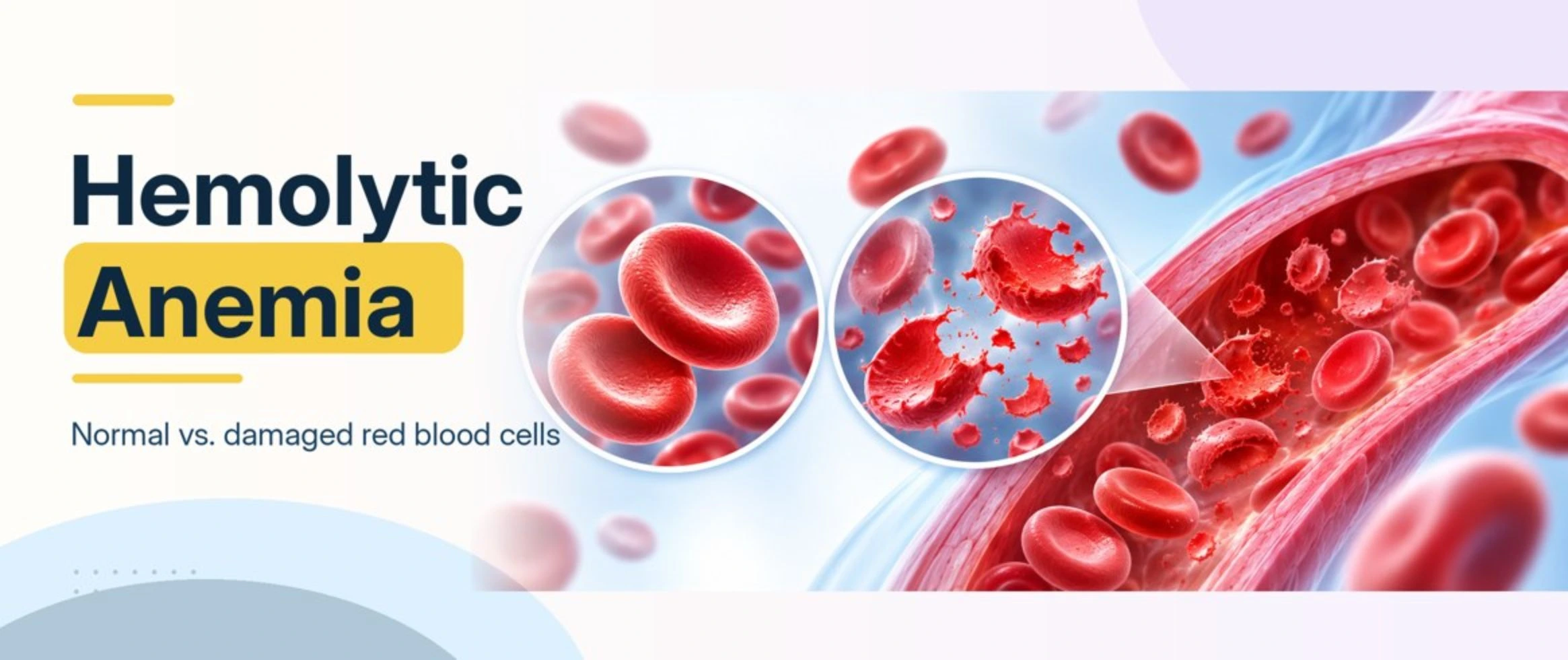
Feeling unusually tired, breathless or dizzy can have many explanations, including anaemia. One less familiar cause is Hemolytic Anemia, a condition in which red blood cells are destroyed faster than the body can replace them. Some forms develop gradually, while others need urgent care.
Red blood cells carry oxygen throughout the body. They normally survive for about 120 days before being removed and replaced. In hemolytic anemia, these cells break down early, a process called hemolysis. When the bone marrow cannot produce replacements quickly enough, haemoglobin levels fall and symptoms appear.
The condition can affect children or adults. It may be inherited, develop later in life, or occur alongside another illness.
Doctors commonly classify the condition into two broad groups.
Inherited hemolytic anemia: Genetic changes affect red blood cells, making them fragile or easier to destroy. Examples include sickle cell disease, some forms of thalassaemia, hereditary spherocytosis and glucose-6-phosphate dehydrogenase (G6PD) deficiency.
Acquired hemolytic anemia: Red blood cells are damaged by factors arising after birth. Autoimmune hemolytic anemia occurs when the immune system mistakenly attacks them. Other causes include infections, certain medicines, mechanical heart valves and disorders affecting small blood vessels.
Another distinction is where destruction happens: inside blood vessels (intravascular) or mainly in the spleen and liver (extravascular). Doctors use these patterns to investigate the underlying cause.
Symptoms vary depending on how rapidly red blood cells are lost. Watch for:
Mild cases may cause few noticeable problems. Prolonged red-cell breakdown can also contribute to gallstones, which sometimes cause upper abdominal pain. These signs overlap with other conditions, so symptoms alone cannot confirm a diagnosis. Sudden breathlessness, chest pain, fainting, confusion or rapidly worsening weakness needs emergency medical care, especially when accompanied by dark urine or jaundice.
The cause determines both the treatment and the possibility of recurrence.
Immune-related conditions: In autoimmune disease, antibodies can target otherwise healthy red cells. This may occur alone or alongside conditions such as lupus or certain blood cancers.
Inherited disorders: Abnormal haemoglobin, cell membranes or protective enzymes can shorten red-cell survival. People with G6PD deficiency may experience episodes after particular medicines, infections or fava beans.
Infections and medicines: Certain infections and drug reactions can trigger rapid red-cell breakdown. Risk depends on the infection, medicine and health history.
Mechanical damage: Artificial heart valves or rare conditions that damage tiny blood vessels may physically break red blood cells.
A clinician will ask about family history, recently started medicines, previous transfusions and other illnesses to narrow down the possible triggers.
A complete blood count (CBC) checks haemoglobin and other blood measurements. A reticulocyte count helps show whether the bone marrow is producing extra young red blood cells.
Doctors may also recommend bilirubin and LDH tests, whose levels often rise when red cells break down, and a haptoglobin test, which may show a low level. A peripheral blood smear examines the size, shape and appearance of red cells, while the direct Coombs test helps identify immune-related destruction. Specialised testing may include G6PD testing, haemoglobin analysis or genetic tests when indicated.
These tests also help distinguish hemolytic anemia from iron-deficiency anemia, which requires a different approach. No single result confirms every type. Your doctor interprets findings together with symptoms and medical history.
Treatment depends on the cause, severity and speed of blood-cell destruction.
For some autoimmune forms, doctors prescribe corticosteroids or other immune-targeting medicines. Treatment differs between warm and cold autoimmune disease, so steroids are not suitable for every case.
If a medicine is suspected, the prescribing clinician may replace it safely. Treating an underlying infection or medical condition may also help. People with G6PD deficiency need guidance on avoiding their specific triggers.
Severe cases sometimes require a blood transfusion. Selected patients may need folate supplements or specialist procedures. Iron tablets are not automatically helpful: take them only if testing shows iron deficiency or your clinician recommends them.
Inherited forms cannot usually be prevented, but some complications can. Follow prescribed treatment, attend blood-test reviews, discuss medicines before taking them and seek prompt care for infections. If hemolytic anemia runs in your family, genetic counselling may be useful.
Unexplained fatigue combined with jaundice or dark urine deserves medical assessment. Timely blood tests can identify red-cell destruction and help your doctor choose the appropriate treatment.
Discover precision diagnostics with Pathkind Labs, a trusted name in diagnostic services in India. Our NABL accredited labs, equipped with advanced technology, are staffed by a certified team of over 200+ senior pathologists and 2000+ technicians. From tailored health check-ups to specialized tests in Oncology, Neurology, Gynaecology, Nephrology, and more, we've got your health covered. Skip the hassle with online booking for tests or check-ups, available for both lab visits and at-home blood collection. For a seamless experience and early detection, choose Pathkind Labs in Gurugram. Book your appointment today and experience diagnostics made easy.
© 2026 Pathkind Diagnostics Pvt. Ltd. All Rights Reserved | Unsubscribe











 Track Sample
 Upload Prescription