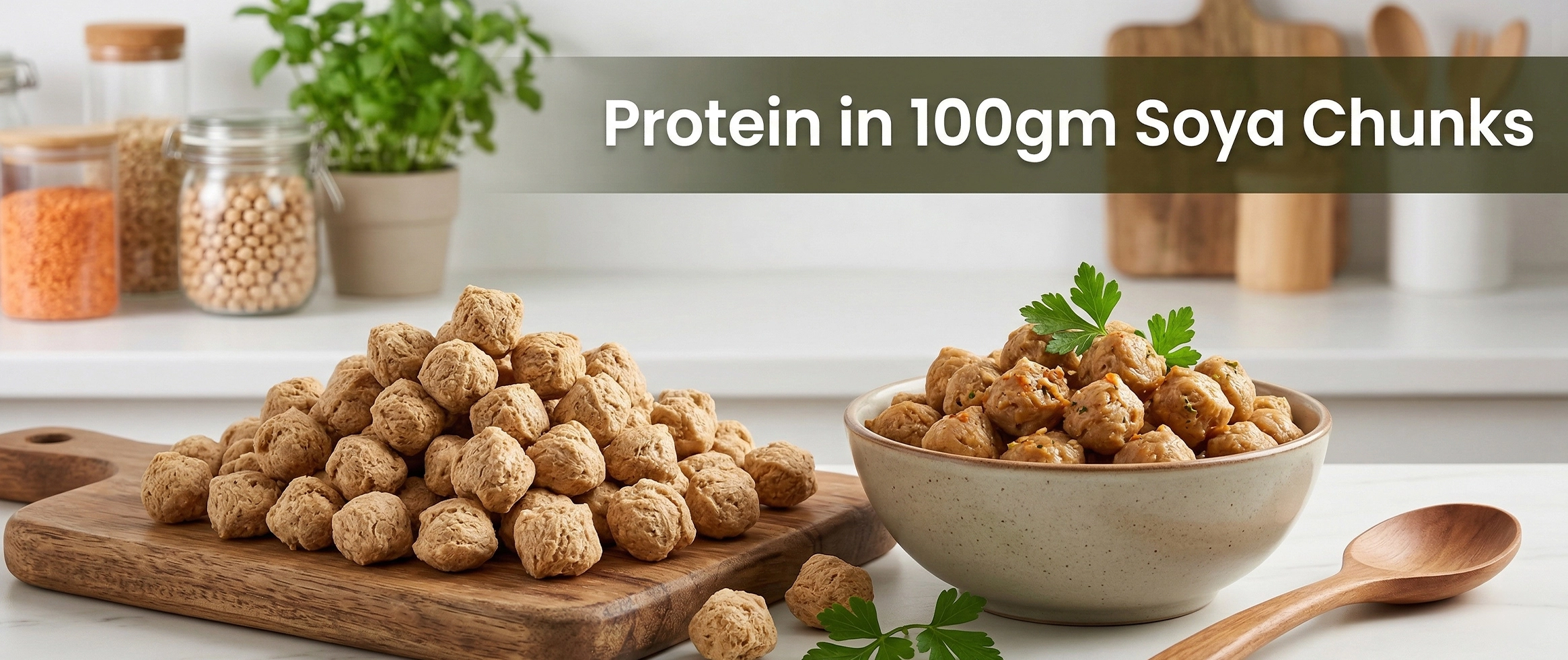
Soya chunks are one of the most popular plant-based protein sources, especially in Indian diets. Affordable, easy to cook, and versatile, they are often included in meals to boost protein intake. Many people rely on them as a vegetarian alternative to meat.
In this blog, we explain soya chunks protein per 100g, overall soya bean protein per 100g, and answer the common question, how much protein in soya chunks, along with their nutritional value and health benefits.
Soya chunks are made from defatted soy flour, a by product of soybean oil extraction. They are processed into small chunks that absorb water and expand when cooked.
They are commonly used in:
Soya chunks are known for their high protein content.
100 gm Soya Chunks Protein
This makes soya chunks one of the richest vegetarian protein sources.
Soya Bean Protein per 100g
For comparison, raw soybeans also provide high protein.
Processing increases protein concentration in soya chunks.
When soya chunks are cooked, they absorb water and expand.
This means:
50 g cooked soya chunks provide about 10 to 12 g protein
One of the biggest advantages is high protein content.
Benefits
Soya chunks are high in protein and fibre.
Why it helps
Soya products contain compounds that may support heart health.
Benefits
Soya contains minerals like calcium and magnesium.
These help:
With a combination of protein and carbohydrates, soya chunks provide sustained energy throughout the day.
Simple ways to add soya chunks to meals:
Always soak and cook properly before eating.
Recommended intake:
Excess intake is not recommended.
Soya chunks are healthy, but moderation is important for:
If you have a medical condition, consult a healthcare professional.
- Soya chunks are harmful
Moderate intake is generally safe.
- Soya reduces strength in men
There is no strong evidence supporting this in normal dietary amounts.
- More protein is always better
Balanced intake is important.
Soya chunks are one of the best plant-based protein sources available. Understanding soya chunks protein per 100g helps you plan your diet better and meet daily protein needs.
If you are wondering how much protein in soya chunks, the answer is that they provide a high amount of protein compared to most vegetarian foods. When consumed in moderation and combined with a balanced diet, soya chunks can support overall health effectively.
Discover precision diagnostics with Pathkind Labs, a trusted name in diagnostic services in India. Our NABL accredited labs, equipped with advanced technology, are staffed by a certified team of over 200+ senior pathologists and 2000+ technicians. From tailored health check-ups to specialized tests in Oncology, Neurology, Gynaecology, Nephrology, and more, we've got your health covered. Skip the hassle with online booking for tests or check-ups, available for both lab visits and at-home blood collection. For a seamless experience and early detection, choose Pathkind Labs in Gurugram. Book your appointment today and experience diagnostics made easy.
© 2026 Pathkind Diagnostics Pvt. Ltd. All Rights Reserved | Unsubscribe











 Track Sample
 Upload Prescription