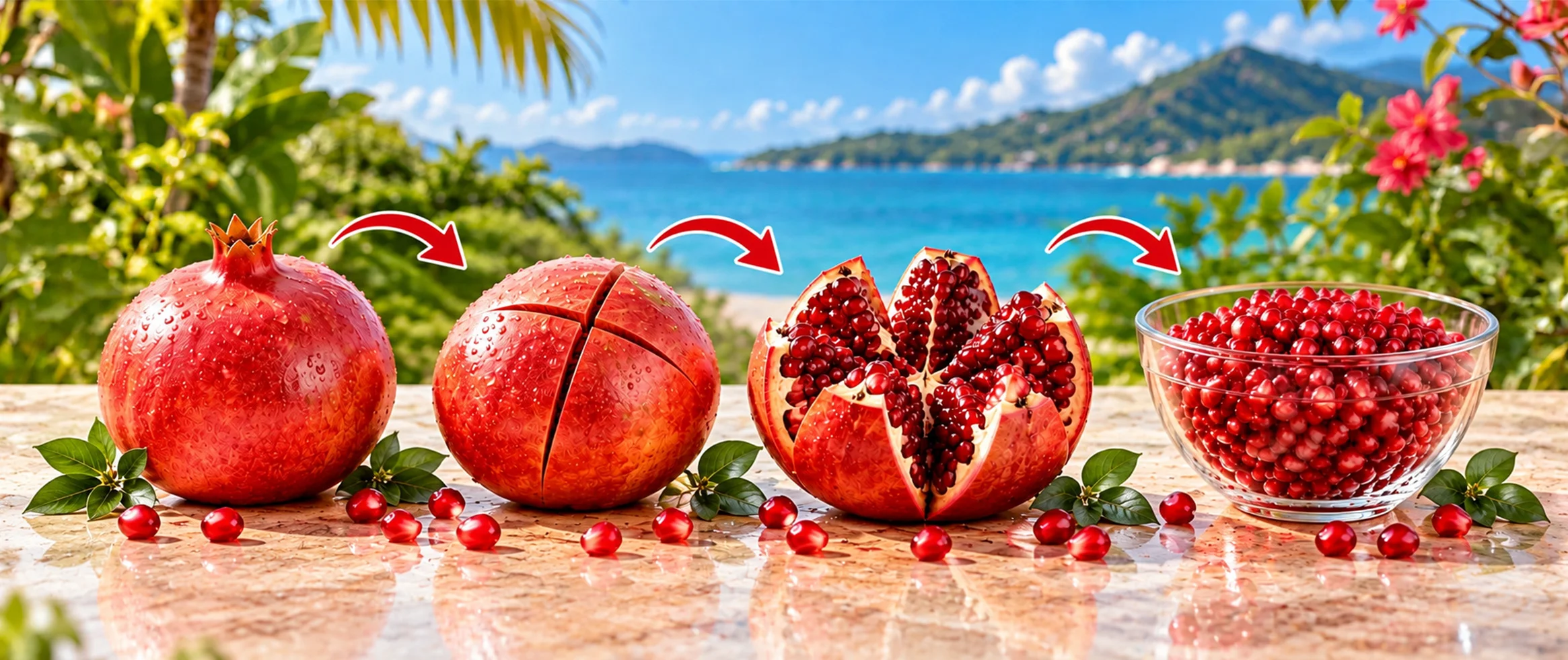
Pomegranate is a nutritious fruit known for its bright red, juicy seeds and slightly sweet, tangy taste. While eating the seeds is easy once the fruit is opened, cutting and removing them can seem messy at first.
The good news is that you do not need any special equipment. With a sharp knife, a bowl and a few simple steps, you can open a pomegranate and separate its seeds without much effort.
This guide explains how to cut pomegranate, how to peel a pomegranate, remove the seeds and enjoy them in different ways.
The edible part of a pomegranate is the juicy covering around each seed, commonly called an aril. The small inner seed inside each aril is also edible.
The white, spongy membranes inside the fruit are generally not eaten because they have a bitter taste.
So, when you open a pomegranate, your goal is to separate the juicy red arils from the white membrane and outer skin.
If you are wondering how to cut pomegranate without making a mess, try this method.
Step 1: Wash the Pomegranate
Wash the whole fruit under clean running water and dry it with a clean towel.
Even though you will remove the outer peel, washing the fruit first helps prevent dirt from transferring to the edible portion when you cut it.
Step 2: Cut Off the Top
Place the pomegranate on a stable cutting board.
Using a sharp knife, carefully slice off a thin piece from the top of the fruit. This exposes the inside and makes the natural sections easier to identify.
Do not cut too deeply because you only need to remove the crown and a small portion of the skin.
Step 3: Score the Skin
Look at the exposed top of the fruit. You should be able to see lines or sections separating the clusters of seeds.
Make shallow cuts down the sides of the fruit following these natural sections.
The cuts only need to go through the skin. Avoid cutting deeply into the seeds.
Step 4: Break the Fruit Apart
Gently pull the fruit apart using your hands along the cuts you made.
It should separate into several sections, making the seeds easier to access.
If you are wondering how do I peel a pomegranate, there is no need to peel it like an apple or orange.
Instead:
Trying to peel the entire fruit in one piece can actually make the process more difficult. Opening it in sections gives you better access to the seeds.
The water method is particularly useful if you want to reduce splashing and make separating the seeds easier.
Here's how to do it:
This method can help keep your kitchen counter cleaner compared with removing all the seeds directly over a plate.
You can also remove the seeds without water.
After cutting the pomegranate into sections, hold one section over a bowl and gently loosen the seeds with your fingers. Separate the red arils from the white membrane as you go.
This method is simple and does not require additional utensils, although some juice may splash onto your hands or work surface.
Once you have removed the seeds, there are several easy ways to enjoy them.
Eat Them Fresh
The simplest way to eat pomegranate is to enjoy the arils directly with a spoon or your fingers.
They make a convenient snack and can be eaten on their own.
Add Them to Fruit Salad
Pomegranate seeds can add colour, texture and a sweet-tangy flavour to a fruit salad. Combine them with fruits such as apple, orange, papaya or banana.
Add Them to Yogurt
Sprinkle pomegranate seeds over plain yogurt for a simple snack or breakfast. You can also add nuts or seeds for additional texture.
Add Them to Salads
Pomegranate arils work well in savoury salads too. Their slightly sweet and tangy flavour can complement vegetables, leafy greens and other ingredients.
Use Them as a Topping
You can sprinkle the seeds over oatmeal, porridge or homemade dishes for extra flavour and texture.
If you find pomegranates difficult to prepare, these small tricks can help:
Learning how to eat pomegranate becomes much easier once you know how to open the fruit properly. Cut off the crown, score the skin along its natural sections, break the fruit apart and separate the juicy arils from the white membrane.
If you want a less messy approach, the water method is an easy option. Once prepared, pomegranate seeds can be enjoyed on their own or added to yogurt, salads, fruit bowls and other dishes.
Along with being versatile, pomegranate provides fibre, vitamins and naturally occurring plant compounds, making it a nutritious addition to a balanced diet.
Discover precision diagnostics with Pathkind Labs, a trusted name in diagnostic services in India. Our NABL accredited labs, equipped with advanced technology, are staffed by a certified team of over 200+ senior pathologists and 2000+ technicians. From tailored health check-ups to specialized tests in Oncology, Neurology, Gynaecology, Nephrology, and more, we've got your health covered. Skip the hassle with online booking for tests or check-ups, available for both lab visits and at-home blood collection. For a seamless experience and early detection, choose Pathkind Labs in Gurugram. Book your appointment today and experience diagnostics made easy.
© 2026 Pathkind Diagnostics Pvt. Ltd. All Rights Reserved | Unsubscribe











 Track Sample
 Upload Prescription