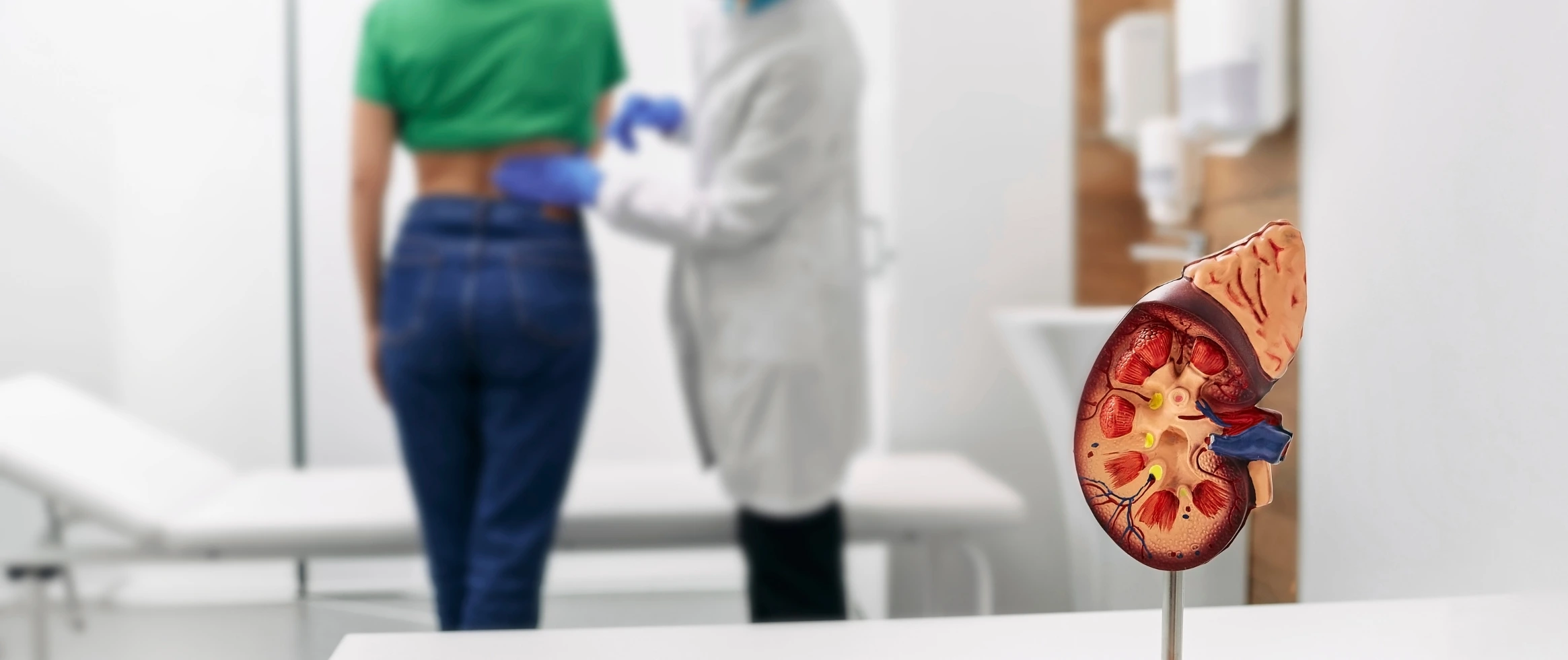
Have you ever experienced a dull pain in your lower back and ignored it, thinking it was just muscle strain? Sometimes, your body is trying to tell you something more serious. One such condition that often goes unnoticed in the early stages is hydronephrosis.
Hydronephrosis may sound complex, but understanding it is actually quite simple. Let’s break it down in a way that makes sense, so you can recognize the signs early and take the right steps for your health.
Hydronephrosis is a condition where one or both kidneys become swollen due to a build-up of urine. Normally, urine flows smoothly from the kidneys to the bladder. But when there’s a blockage or obstruction, urine backs up, causing the kidney to stretch and swell.
This condition can affect people of all ages-from newborns to adults-and can be temporary or chronic depending on the cause.
When left untreated, hydronephrosis can lead to serious kidney damage. Since the kidneys play a crucial role in filtering waste and maintaining fluid balance, any disruption can impact overall health.
Think of your kidneys like a water filter at home. If the outlet pipe is blocked, the water backs up and damages the system. That’s exactly what happens in hydronephrosis kidney disease.
Understanding the reason for hydronephrosis is key to treating it effectively. Here are the most common causes:
1. Kidney Stones
One of the most common reasons. Stones can block the ureter (the tube connecting the kidney to the bladder), stopping urine flow.
2. Urinary Tract Infections (UTIs)
Severe or untreated infections can cause swelling and blockage.
3. Enlarged Prostate (in men)
An enlarged prostate can press against the urethra, making it difficult for urine to pass.
4. Pregnancy
In some pregnant women, the growing uterus can press on the urinary tract.
5. Congenital Issues
Some babies are born with abnormalities in the urinary tract that lead to hydronephrosis.
6. Tumors or Growths
Masses in the urinary tract can obstruct urine flow.
7. Ureteral Stricture
Narrowing of the ureter due to injury or surgery.
Hydronephrosis doesn’t always show symptoms in the early stages, which makes it tricky. But as it progresses, you may notice:
A Real-Life Example
Imagine waking up with a constant ache on one side of your back. You drink water, rest, maybe take a painkiller-but the discomfort stays. After a few days, it worsens. That could be your kidney signaling a problem like hydronephrosis.
Early diagnosis can prevent complications. Doctors use a combination of tests to confirm hydronephrosis:
1. Ultrasound
A simple and painless test to detect kidney swelling.
2. CT Scan
Provides detailed images to identify blockages like stones or tumors.
3. Urine Test
Checks for infection or abnormalities.
4. Blood Test
Evaluates kidney function.
5. Intravenous Pyelogram (IVP)
A special X-ray using contrast dye to track urine flow.
At Pathkind Labs, advanced diagnostic tests like Kidney Function Tests (KFT), urine analysis, and imaging support early detection of conditions like hydronephrosis. Early diagnosis means faster treatment and better outcomes.
The cure for hydronephrosis depends on the underlying cause. The goal is to remove the blockage and restore normal urine flow.
1. Medications
2. Drainage Procedures
3. Surgery
4. Lifestyle Changes
Yes, in many cases, hydronephrosis is reversible-especially if detected early. Once the blockage is treated, the kidney can return to normal function.
However, long-term untreated hydronephrosis may lead to permanent damage. That’s why early testing and diagnosis are critical.
Some people are more likely to develop hydronephrosis:
History of kidney stones
If you fall into any of these categories, regular screening is highly recommended.
While not all cases are preventable, you can reduce your risk:
Don’t wait if you experience:
These could be signs of hydronephrosis or other serious kidney issues.
Hydronephrosis is a condition that should never be ignored. While it may start silently, its impact on kidney health can be serious if left untreated. The good news is that with timely diagnosis and proper treatment, it is often completely manageable.
If you’ve been experiencing unusual symptoms or fall into a high-risk category, consider getting your kidney health checked. A simple test today can prevent major complications tomorrow.
Discover precision diagnostics with Pathkind Labs, a trusted name in diagnostic services in India. Our NABL accredited labs, equipped with advanced technology, are staffed by a certified team of over 200+ senior pathologists and 2000+ technicians. From tailored health check-ups to specialized tests in Oncology, Neurology, Gynaecology, Nephrology, and more, we've got your health covered. Skip the hassle with online booking for tests or check-ups, available for both lab visits and at-home blood collection. For a seamless experience and early detection, choose Pathkind Labs in Gurugram. Book your appointment today and experience diagnostics made easy.
© 2026 Pathkind Diagnostics Pvt. Ltd. All Rights Reserved | Unsubscribe











 Track Sample
 Upload Prescription