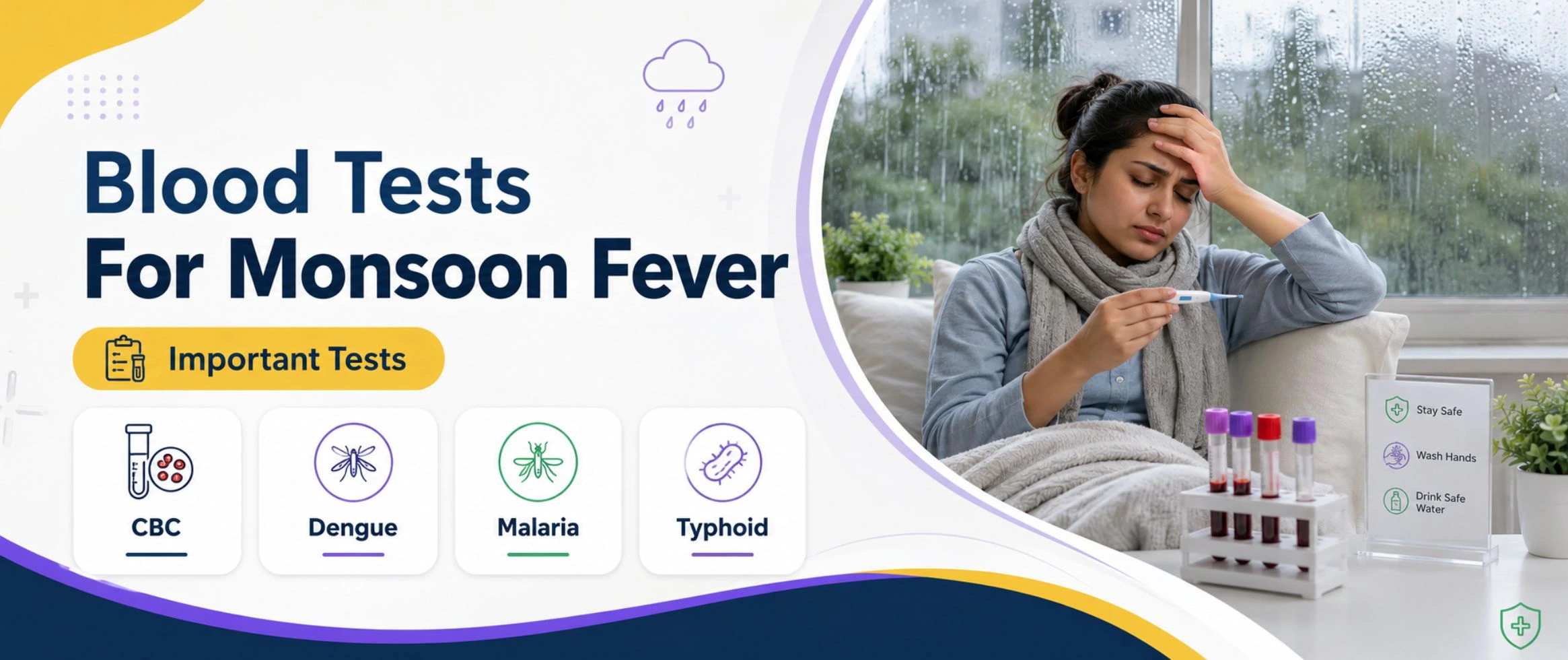
Fever is common during the monsoon season because the risk of mosquito-borne, water-borne and viral infections increases. Dengue, malaria, typhoid, chikungunya, leptospirosis and viral infections can all begin with similar symptoms such as fever, weakness, headache and body pain.
So, which blood test for fever should you get? There is no single test for every type of fever. The right test depends on your symptoms, how long you have had fever and your doctor’s assessment.
Rainwater and high humidity create favourable conditions for mosquitoes and infection-causing germs. Stagnant water can increase mosquito breeding, while contaminated food and water may raise the risk of illnesses such as typhoid and leptospirosis.
Because several monsoon illnesses have similar symptoms, timely testing can help identify the possible cause and guide further treatment.
A Complete Blood Count (CBC) is commonly advised as an initial blood test for fever. It measures important parameters such as:
Changes in these values can provide useful clues, but a CBC alone cannot confirm dengue, malaria, typhoid or viral fever. Depending on the symptoms, your doctor may recommend specific tests.
Dengue commonly causes high fever, severe body pain, headache, nausea and sometimes a rash.
Tests may include:
Dengue NS1 Antigen Test
The NS1 antigen test is generally useful during the early days of dengue infection, particularly within the first week of fever.
Dengue IgM Antibody Test
Dengue IgM antibodies usually become easier to detect after the first few days of illness. The doctor may recommend this test depending on when the fever started.
A CBC may also be repeated to monitor platelet count and haematocrit. However, a low platelet count alone does not confirm dengue.
Malaria may cause fever with chills, sweating, headache, weakness, nausea and body pain.
Common tests include:
If malaria is strongly suspected despite an initial negative result, a doctor may recommend repeat testing.
Typhoid can spread through contaminated food and water and may cause prolonged fever, weakness, stomach discomfort, constipation or diarrhoea.
A blood culture is an important test for suspected typhoid and is preferably performed before starting antibiotics.
The Widal test may also be available, but it has limitations and should not be used alone to confirm active typhoid infection.
People often search for a blood test for viral fever, but viral fever is not one specific disease.
Depending on symptoms, doctors may recommend:
Many uncomplicated viral infections improve with rest, adequate fluids and doctor-advised treatment. Persistent or worsening symptoms should be evaluated.
Chikungunya usually causes sudden fever along with significant joint pain. Depending on the duration of symptoms, a doctor may recommend:
Since dengue and chikungunya can produce similar symptoms, proper diagnosis is important.
Leptospirosis is a bacterial infection that can spread through water or soil contaminated by infected animal urine. The risk may increase during flooding and heavy rainfall.
Tests may include:
Your doctor will select the appropriate test based on symptoms and the stage of illness.
A blood test report for fever should always be interpreted together with symptoms and medical history.
For example, changes in platelet count may require further investigation for dengue, while abnormal white blood cell counts may occur in many bacterial, viral or inflammatory conditions.
No single CBC value can reliably identify the exact cause of fever. Disease-specific testing and clinical evaluation are often necessary.
Seek medical attention if fever is accompanied by:
These symptoms should not be ignored.
If fever continues during the monsoon or your doctor suspects dengue, malaria, typhoid or another infection, timely diagnostic testing can help provide clearer answers.
Pathkind Labs offers a wide range of diagnostic tests for fever and seasonal infections, including CBC, dengue tests, malaria testing and other doctor-recommended investigations. Home sample collection may also be available in selected locations for added convenience.
Always consult your doctor to understand which blood test for fever is appropriate based on your symptoms and duration of illness.
Monsoon fever should not always be treated as a simple viral infection. Dengue, malaria, typhoid, chikungunya and other illnesses can initially look similar. A CBC is often the starting point, followed by specific tests depending on symptoms and the day of fever.
Getting the right test at the right time can support early diagnosis and appropriate medical care.
Discover precision diagnostics with Pathkind Labs, a trusted name in diagnostic services in India. Our NABL accredited labs, equipped with advanced technology, are staffed by a certified team of over 200+ senior pathologists and 2000+ technicians. From tailored health check-ups to specialized tests in Oncology, Neurology, Gynaecology, Nephrology, and more, we've got your health covered. Skip the hassle with online booking for tests or check-ups, available for both lab visits and at-home blood collection. For a seamless experience and early detection, choose Pathkind Labs in Gurugram. Book your appointment today and experience diagnostics made easy.
© 2026 Pathkind Diagnostics Pvt. Ltd. All Rights Reserved | Unsubscribe











 Track Sample
 Upload Prescription