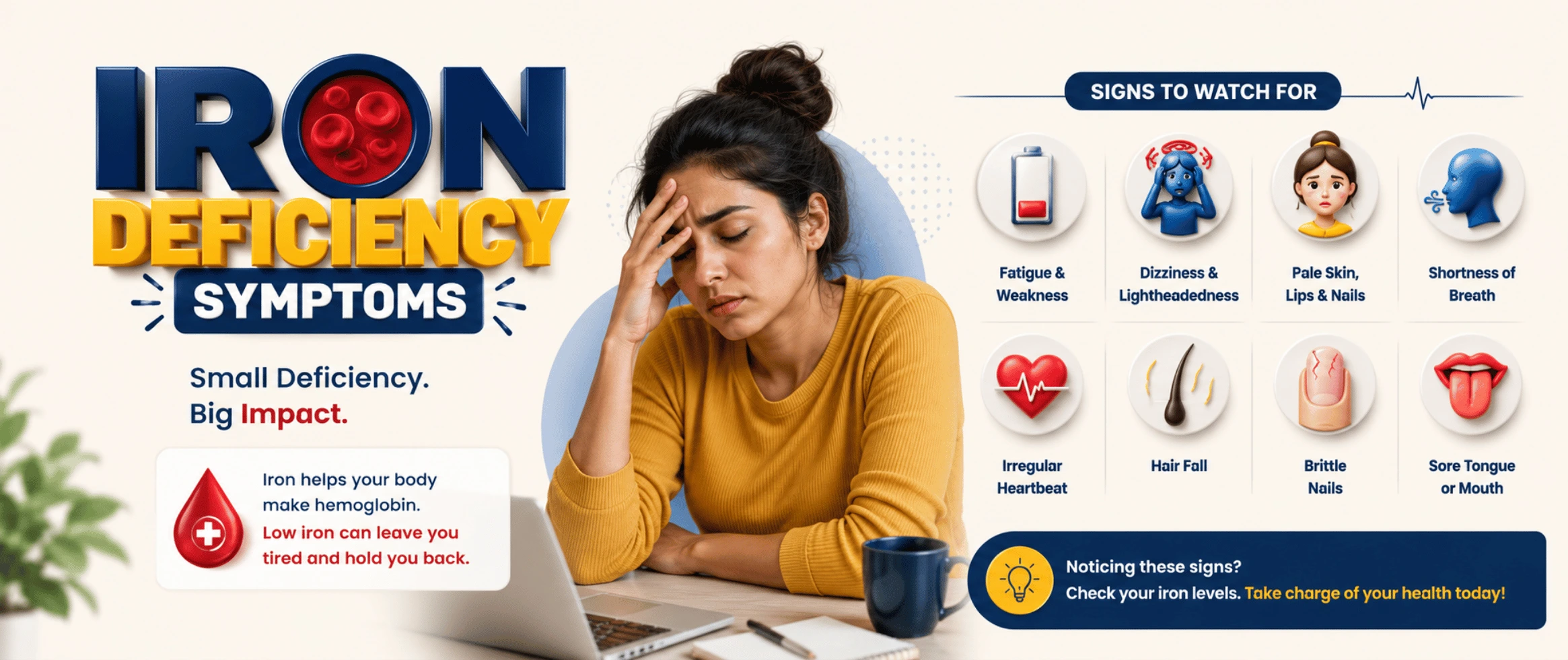
Feeling tired after a long day is normal. But what if you feel tired even after sleeping well? What if climbing stairs suddenly feels harder than before? Or your hands and feet feel cold even when the weather is not that cold?
Many people ignore these signs and blame work stress, poor sleep, or a busy routine. But sometimes, the real reason can be low iron levels in the body.
Iron deficiency is one of the most common nutrition-related health concerns. It can slowly affect your energy, focus, skin, hair, heart, and overall health. According to the World Health Organization, anaemia mainly affects women and children, and it happens when red blood cells or haemoglobin levels are lower than normal. Haemoglobin helps carry oxygen to body organs and tissues.
The tricky part is that iron deficiency symptoms often start slowly. You may not notice them at first. But if low iron is not corrected, it can lead to iron deficiency anaemia and other health problems.
The most common iron deficiency symptoms include tiredness, weakness, pale skin, dizziness, headache, shortness of breath, fast heartbeat, cold hands and feet, brittle nails, hair fall, restless legs, and poor concentration. Some people may also crave ice, clay, dirt, or other non-food items, which can be a sign of severe iron deficiency.
Iron deficiency means your body does not have enough iron to work properly. Iron is needed to make haemoglobin, a protein in red blood cells that carries oxygen through the body. When iron levels fall, your body may struggle to make enough healthy red blood cells.
Think of haemoglobin like a delivery van carrying oxygen. If there are fewer vans on the road, your muscles, brain, and organs do not get enough oxygen on time. That is why low iron can make you feel tired, dizzy, weak, or breathless.
Iron deficiency can exist even before anaemia develops. In the early stage, your iron stores may be low, but haemoglobin may still be normal. Later, if the deficiency continues, haemoglobin can drop and iron deficiency anaemia may develop. Few references explains that iron deficiency anaemia develops in stages, starting with low iron stores and later affecting red blood cells and haemoglobin.
Iron supports many daily body functions. It helps:
When iron is low, the body has to work harder. That is why even simple tasks like walking, cooking, working, studying, or exercising may feel more tiring than usual.
1. Constant Tiredness and Low Energy
Feeling tired is one of the earliest and most common iron deficiency symptoms. This tiredness can feel different from normal fatigue. You may sleep enough but still wake up feeling drained. You may feel like your body is running on low battery throughout the day.
Few references notes that iron deficiency anaemia symptoms can develop slowly and may include weakness, tiredness, headaches, dizziness, palpitations, and trouble concentrating.
2. Weakness During Daily Activities
If you suddenly feel weak while doing everyday tasks, low iron could be one reason. You may feel tired while climbing stairs, carrying groceries, walking short distances, or doing your regular workout.
This happens because your muscles may not be getting enough oxygen-rich blood.
3. Pale Skin or Pale Inner Eyelids
Pale skin is another possible sign of low haemoglobin. Some people notice paleness on the face, lips, gums, nails, or inside the lower eyelid. However, skin tone varies from person to person, so paleness alone is not enough to confirm iron deficiency.
A blood test is the right way to check.
4. Dizziness or Lightheadedness
Low iron can reduce oxygen supply to the brain. This may make you feel dizzy, lightheaded, or unsteady, especially when you stand up quickly or do physical activity.
If dizziness happens often, it should not be ignored.
5. Headaches and Poor Focus
Do you find it harder to focus at work or while studying? Do you forget small things more often? Low iron can affect oxygen delivery to the brain, which may lead to headaches, brain fog, and poor concentration.
This is why iron deficiency can affect students, working adults, and even homemakers who already manage long, tiring days.
6. Shortness of Breath
If you feel breathless after light activity, such as walking or climbing a few stairs, it may be a sign that your body is trying to get more oxygen. Few references lists shortness of breath, chest pain, and fast heartbeat among possible iron deficiency anaemia symptoms.
7. Fast Heartbeat or Palpitations
When oxygen levels are low, the heart may pump faster to supply oxygen to the body. This can cause palpitations, a racing heartbeat, or chest discomfort. If you have chest pain, severe breathlessness, fainting, or a very fast heartbeat, seek medical care urgently.
8. Cold Hands and Feet
Many people with low iron complain that their hands and feet feel cold. This may happen because oxygen supply and blood circulation are affected.
9. Hair Fall and Brittle Nails
Hair fall can happen due to many reasons, including stress, thyroid problems, vitamin deficiency, hormonal changes, and low iron. Brittle nails or spoon-shaped nails may also point toward iron deficiency. Few references includes brittle nails among possible symptoms of iron deficiency anaemia.
Some iron deficiency symptoms are not very obvious. In fact, they may feel strange or unrelated.
1. Craving Ice or Non-Food Items
One of the 5 weird signs of iron deficiency is craving ice, clay, dirt, paper, or other non-food items. This is called pica. Some people chew ice daily without realizing it may be linked to low iron.
Few references mentions cravings for non-food items like ice, dirt, or clay as a possible sign of iron deficiency anaemia.
2. Restless Legs at Night
Restless legs means you feel a strong urge to move your legs, often at night or while resting. It can disturb sleep and make you feel tired the next day. Few references notes that restless legs syndrome is linked with low brain iron levels and can also be associated with iron-deficiency anaemia.
3. Sore or Smooth Tongue
Some people with iron deficiency may notice tongue soreness, swelling, burning, or a smooth-looking tongue. It may also affect taste or make eating uncomfortable.
4. Strange Smell Cravings
Some people develop unusual smell cravings, such as wanting to smell detergent, rubber, petrol, or cleaning products. Few references lists odd smell cravings as a possible sign in iron deficiency anaemia.
5. Cracks Around the Mouth
Cracks at the corners of the mouth can happen due to dryness, infection, vitamin deficiency, or iron deficiency. If this keeps coming back along with tiredness or weakness, it is worth discussing with a doctor.
Understanding iron deficiency causes is important because treatment depends on the reason behind low iron. Taking iron tablets without knowing the cause may not solve the real problem.
1. Low Iron Intake in Diet
A diet low in iron-rich foods can slowly reduce iron stores. This may happen in people who skip meals, eat very limited diets, or do not include enough iron-rich foods.
Iron-rich foods include:
Few references notes that iron-rich foods include meat, eggs, leafy green vegetables, beans, seafood, dried fruits, and iron-fortified foods.
2. Heavy Periods
Heavy menstrual bleeding is one of the common iron deficiency causes in women. Losing blood means losing iron. Over time, this can lower iron stores and haemoglobin.
If periods are very heavy, last longer than usual, or include large clots, medical advice is important.
3. Pregnancy
During pregnancy, the body needs more iron because blood volume increases and the baby also needs iron. Without proper care, pregnant women may develop iron deficiency anaemia. WHO notes that anaemia can cause problems for pregnant women and their babies.
4. Internal Bleeding
Sometimes, iron deficiency is caused by slow blood loss inside the body. This may happen due to stomach ulcers, colon polyps, piles, or other digestive tract conditions. Few references notes that slow internal blood loss can cause iron deficiency anaemia and may need further tests to find the source.
5. Poor Iron Absorption
Even if you eat enough iron, your body may not absorb it well. Conditions like celiac disease, inflammatory bowel disease, or a history of stomach or intestinal surgery may affect iron absorption.
6. Frequent Blood Donation
Donating blood frequently can lower iron levels. If you donate blood often and feel tired, dizzy, or weak, speak to your doctor about checking your iron status.
7. Tea or Coffee With Meals
Tea and coffee can reduce iron absorption when taken close to iron-rich meals or iron supplements. Few references advises avoiding coffee or tea within an hour of taking iron because they can reduce absorption.
Iron deficiency can affect anyone, but some people are at higher risk:
WHO identifies children under 5, menstruating adolescent girls and women, pregnant women, and postpartum women as vulnerable groups for anaemia.
Iron deficiency may look small in the beginning, but ignoring it can affect health in many ways.
1. Worsening Anaemia
Low iron can slowly progress to iron deficiency anaemia. At this stage, haemoglobin drops and symptoms may become stronger.
2. Heart Strain
When the blood cannot carry enough oxygen, the heart may work harder. Severe or untreated iron deficiency anaemia can lead to fast or irregular heartbeat and may contribute to heart-related complications.
3. Pregnancy Complications
Serious iron deficiency anaemia during pregnancy has been linked with premature birth and low birth weight.
4. Growth and Learning Issues in Children
Children need iron for growth, brain development, and energy. Severe iron deficiency may affect growth and development. WHO also notes that severe anaemia can affect cognitive and motor development in children.
5. Low Immunity and Poor Recovery
Low iron may affect the body’s ability to function well. Some people may feel weaker, fall sick more often, or take longer to recover.
You cannot confirm iron deficiency only by looking at symptoms. Many conditions can cause tiredness, dizziness, hair fall, or weakness. Blood tests help identify the real cause.
Doctors may suggest:
Complete Blood Count
A Complete Blood Count, or CBC, checks red blood cells, white blood cells, platelets, haemoglobin, haematocrit, and other blood parameters. We describes CBC as a common test that measures key blood cell groups and helps detect changes in blood cell counts.
Ferritin Test
Ferritin shows how much iron is stored in the body. Low ferritin often means low iron stores. Few references states that lower-than-normal ferritin levels may indicate iron deficiency anaemia or another low-iron condition.
Iron Studies
Iron studies may include serum iron, TIBC, transferrin saturation, and ferritin. These tests help doctors understand whether iron is low, whether absorption is affected, or whether another condition may be involved.
Other Tests
If blood tests show iron deficiency, doctors may suggest further testing to find the cause. Few references notes that tests such as endoscopy, colonoscopy, or pelvic ultrasound may be advised in some cases to check for bleeding or heavy periods-related causes.
If you have ongoing tiredness, weakness, dizziness, breathlessness, hair fall, cold hands and feet, heavy periods, or unusual cravings like ice, it may be time to speak to a doctor and consider testing.
We offers tests such as Iron, Ferritin, and Complete Blood Count that can support evaluation of low iron and anaemia-related concerns.
Suggested internal links:
Iron deficiency treatment depends on the cause, severity, age, pregnancy status, and overall health. Do not start iron supplements on your own without medical advice. Too much iron can be harmful and may damage organs. Few references advises talking to a healthcare professional before taking iron supplements.
1. Improve Iron-Rich Foods
Your doctor or dietitian may suggest adding iron-rich foods to your meals.
Good options include:
2. Add Vitamin C With Meals
Vitamin C helps the body absorb iron better. Pair iron-rich foods with:
For example, adding lemon to dal or eating guava after meals can support iron absorption.
3. Avoid Tea or Coffee Right After Meals
Many Indian households have tea soon after breakfast or lunch. But tea and coffee can reduce iron absorption. Try keeping a gap of at least one hour, especially if you are already low in iron.
4. Take Iron Supplements Only as Advised
Doctors may prescribe iron tablets, syrup, or capsules. Some people may feel constipation, nausea, stomach discomfort, or dark stools while taking iron. Few references notes that iron supplements can cause constipation and black stools, and treatment may take several months to rebuild iron stores.
5. Treat the Root Cause
If low iron is due to heavy periods, piles, ulcers, poor absorption, or another illness, iron tablets alone may not be enough. The cause must be treated.
6. Iron Infusion in Some Cases
In severe cases or when oral iron does not work, doctors may suggest iron through a vein. This is usually done under medical supervision.
See a doctor if you have:
Seek urgent medical help if you have chest pain, severe breathlessness, fainting, or signs of heavy bleeding.
Iron deficiency symptoms can be easy to miss because they often look like everyday tiredness, stress, or lack of sleep. But if fatigue, dizziness, breathlessness, hair fall, cold hands and feet, or unusual cravings continue, your body may be asking for attention.
The good news is that iron deficiency is treatable when found early. A simple blood test can help you understand your iron status and take the right next step. Instead of guessing, speak to a healthcare professional, get tested if needed, and follow a safe treatment plan.
Medical Disclaimer: This blog is for educational purposes only and does not replace medical advice. Please consult a qualified doctor for diagnosis and treatment.
Discover precision diagnostics with Pathkind Labs, a trusted name in diagnostic services in India. Our NABL accredited labs, equipped with advanced technology, are staffed by a certified team of over 200+ senior pathologists and 2000+ technicians. From tailored health check-ups to specialized tests in Oncology, Neurology, Gynaecology, Nephrology, and more, we've got your health covered. Skip the hassle with online booking for tests or check-ups, available for both lab visits and at-home blood collection. For a seamless experience and early detection, choose Pathkind Labs in Gurugram. Book your appointment today and experience diagnostics made easy.
© 2026 Pathkind Diagnostics Pvt. Ltd. All Rights Reserved | Unsubscribe











 Track Sample
 Upload Prescription