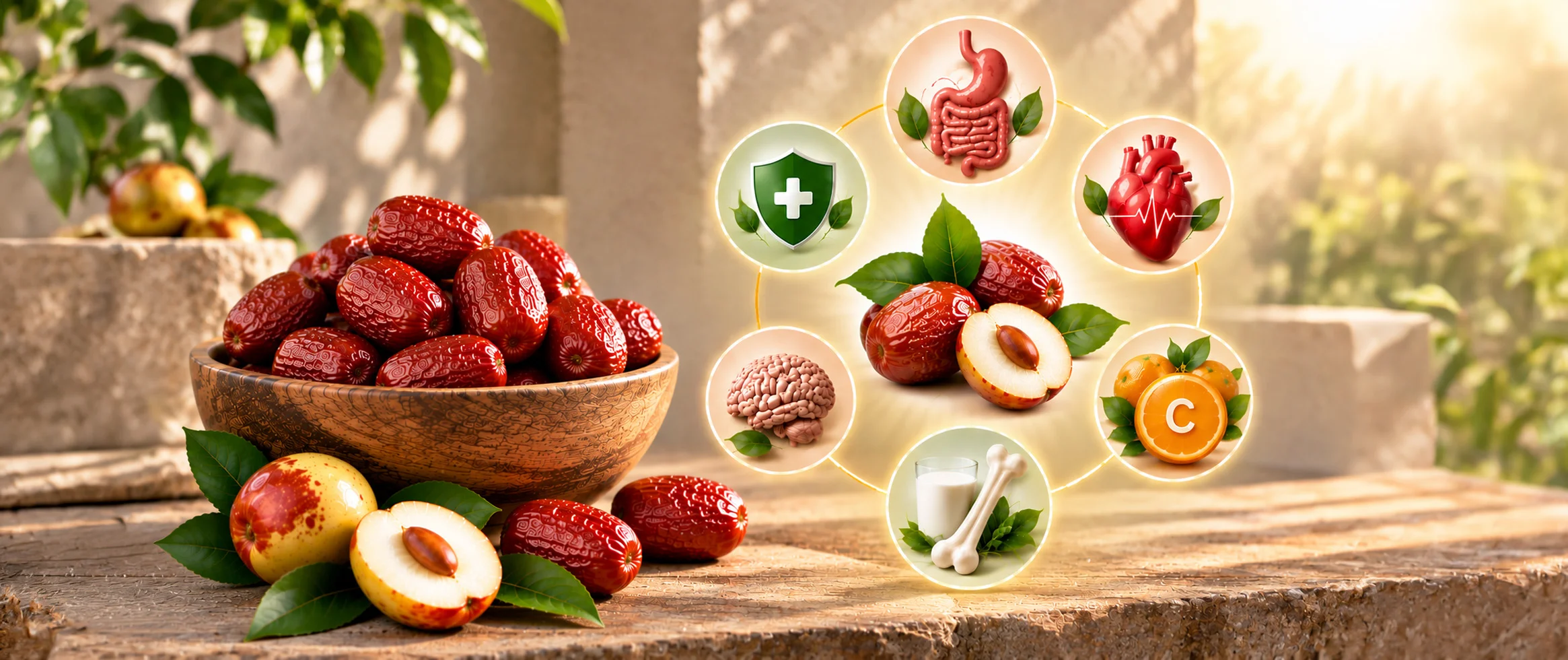
Jujube fruit, commonly known as ber fruit in India, is a small, round or oval fruit that grows on the jujube tree. It is usually green when unripe and turns yellowish, reddish or brown as it ripens. Depending on the variety and stage of ripeness, ber can taste mildly sweet, tangy or pleasantly crisp.
Ber is commonly eaten fresh, but it can also be dried or used in chutneys, pickles and other preparations. Like many fruits, it provides water, natural carbohydrates, dietary fibre and several vitamins and minerals.
Adding seasonal fruits such as ber to a balanced diet can be a simple way to increase fruit and nutrient intake.
The exact nutritional value of jujube can vary depending on the variety, ripeness and whether the fruit is fresh or dried. Fresh jujube generally contains water, carbohydrates and dietary fibre, along with nutrients such as vitamin C and potassium.
Here is an overview of nutrients commonly found in fresh jujube fruit:
Dried jujube is more concentrated than fresh fruit, so its calories and naturally occurring sugars are higher per 100 grams.
1. Provides Vitamin C
One of the notable nutrients found in fresh jujube is vitamin C. Vitamin C plays several important roles in the body, including supporting normal immune function, collagen production and wound healing.
Eating vitamin C-containing fruits as part of a varied diet can help contribute to overall nutritional needs.
2. May Support Digestive Health
Ber fruit contains dietary fibre, which can support regular bowel movements and healthy digestion. Fibre also contributes to a feeling of fullness after eating.
However, eating large amounts of any high-fibre food suddenly may cause bloating or discomfort in some people. It is better to increase fibre intake gradually and drink enough fluids.
3. Contains Antioxidant Compounds
Jujube contains naturally occurring antioxidant compounds, including vitamin C and various plant compounds. Antioxidants help protect cells from damage associated with free radicals.
A diet that includes a variety of fruits and vegetables provides different types of these beneficial plant compounds.
4. Can Be Part of a Heart-Healthy Diet
Ber can fit into a heart-conscious eating pattern because it is a fruit that provides fibre, potassium and other nutrients while being naturally low in fat.
However, no single fruit can prevent or treat heart disease. Overall dietary patterns, physical activity, blood pressure, cholesterol and other lifestyle factors are much more important for cardiovascular health.
5. Supports Normal Immune Function
Vitamin C in jujube contributes to normal immune system function. Including fruits such as ber alongside vegetables, whole grains, pulses, nuts and other nutrient-rich foods can help create a balanced diet.
It is important to remember that eating ber does not provide a guaranteed protection against infections.
6. May Help Add Variety to a Healthy Diet
One of the practical jujube fruit benefits is simply that it adds variety to your fruit intake. Eating different types of fruits helps provide a broader range of nutrients and plant compounds.
Ber can be eaten fresh as a snack or added to meals depending on personal preference.
7. Provides a Naturally Sweet Snack Option
Ripe ber has a naturally sweet taste, making it an alternative to some highly processed sweet snacks. Fresh fruit also provides water and fibre, which are generally lacking in many sugary packaged foods.
For people looking to improve their overall eating habits, replacing some highly processed snacks with whole fruits can be a useful dietary change.
Both fresh and dried jujube can be included in the diet, but their nutritional profiles are different.
If you are watching your calorie or sugar intake, portion size is particularly important with dried fruits because removing water concentrates their nutrients and natural sugars.
Fresh ber fruit can be enjoyed in several simple ways:
When eating fresh ber, choose fruits that are free from visible mould, excessive bruising or spoilage. Wash them properly before consumption.
For most people, fresh jujube can be part of a balanced diet. However, a few points are worth keeping in mind.
Jujube, or ber fruit, is a seasonal fruit that can be a nutritious addition to a balanced diet. Its vitamin C, dietary fibre, potassium and plant compounds contribute to its nutritional value. The jujube fruit benefits are best understood as part of an overall healthy eating pattern rather than as a treatment for a particular health condition.
Fresh ber can be enjoyed as a simple snack, while dried jujube can be consumed in smaller portions. As with any food, variety and moderation are key to getting the most from your diet.
Discover precision diagnostics with Pathkind Labs, a trusted name in diagnostic services in India. Our NABL accredited labs, equipped with advanced technology, are staffed by a certified team of over 200+ senior pathologists and 2000+ technicians. From tailored health check-ups to specialized tests in Oncology, Neurology, Gynaecology, Nephrology, and more, we've got your health covered. Skip the hassle with online booking for tests or check-ups, available for both lab visits and at-home blood collection. For a seamless experience and early detection, choose Pathkind Labs in Gurugram. Book your appointment today and experience diagnostics made easy.
© 2026 Pathkind Diagnostics Pvt. Ltd. All Rights Reserved | Unsubscribe











 Track Sample
 Upload Prescription