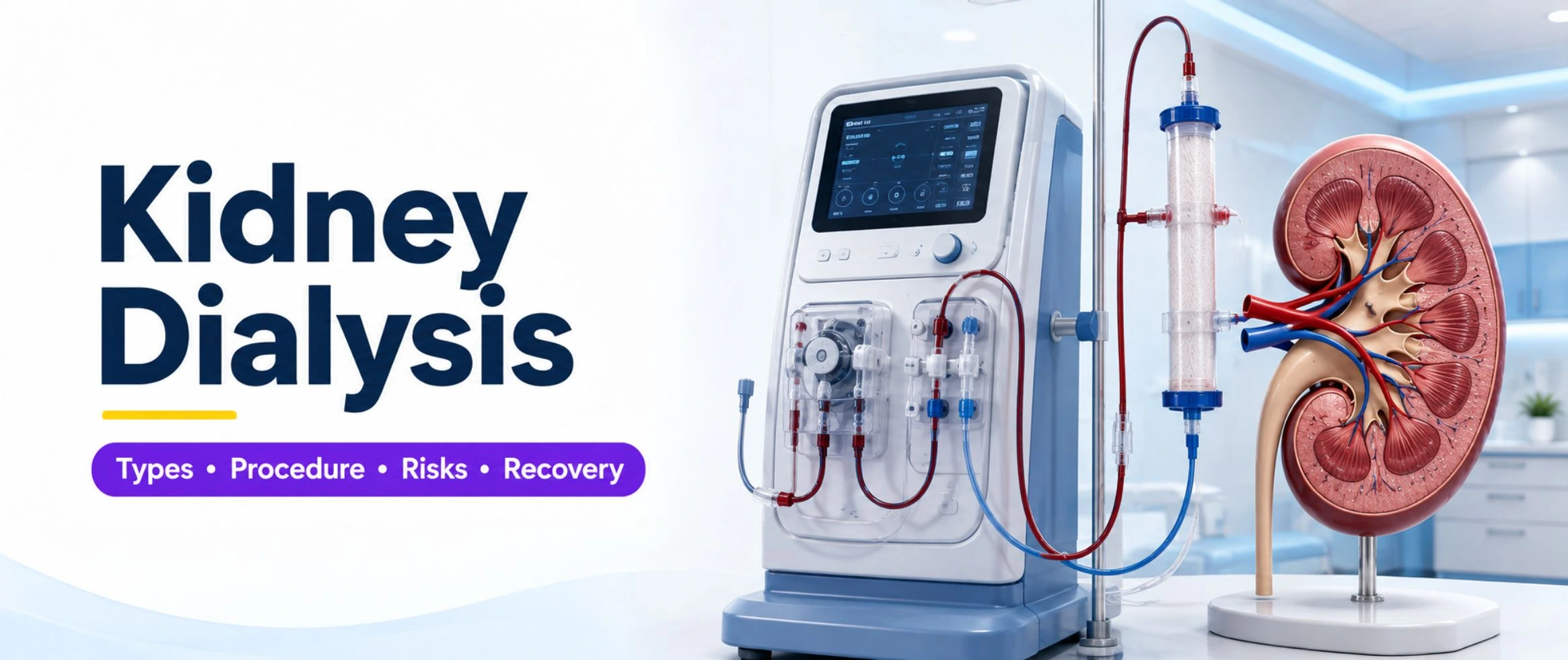
Hearing the word “dialysis” for the first time can feel overwhelming. Patients and families often have many questions at once. What is kidney dialysis? Is it painful? How long does it take? Can someone live a normal life while receiving dialysis?
These concerns are completely understandable.
Kidney dialysis is a medical treatment used when the kidneys can no longer remove enough waste, extra fluid, and certain chemicals from the blood. It does not completely replace everything healthy kidneys do, but it can perform an important part of their filtering work and help people with severe kidney failure feel better and live longer.
The type of dialysis, treatment schedule, and recovery experience can differ from one person to another. Understanding how dialysis works can make the treatment journey easier to manage.
To understand dialysis, it helps to first understand what the kidneys normally do.
Your kidneys continuously filter your blood. They help remove waste products and extra water through urine. They also help maintain the correct balance of important minerals and salts such as sodium and potassium.
When kidney function becomes severely reduced, waste and extra fluid can begin building up in the body.
Kidney dialysis is a treatment that removes some of these wastes and excess fluids when the kidneys are no longer able to do so adequately.
According to the National Institute of Diabetes and Digestive and Kidney Diseases (NIDDK), kidney failure generally means that kidney function has fallen below about 15% of normal. Treatment options may then include dialysis, kidney transplantation, or conservative management, depending on the patient's health and preferences.
Dialysis does not cure chronic kidney failure or restore permanently damaged kidneys. Instead, it takes over part of their filtering role.
Kidney dialysis may become necessary when severe kidney disease makes it difficult for the body to safely remove waste and extra fluid.
Doctors do not decide to begin dialysis based on a single laboratory result alone. They look at kidney function, symptoms, fluid levels, electrolyte abnormalities, overall health, and whether complications can still be controlled with medicines and diet.
A person with advanced kidney failure may develop problems such as:
NIDDK notes that many people begin dialysis when their glomerular filtration rate is around 5–10, although the timing varies according to symptoms and clinical circumstances.
This is why regular medical assessment is important for people living with advanced chronic kidney disease.
There are two major types of kidney dialysis:
Within these two categories, treatment can be adapted in different ways.
1. Hemodialysis
Hemodialysis is the type of dialysis many people picture when they hear the word “dialysis.”
During hemodialysis, blood leaves the body through a special access point and passes through a machine containing a filter known as a dialyzer. The dialyzer removes waste products and excess fluid, after which the filtered blood returns to the body.
Hemodialysis can be performed:
In-centre hemodialysis is commonly performed about three times per week, although the exact frequency and duration are prescribed individually. A typical centre-based session may last around four hours.
Home hemodialysis schedules may be shorter and more frequent or may sometimes be performed overnight.
2. Peritoneal Dialysis
Peritoneal dialysis works differently.
Instead of filtering blood through an external machine, it uses the natural lining inside your abdomen, known as the peritoneum, as a filtering surface.
A soft catheter is surgically placed into the abdomen. Dialysis solution flows through this catheter into the abdominal cavity. Waste and extra fluid gradually move from the blood into the solution.
After several hours, the used solution is drained and replaced with fresh dialysis solution. This is called an exchange.
Peritoneal dialysis can often be done at home, work, or another clean environment after proper training.
There are two common forms.
Continuous Ambulatory Peritoneal Dialysis or CAPD
CAPD does not require a machine.
The patient manually drains and replaces dialysis fluid several times during the day. NIDDK notes that an exchange typically takes around 30–40 minutes, with many people performing about four exchanges a day.
Automated Peritoneal Dialysis or APD
Automated peritoneal dialysis uses a machine called a cycler.
The cycler automatically fills and drains the abdomen several times, usually while the patient sleeps.
For some people, this approach can make daytime activities easier to manage.
Neither option is automatically best for everyone.
Your nephrologist considers your medical condition, lifestyle, support system, blood vessels, abdominal health, treatment preferences, and other factors before recommending a method.
The National Kidney Foundation also emphasizes that medical and lifestyle factors influence which dialysis option is suitable, and patients may sometimes change dialysis methods later if needed.
People preparing for their first session often want to know exactly what the kidney dialysis process involves.
Here is a simplified step-by-step explanation.
Step 1: Creating Dialysis Access
Before long-term hemodialysis begins, doctors usually create a safe pathway through which blood can move from the body to the dialysis machine and back again.
Common forms of access include:
AV fistula: A surgeon connects an artery and vein, usually in the arm.
AV graft: A synthetic tube connects an artery and vein.
Central venous catheter: A catheter is placed in a large vein, often when dialysis must begin quickly or another access is not ready.
For long-term treatment, an AV fistula is commonly preferred because it generally has lower infection and clotting risks than some other access methods.
Step 2: Checking the Patient
Before treatment, the healthcare team may check:
Weight helps the team estimate how much excess fluid may need to be removed.
Step 3: Connecting to the Dialysis Machine
Needles are placed into the vascular access in patients using a fistula or graft.
One line carries blood toward the dialyzer, while another returns filtered blood to the body.
Step 4: Filtering the Blood
Blood flows through the dialyzer.
Inside it are very thin hollow fibres. Dialysis fluid moves around these fibres in the opposite direction. Waste products and excess water move out of the blood and into the dialysis solution.
The cleaned blood then returns to the patient.
Step 5: Monitoring Throughout Treatment
The dialysis team monitors important factors including:
Step 6: Completing the Session
After the prescribed dialysis time is completed, the needles are removed and the access points are covered.
The patient's weight and blood pressure may be checked again before leaving.
The kidney dialysis process for peritoneal dialysis is different.
A typical exchange involves three basic stages:
Drain
Used dialysis fluid containing accumulated waste and extra water drains from the abdomen.
Fill
Fresh dialysis solution enters through the abdominal catheter.
Dwell
The solution remains inside the abdomen for a prescribed period while waste and excess fluid move into it.
The solution is then drained, and the cycle begins again.
Strict cleanliness is especially important because bacteria entering through the catheter can cause infection or peritonitis.
Dialysis itself should not normally be painful.
People undergoing hemodialysis may feel discomfort when dialysis needles are inserted. Some people also experience muscle cramps, headache, nausea, dizziness, or weakness during or after treatment.
Peritoneal dialysis generally should not cause significant pain. Some people notice a feeling of fullness or bloating while dialysis fluid is inside the abdomen.
New or severe pain should always be reported to the dialysis team.
Kidney dialysis can be life-sustaining, but complications are possible.
Low Blood Pressure
A fall in blood pressure is one of the more common problems during hemodialysis, especially when fluid is removed quickly.
It can cause:
Muscle Cramps
Changes in fluid volume and mineral levels may contribute to cramps during treatment.
Access Infection
The fistula, graft, or catheter can sometimes become infected.
Redness, swelling, drainage, fever, or chills should be reported quickly.
Blood Clots or Access Problems
Dialysis access may narrow or become blocked, which can reduce blood flow and interfere with treatment.
Bleeding
Blood-thinning medicines may be used during hemodialysis to prevent clotting inside the machine, which can increase bleeding from the access site.
Peritonitis
Peritonitis is an infection inside the abdomen and is one of the most important complications of peritoneal dialysis.
Warning signs can include:
These symptoms require prompt medical attention.
Catheter-Site Infection
The skin around the catheter may become infected.
Hernia
Having fluid repeatedly inside the abdomen increases pressure on the abdominal wall and may contribute to hernia formation.
Weight Gain
Some dialysis solutions contain glucose, and the body can absorb some of these calories.
There is no single fixed “recovery period” following dialysis because it is usually an ongoing treatment rather than a one-time procedure.
Many patients return to their normal daily routine after dialysis. Others may feel tired for several hours.
After hemodialysis, some people experience:
Good daily habits can make dialysis treatment easier to manage.
Follow Your Fluid Advice
When kidney function is severely reduced, extra fluid can accumulate between dialysis sessions.
Your doctor may recommend limiting liquids according to your individual condition.
Remember that fluid also comes from foods such as:
Fluid restrictions are not identical for every patient, so follow the amount recommended by your nephrologist or renal dietitian.
Limit Excess Salt
Too much sodium can increase thirst, fluid retention, swelling, and blood pressure.
Reduce heavily salted and highly processed foods unless advised otherwise.
Follow Your Personalised Kidney Diet
People receiving dialysis may need changes in their intake of:
However, dialysis diets vary.
For example, peritoneal dialysis can remove more protein than hemodialysis, so protein requirements may differ.
Never severely restrict foods without professional advice.
Protect Your Dialysis Access
If you have an AV fistula or graft:
Take Medicines as Prescribed
Patients with kidney failure may receive medicines to manage issues such as blood pressure, anaemia, phosphorus levels, or other complications.
Do not stop medicines on your own because you feel better after dialysis.
Dialysis patients require regular laboratory monitoring.
Tests may help doctors assess kidney function, dialysis effectiveness, electrolytes, anaemia, nutritional status, and mineral balance.
Depending on the patient's condition, testing may include:
Blood test results can also help doctors adjust the dialysis prescription. For example, NIDDK notes that dialysis solution may be modified when laboratory tests show abnormalities in minerals such as potassium or calcium.
People being investigated for kidney disease or those who require kidney-related monitoring may need tests recommended by their treating doctor.
Pathkind Labs offers kidney-related diagnostic options including a Kidney Profile, Kidney Profile (KFT), creatinine testing, Blood Urea Nitrogen, electrolytes, eGFR and other renal investigations. The Pathkind Kidney Profile includes tests such as serum creatinine, eGFR, electrolytes, urea-related markers, minerals, and urine testing.
Pathkind Labs also offers a standalone creatinine test, which can help assess kidney filtration when interpreted along with other clinical findings.
For someone undergoing dialysis, however, tests should be selected according to the nephrologist's treatment plan rather than being self-ordered as a substitute for clinical follow-up.
This depends on why dialysis was needed.
Acute Kidney Injury
Some people need temporary dialysis because their kidneys suddenly stop working due to severe illness, infection, dehydration, certain medicines, surgery, or another acute problem.
If kidney function improves sufficiently, dialysis may eventually be stopped under medical supervision.
Chronic Kidney Failure
When advanced chronic kidney disease causes permanent kidney failure, dialysis is usually a long-term treatment unless the person receives a successful kidney transplant.
Importantly, dialysis itself does not repair damaged kidneys. It replaces only part of the work that healthy kidneys would normally perform.
Life certainly changes after dialysis begins, but many people continue to:
People using home dialysis may sometimes have more flexibility in scheduling.
The key is to develop a routine around treatment sessions, medicines, diet, tests, and medical appointments.
Patients should also tell their healthcare team about sleep problems, anxiety, low mood, or difficulty coping. Emotional wellbeing is an important part of long-term kidney care.
Contact your dialysis team promptly if you notice symptoms such as:
Kidney dialysis can sound frightening when patients first hear that they may need it, but understanding the treatment makes the situation easier to navigate.
The two main types of kidney dialysis are hemodialysis and peritoneal dialysis. Hemodialysis cleans the blood through an external filter, while peritoneal dialysis uses the lining of the abdomen to remove waste and extra fluid.
Although dialysis cannot fully replace healthy kidney function or cure permanent kidney failure, it can perform essential filtering work, reduce symptoms, manage dangerous fluid and mineral imbalances, and help people with kidney failure continue their daily lives.
Regular medical appointments, laboratory monitoring, proper nutrition, access care, and following the dialysis schedule are essential parts of successful treatment.
If kidney disease is suspected or your doctor recommends renal monitoring, tests such as creatinine, eGFR, urea, electrolytes, urine analysis, and a Kidney Function Test can provide valuable information about kidney health. Pathkind Labs offers kidney-related testing options, including Kidney Profile and creatinine testing, which should be interpreted alongside medical advice.
Medical Disclaimer: This article is for general educational purposes only. Dialysis type, timing, diet, medicines, and testing should always be decided in consultation with a nephrologist or qualified healthcare professional.
Discover precision diagnostics with Pathkind Labs, a trusted name in diagnostic services in India. Our NABL accredited labs, equipped with advanced technology, are staffed by a certified team of over 200+ senior pathologists and 2000+ technicians. From tailored health check-ups to specialized tests in Oncology, Neurology, Gynaecology, Nephrology, and more, we've got your health covered. Skip the hassle with online booking for tests or check-ups, available for both lab visits and at-home blood collection. For a seamless experience and early detection, choose Pathkind Labs in Gurugram. Book your appointment today and experience diagnostics made easy.
© 2026 Pathkind Diagnostics Pvt. Ltd. All Rights Reserved | Unsubscribe











 Track Sample
 Upload Prescription