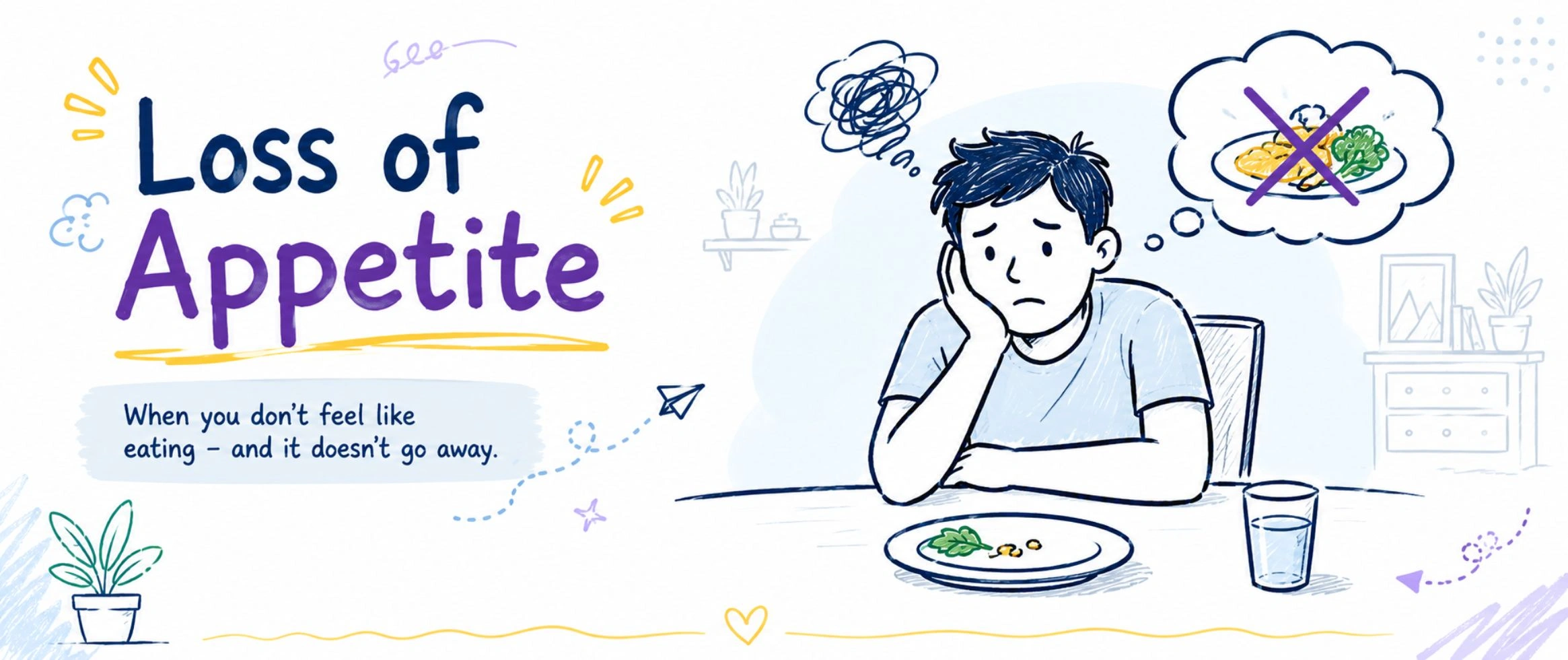
Have you ever looked at your favourite meal and realised you simply do not want to eat? A missed meal after a busy day may not be a concern. But when you have little interest in food for several days, feel full after only a few bites, or start losing weight without trying, it deserves attention.
Loss of appetite is a symptom, not a disease by itself. It can happen after a short-term infection, during a stressful period, because of a medicine, or due to an underlying health problem. In many cases, the appetite improves when the cause is treated. However, ongoing appetite loss can reduce your intake of calories, protein, vitamins, and fluids. Over time, this may lead to weakness, dehydration, malnutrition, and unplanned weight loss.
This guide explains the common loss of appetite causes, associated symptoms, diagnosis, treatment options, and signs that mean you should seek medical care.
Loss of appetite means having less desire to eat than usual. You may not feel hungry, may stop enjoying food, or may feel full very quickly. The medical term for a reduced appetite is anorexia. This is not the same as anorexia nervosa, which is an eating disorder involving restricted food intake and concerns about body weight or shape.
Appetite can change suddenly or gradually. Some people eat smaller portions but continue to drink normally. Others also experience nausea, vomiting, pain, or difficulty swallowing. The pattern matters because it helps a healthcare professional understand the possible cause.
The most obvious sign is eating less than usual. Other symptoms can appear at the same time, depending on the reason for the appetite change.
Common symptoms include:
There is no single reason for loss of appetite. The cause may be temporary, physical, emotional, medication-related, or linked to a long-term condition.
1. Short-term infections and illness
Colds, flu, fever, sore throat, food poisoning, and other infections can reduce appetite. Fever and tiredness may make eating feel unimportant. A blocked nose or infection can also change your sense of smell and taste, making food less appealing.
Stomach infections may cause nausea, vomiting, abdominal cramps, or diarrhoea along with poor appetite. Appetite commonly returns as the infection settles, but fluids remain important during recovery.
2. Digestive problems and physical discomfort
Digestive symptoms can make eating uncomfortable. Indigestion, acid reflux, constipation, diarrhoea, gastritis, bloating, and abdominal pain are possible reasons for loss of appetite. Mouth ulcers, tooth pain, gum disease, ill-fitting dentures, or a dry mouth can also make chewing and swallowing difficult.
Some people lose their appetite after surgery or an injury. Dehydration itself may also reduce the desire to eat. Problems with swallowing should not be ignored, especially if food feels stuck, you cough while eating, or you are losing weight.
3. Stress, anxiety, grief, and depression
Emotional health and appetite are closely connected. Work pressure, family worries, financial stress, grief, fear, or a major life change can make food seem unimportant. Anxiety may cause a tight feeling in the stomach or nausea. Depression can reduce both appetite and interest in activities that once felt enjoyable.
This does not mean the symptoms are “only in your head.” Mental health can create real physical changes in sleep, digestion, energy, and hunger. If low mood continues for two weeks or more, or you feel hopeless or unsafe, speak with a healthcare professional promptly.
Eating disorders can also affect food intake. A person may avoid food because of fear of weight gain, body-image concerns, distress about eating, or strong aversions to certain textures. Compassionate professional support is important.
4. Medicines and other substances
Some medicines can cause nausea, dry mouth, altered taste, constipation, or a direct reduction in appetite. Examples include some antibiotics, opioid pain medicines, chemotherapy medicines, and other prescription drugs. Supplements and recreational substances may also affect appetite.
If your appetite changed soon after starting a medicine or changing its dose, tell the prescribing doctor or pharmacist. Do not stop a prescribed medicine on your own. The healthcare professional may adjust the dose, change the timing, or recommend another option if appropriate.
5. Long-term health conditions
Several health conditions can cause appetite loss, sometimes along with weight change, tiredness, or other symptoms. These may include diabetes, thyroid disorders, chronic liver or kidney disease, heart failure, lung disease, dementia, chronic infections, and some cancers. Digestive conditions that affect nutrient absorption can also lead to reduced appetite or weight loss.
The presence of appetite loss does not mean a person has a serious disease. It simply means the symptom should be considered with the full health picture. A doctor may use the duration of symptoms, physical examination, medical history, and targeted tests to find the cause.
6. Pregnancy and ageing
Some people experience appetite changes during early pregnancy, particularly when nausea, vomiting, or food aversions are present. A pregnant person who cannot keep fluids down, is losing weight, or is unable to meet nutritional needs should contact their obstetrician or doctor.
Reduced appetite is also more common in older adults. Changes in taste and smell, dental problems, medicines, loneliness, difficulty shopping or cooking, and chronic illness may all play a part. Family members should look for smaller meals, loose clothing, tiredness, and reduced fluid intake rather than assuming it is a normal part of ageing.
There is no single “loss of appetite test.” Diagnosis starts with understanding what changed and when it began. Your doctor may ask:
The examination may include checking your weight, hydration, mouth and teeth, abdomen, pulse, and other signs related to the suspected cause. Depending on your symptoms, your doctor may advise blood tests, urine tests, stool tests, or imaging.
Common investigations may include a complete blood count, blood glucose or HbA1c, liver and kidney function tests, thyroid tests, and other tests selected for your symptoms. For example, thyroid evaluation may include TSH and, when needed, T4 or T3 tests.
Loss of appetite treatment depends on the underlying cause. Treating the symptom alone is not enough if an infection, medicine side effect, digestive problem, or mental health condition is responsible.
Treatment may include:
Appetite-stimulating medicines are not suitable for everyone and should not be self-prescribed. In severe malnutrition or dehydration, hospital-based treatment may be needed.
Large meals can feel overwhelming when you do not feel hungry. Try “little and often” instead. Eat a small meal or snack every two to three hours, and choose foods that provide protein and energy in a manageable portion.
Practical options may include:
Keep water, soups, or oral rehydration fluids available, especially after vomiting or diarrhoea. If you have diabetes, kidney disease, heart failure, food allergies, or another condition requiring a special diet, ask your doctor or dietitian before increasing salt, sugar, protein, or fluids.
Gentle movement, fresh air, and eating with family may help some people. Keep a simple 24-hour record of food and fluids. This helps you and your doctor see whether the problem is improving and whether you may need extra nutritional support.
Not every cause can be prevented, but a few habits can lower the risk of complications:
Loss of appetite may be a short-lived response to illness or stress, but persistent appetite loss should not be dismissed. Pay attention to changes in weight, hydration, mood, digestion, and energy. A timely medical evaluation can identify treatable causes and reduce the risk of malnutrition. Until you receive advice, focus on small nourishing meals, regular fluids, and gentle support from family or friends. If warning signs appear, seek medical care promptly.
Medical disclaimer: This article is for general health education and does not replace an examination, diagnosis, or treatment plan from a qualified healthcare professional.
Discover precision diagnostics with Pathkind Labs, a trusted name in diagnostic services in India. Our NABL accredited labs, equipped with advanced technology, are staffed by a certified team of over 200+ senior pathologists and 2000+ technicians. From tailored health check-ups to specialized tests in Oncology, Neurology, Gynaecology, Nephrology, and more, we've got your health covered. Skip the hassle with online booking for tests or check-ups, available for both lab visits and at-home blood collection. For a seamless experience and early detection, choose Pathkind Labs in Gurugram. Book your appointment today and experience diagnostics made easy.
© 2026 Pathkind Diagnostics Pvt. Ltd. All Rights Reserved | Unsubscribe











 Track Sample
 Upload Prescription