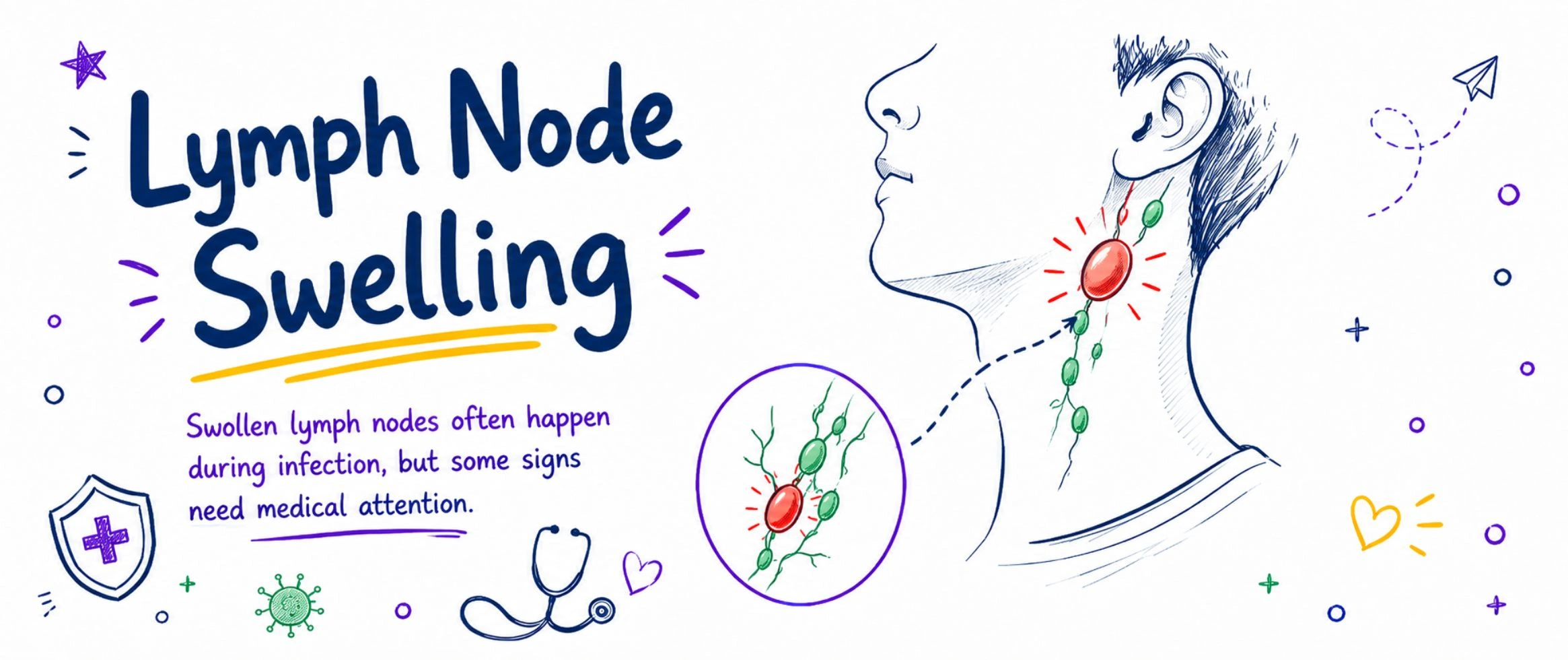
Have you ever felt a small, tender lump in your neck after a cold, sore throat or dental problem? In many cases, this is lymph node swelling. It may feel worrying, especially when the lump appears suddenly. However, swollen lymph nodes are often a normal sign that your immune system is responding to an infection.
At the same time, lymph node swelling that continues to grow, feels hard or appears without an obvious infection should not be ignored. The cause may be simple, such as a throat infection, or may require further medical evaluation.
This article explains the common causes of lymph node swelling, symptoms to watch for, when gland swelling in the neck needs medical attention, available tests and treatment options.
Lymph nodes are small, bean-shaped structures that form part of the lymphatic system. They are found in several areas of the body, including the neck, under the chin, behind the ears, armpits, chest, abdomen and groin.
These nodes filter lymph fluid and contain white blood cells that help the body fight infections. When the immune system detects germs, the nearby lymph nodes may become larger and tender. This is known as lymph node swelling or lymphadenopathy.
The terms “swollen glands,” “lymph gland swelling” and “gland swelling in neck” are commonly used to describe this condition. However, not every lump in the neck is a lymph node. A thyroid lump, salivary gland problem, cyst or another type of swelling may feel similar. This is why a healthcare professional should examine any unexplained or persistent lump.
1. Common infections
Infections are the most frequent cause of lymph node swelling. A node may become enlarged near the part of the body affected by the infection.
For example, an infection in the throat may cause lymph node swelling in the neck. A dental infection may cause swelling under the jaw. Similarly, a skin infection on the arm may cause enlarged lymph nodes in the armpit.
2. Tuberculosis
Tuberculosis, or TB, can sometimes affect the lymph nodes instead of, or along with, the lungs. This is called lymph node or extrapulmonary TB.
TB-related lymph node swelling may develop gradually. The lump may not always be painful. Some people may also have fever, night sweats, loss of appetite, unexplained weight loss or tiredness.
3. Autoimmune and inflammatory conditions
Sometimes, the immune system becomes overactive and attacks the body’s own tissues. Conditions such as rheumatoid arthritis and other inflammatory disorders may be associated with lymph node swelling.
In these cases, swollen lymph nodes may occur along with symptoms such as joint pain, prolonged tiredness, skin rashes or repeated episodes of inflammation. Treatment focuses on controlling the underlying condition.
4. Certain medicines or immune reactions
Some medicines can rarely cause enlarged lymph nodes. An immune reaction after certain immunisations may also cause temporary swelling near the area where the immune response is active.
If swelling begins after starting a new medicine or receiving an injection, inform your doctor. Do not stop a prescribed medicine without medical advice.
5. Cancer
Less commonly, lymph node swelling may be linked to cancers such as lymphoma, leukaemia or cancer that has spread from a nearby organ.
Lymphoma may cause a painless lump in the neck, armpit or groin. Other possible symptoms include persistent fever, drenching night sweats, unexplained weight loss, itching and unusual tiredness.
Having swollen lymph nodes does not mean that you have cancer. Infections are much more common. Still, a painless swelling that continues to increase in size or is not linked to an obvious infection should be evaluated.
The symptoms can vary depending on the cause and the location of the affected node.
Common symptoms include:
When lymph node swelling is caused by a nearby infection, the related symptoms are often easier to identify. For example, a sore throat with tender neck nodes may suggest a throat infection, while swelling under the jaw with tooth pain may point towards a dental problem.
Some people may have enlarged lymph nodes in more than one area. Generalised swelling can occur with certain viral infections, immune disorders or other medical conditions and should be assessed by a doctor.
Most infection-related swollen glands improve as the infection settles. The NHS states that swollen glands caused by infection often improve within one to two weeks. However, the lymph node itself may take longer to return completely to its usual size.
Arrange a medical appointment if:
A painful node is often linked to infection, but pain alone cannot confirm the cause. Similarly, a painless node is not automatically cancer. The pattern, duration, size, texture and other symptoms all matter.
Seek urgent medical care if you have difficulty breathing or swallowing
A very swollen lymph node or infection in the neck can sometimes affect the throat or airway. Seek urgent medical help if you have serious difficulty breathing, difficulty swallowing, drooling, rapidly increasing neck swelling or severe weakness.
A doctor will usually begin by asking:
During the examination, the doctor may check the size, softness, tenderness and movement of the lymph node. They may also examine your throat, ears, mouth, teeth and skin.
Depending on the findings, recommended tests may include:
Complete Blood Count
A Complete Blood Count, or CBC, checks red blood cells, white blood cells and platelets. It may provide clues about infection, inflammation, anaemia or some blood-related disorders. A CBC cannot identify every cause of lymph node swelling by itself.
CRP or ESR
C-reactive protein and erythrocyte sedimentation rate tests can indicate inflammation in the body. These tests may support the medical evaluation, but they cannot identify the exact reason for the swelling.
Infection-specific tests
A doctor may recommend a throat swab, viral tests, HIV testing, TB-related testing or other investigations when clinically appropriate. The right test depends on symptoms and risk factors.
Ultrasound scan
An ultrasound may help assess the size and appearance of a superficial lymph node, particularly in the neck. It can also help distinguish some lymph nodes from other types of lumps.
FNAC or biopsy
Fine Needle Aspiration Cytology, commonly called FNAC, uses a thin needle to collect cells or fluid from a lump. A biopsy may remove part or all of a lymph node for examination under a microscope.
Depending on the doctor’s recommendation, Pathkind Labs can support investigations such as CBC, CRP, ESR, FNAC and other laboratory tests. Patients can explore the Complete Blood Count test, Quantitative CRP test, CBC plus ESR package or FNAC testing, where available.
Pathkind Labs also provides digital reports and home sample collection for eligible services and locations. Test selection should be based on a doctor’s assessment rather than symptoms alone. A laboratory report should always be interpreted along with the clinical examination.
Treatment depends on the underlying cause.
Viral infections
Viral infections usually improve with time. Rest, adequate fluids and appropriate fever or pain relief may help. Antibiotics do not treat viral infections.
Bacterial infections
A bacterial throat, ear, dental or skin infection may require antibiotics prescribed by a doctor. Take the medicine exactly as advised and complete the course unless your doctor changes the plan.
If an abscess has formed, drainage may be needed. Redness, increasing pain, warmth, pus or rapidly worsening swelling should be medically assessed.
Dental or skin-related causes
When lymph node swelling is linked to a dental infection, gum problem or skin infection, treating the original problem is important. The lymph node may gradually reduce after the source of infection is controlled.
Tuberculosis
TB-related lymph node swelling requires a complete, doctor-supervised treatment plan. Do not stop treatment early, even if the swelling begins to improve.
Autoimmune conditions
If an autoimmune or inflammatory condition is responsible, a specialist may recommend medicines to control inflammation and prevent repeated symptoms.
Cancer-related causes
If tests identify lymphoma or another cancer, treatment may involve a haematologist, oncologist or other specialist. Treatment depends on the type, stage and overall health of the person.
If the swelling is mild and linked to a recent cold or throat infection, you may:
Children, pregnant people, older adults and individuals with kidney disease, stomach ulcers, liver disease or other long-term conditions should seek advice before taking pain medicines.
Avoid self-prescribing antibiotics, steroids or leftover medicines. Incorrect treatment may cause side effects and delay the correct diagnosis.
Not every cause can be prevented, but several habits may lower the risk of infections:
If you regularly experience lymph gland swelling, keep a note of when it appears, how long it lasts and any related symptoms. This information can help your doctor identify a pattern.
Lymph node swelling is often the body’s temporary response to an infection. Tender swelling after a cold, sore throat or dental problem commonly improves as the underlying illness settles. However, a lump that grows, feels hard or fixed, remains for several weeks or occurs with night sweats, unexplained weight loss or persistent fever should be evaluated.
The safest approach is to avoid guessing the cause. A doctor can examine the swelling and recommend focused tests such as CBC, CRP, ESR, ultrasound, FNAC or biopsy when necessary. Early evaluation provides clarity and helps ensure that the right treatment begins at the right time.
Medical disclaimer: This article is for general education and does not replace consultation with a qualified healthcare professional. Do not self-diagnose or start prescription medicines without medical advice.
Discover precision diagnostics with Pathkind Labs, a trusted name in diagnostic services in India. Our NABL accredited labs, equipped with advanced technology, are staffed by a certified team of over 200+ senior pathologists and 2000+ technicians. From tailored health check-ups to specialized tests in Oncology, Neurology, Gynaecology, Nephrology, and more, we've got your health covered. Skip the hassle with online booking for tests or check-ups, available for both lab visits and at-home blood collection. For a seamless experience and early detection, choose Pathkind Labs in Gurugram. Book your appointment today and experience diagnostics made easy.
© 2026 Pathkind Diagnostics Pvt. Ltd. All Rights Reserved | Unsubscribe











 Track Sample
 Upload Prescription