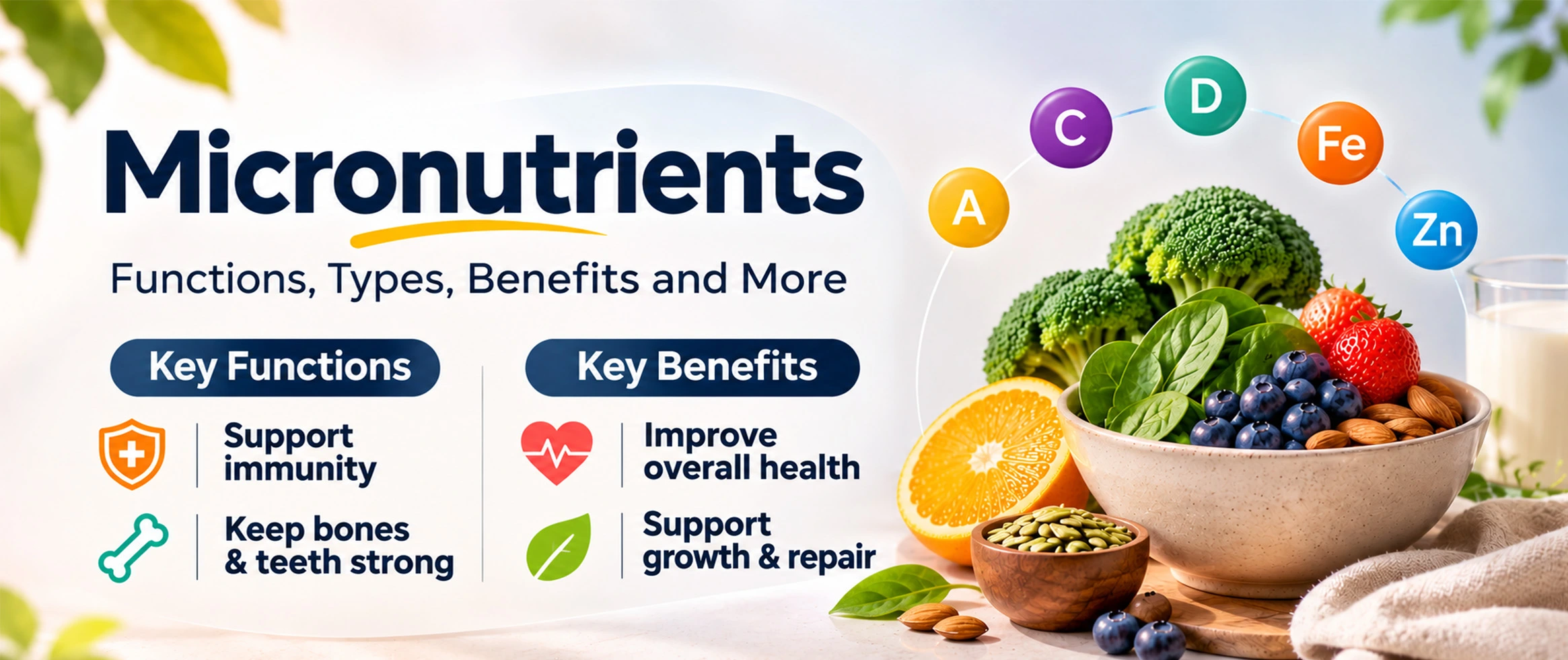
We tend to focus on how much we eat, such as calories, protein and carbs. But the vitamins and minerals in that food matter just as much. You need them in tiny amounts, yet your body can't work properly without them.
In short: Micronutrients are vitamins and minerals your body needs in small quantities for energy metabolism, immunity, growth, bone health and more. There are 13 essential vitamins and around 16 essential minerals, roughly 30 in total.
Micronutrients are the vitamins and minerals that keep your body running smoothly. The World Health Organization (WHO) describes them as nutrients needed in very small amounts.
They don't give you energy the way carbohydrates, proteins and fats (macronutrients) do. Instead, they help your body use that energy, build tissue, fight infections and produce hormones and enzymes.
Your body can't make most of them. The main exception is vitamin D, which your skin produces with sunlight. The rest must come from food, and sometimes from supplements.
Sources count slightly differently, but this is the most common breakdown:
Some researchers argue more minerals deserve a place on the list, so you may see slightly different numbers elsewhere.
Micronutrients fall into four groups.
One practical difference: Water-soluble vitamins aren't stored much, so the body flushes out the extra in urine and you need them regularly. Fat-soluble vitamins are stored in body fat and the liver, so very high supplement doses can build up over time.
Even small amounts do a lot. Here is what a balanced intake supports:
Deficiency often develops slowly, and the early signs are easy to blame on stress or a busy routine. Common ones include:
These symptoms overlap with many other conditions, so you can't confirm a deficiency just by looking at them. A blood test is the reliable way to find out.
Who is more at risk?
Yes. Deficiency is more common than excess, but high-dose supplements can cause problems. Too much vitamin A, vitamin D or iron, for example, can be harmful. More is not always better, so it's wise to take supplements only when you need them and at the dose your doctor recommends.
For most healthy people, food comes first:
Consider a check-up if you have ongoing symptoms, a restricted diet, a pregnancy or planned pregnancy, or a medical condition that affects nutrient absorption. Tests that doctors commonly advise include vitamin D, vitamin B12, iron studies, calcium and a complete blood count (CBC). Your doctor can tell you which ones are right for you.
Micronutrients are needed in small amounts but play a big role in how you feel every day. Eating a varied diet is the best foundation, and a simple blood test can show if something is missing. If you are unsure, speak to your doctor before starting any supplement.
Book a nutrient or vitamin profile test with Pathkind Labs and get a clear picture of your health from the comfort of home.
Medical disclaimer: This article is for general information and does not replace professional medical advice, diagnosis or treatment. Please consult a qualified doctor before making changes to your diet or starting supplements.
Discover precision diagnostics with Pathkind Labs, a trusted name in diagnostic services in India. Our NABL accredited labs, equipped with advanced technology, are staffed by a certified team of over 200+ senior pathologists and 2000+ technicians. From tailored health check-ups to specialized tests in Oncology, Neurology, Gynaecology, Nephrology, and more, we've got your health covered. Skip the hassle with online booking for tests or check-ups, available for both lab visits and at-home blood collection. For a seamless experience and early detection, choose Pathkind Labs in Gurugram. Book your appointment today and experience diagnostics made easy.
© 2026 Pathkind Diagnostics Pvt. Ltd. All Rights Reserved | Unsubscribe











 Track Sample
 Upload Prescription