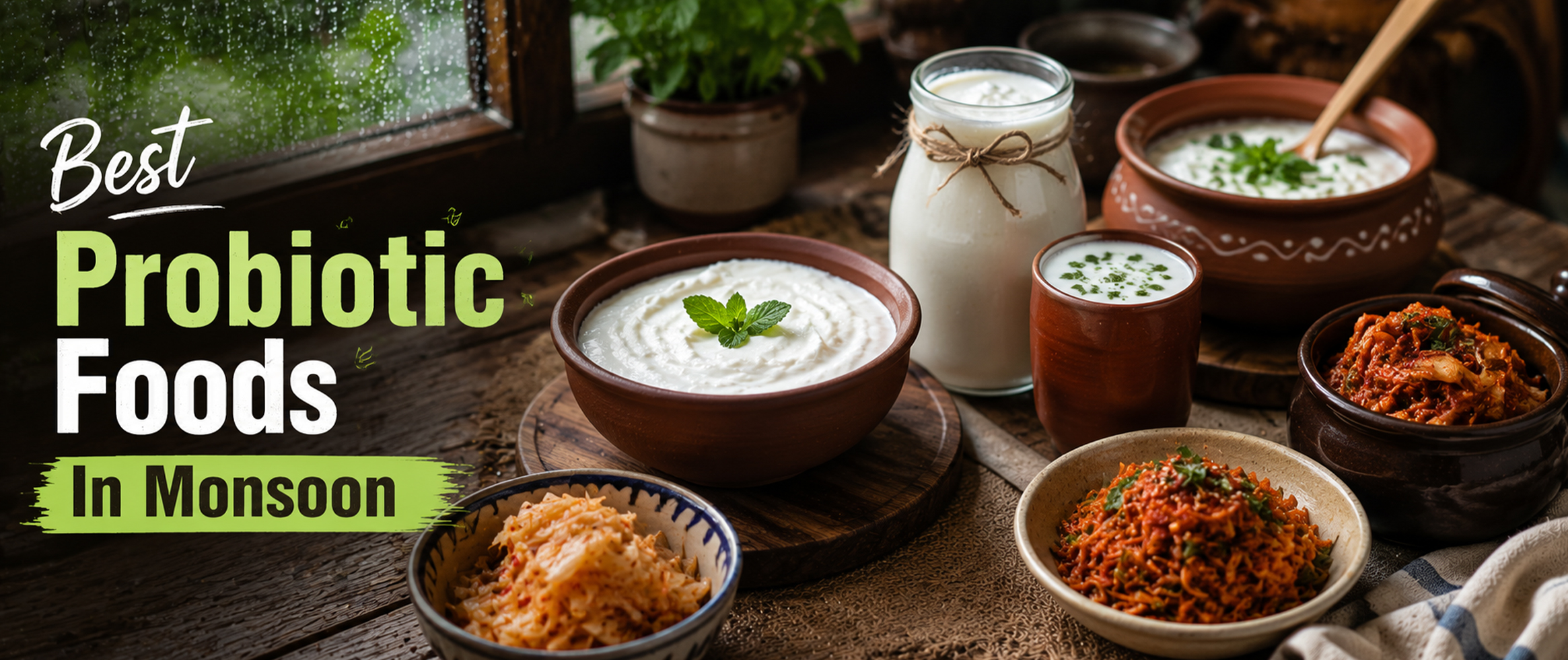
The rainy season is often associated with digestive issues such as bloating, indigestion, stomach infections, and diarrhoea. Increased humidity and a higher risk of food contamination can affect gut health, making it important to pay extra attention to your diet during this time.
One way to support digestive wellness is by including probiotic foods in your meals. Probiotics are beneficial microorganisms that help maintain a healthy balance of bacteria in the gut. Along with a balanced diet and good food hygiene, probiotic-rich foods can help support digestive health and overall well-being.
In this blog, we'll explore the best probiotic foods, how a probiotics diet supports gut health, and practical tips for consuming probiotics safely during the monsoon.
Probiotics are live microorganisms, mainly beneficial bacteria and some yeasts, that naturally live in the digestive tract. They help maintain the balance of gut bacteria, which is important for digestion, nutrient absorption, and immune function.
Many fermented foods naturally contain probiotics and can be included in everyday meals.
Digestive problems tend to become more common during monsoon due to changes in weather, food contamination, and unhealthy eating habits.
Including probiotics for digestive health may help:
While probiotics can support digestive wellness, they are not a treatment for infections or digestive diseases.
1. Curd (Dahi)
Curd is one of the most commonly consumed probiotic foods in India.
Benefits
Choose freshly prepared curd and store it properly in the refrigerator.
2. Yogurt
Plain yogurt with live cultures is another excellent source of probiotics.
It may help:
Avoid flavoured yogurts that contain added sugar.
3. Buttermilk (Chaas)
Fresh buttermilk is light, refreshing, and easy to digest.
Benefits
Prepare it fresh using curd, water, and mild spices like roasted cumin.
4. Fermented Idli and Dosa Batter
Traditional fermented batters used for idli and dosa naturally contain beneficial microorganisms before cooking.
These foods are:
Freshly prepared batter is always the best choice.
5. Kefir
Kefir is a fermented milk drink that contains a wide variety of beneficial bacteria and yeast.
It provides:
Although not as commonly consumed as curd in India, kefir is becoming increasingly popular.
6. Sauerkraut
Sauerkraut is fermented cabbage that naturally contains probiotics when unpasteurised.
It also provides:
Consume it in small quantities as a side dish.
7. Kimchi
Kimchi is a traditional Korean fermented vegetable dish.
It contains:
Choose fresh, hygienically prepared products and consume them in moderation.
Following a simple probiotics diet doesn't require major changes.
You can:
Eating a variety of probiotic foods may support a diverse gut microbiome.
Many people wonder whether food or supplements are a better choice.
For most healthy individuals, probiotic-rich foods are a good way to support digestive health.
To help beneficial gut bacteria thrive, combine probiotics with fibre-rich foods, often called prebiotics.
Good combinations include:
This combination supports a healthier digestive environment.
Food safety is especially important during the rainy season.
Keep these tips in mind:
Safe food handling helps reduce the risk of foodborne illnesses.
Although probiotic foods are safe for most people, extra caution may be needed if you:
If you have an underlying medical condition, consult your healthcare provider before making significant dietary changes.
Adding probiotic foods to your daily meals is a simple way to support digestive wellness during the rainy season. Foods such as curd, yogurt, buttermilk, and fermented dishes provide beneficial bacteria that help maintain a healthy gut.
A balanced probiotics diet, combined with good hygiene, fresh home-cooked meals, and adequate hydration, can help you enjoy better digestive health throughout the monsoon.
Discover precision diagnostics with Pathkind Labs, a trusted name in diagnostic services in India. Our NABL accredited labs, equipped with advanced technology, are staffed by a certified team of over 200+ senior pathologists and 2000+ technicians. From tailored health check-ups to specialized tests in Oncology, Neurology, Gynaecology, Nephrology, and more, we've got your health covered. Skip the hassle with online booking for tests or check-ups, available for both lab visits and at-home blood collection. For a seamless experience and early detection, choose Pathkind Labs in Gurugram. Book your appointment today and experience diagnostics made easy.
© 2026 Pathkind Diagnostics Pvt. Ltd. All Rights Reserved | Unsubscribe











 Track Sample
 Upload Prescription