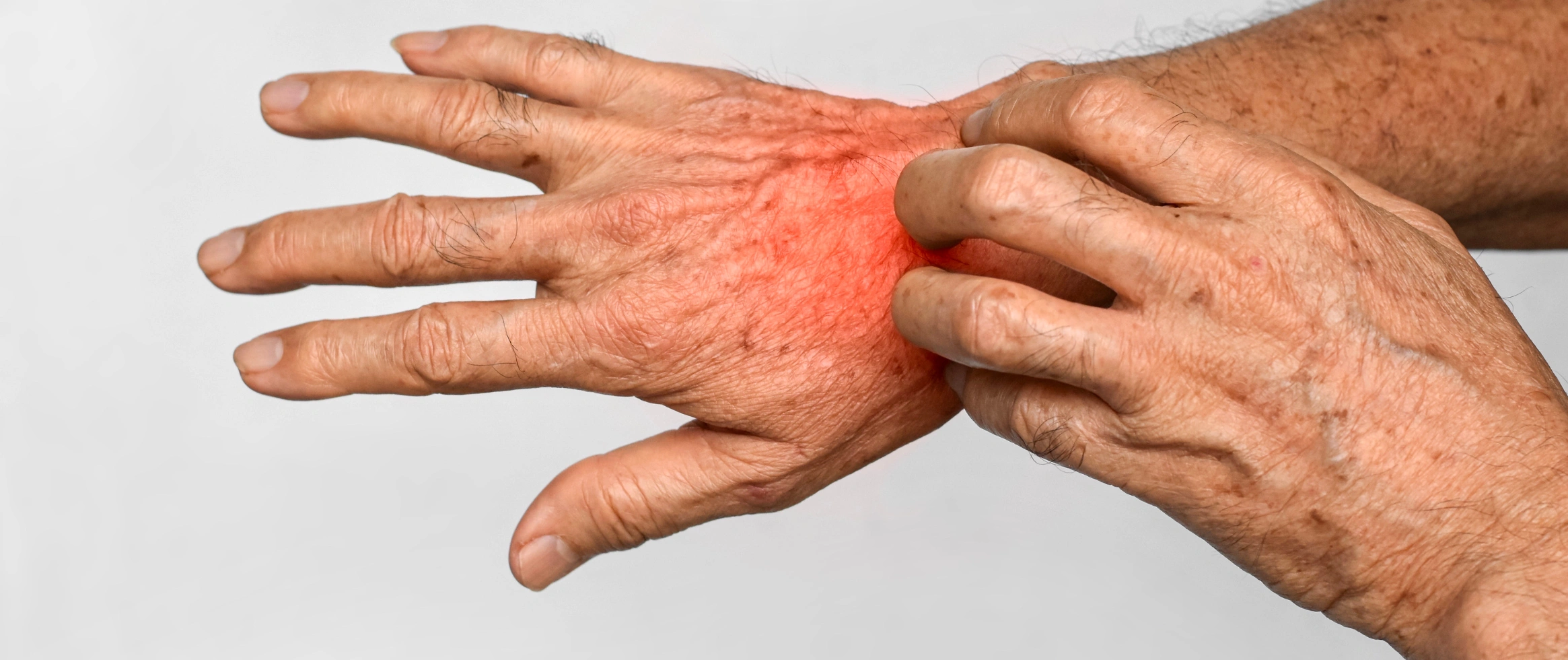
Imagine an unbearable itch that gets worse at night, followed by tiny red bumps or burrowlike lines on your skin that’s what living with scabies feels like. Though it’s often mistaken for an allergy or eczema, scabies is actually caused by tiny mites that burrow under your skin. The good news? It’s completely treatable with timely medical care and hygiene precautions.
Let’s explore what scabies is, how to recognize it early, the best treatment options, and ways to prevent it from spreading.
Scabies is a contagious skin infestation caused by the mite Sarcoptes scabiei. These microscopic parasites burrow into the top layer of your skin to lay eggs, triggering intense itching and rash like bumps.
It spreads primarily through direct skin-to-skin contact, which is why it’s common in families, schools, and nursing homes where close contact happens frequently.
Wondering how to identify scabies at home? Here’s what to look for:
- Intense Itching: Especially worse at night.
- Tiny Red Bumps or Blisters: Often arranged in a line or cluster.
- Burrow Tracks: Thin, wavy, grayish-white lines on the skin a hallmark sign.
- Common Areas Affected:
In infants and young children, scabies can appear on the palms, soles, or scalp, which adults rarely experience.
If you notice a rash that spreads and itches intensely at night, consult a dermatologist immediately. A simple skin scraping test can confirm the presence of mites or eggs.
Recognizing scabies symptoms early can prevent severe outbreaks. Symptoms usually appear 26 weeks after exposure but may show up sooner if you’ve had scabies before.
Common Scabies Symptoms:
If multiple family members develop similar itchy rashes, it’s highly likely to be scabies not an allergy.
There are a few types of scabies, depending on the severity and host immune response:
1. Classic Scabies
The most common type, involving around 1015 mites on the body. It causes itching and rash in specific areas like wrists, waist, or groin.
2. Crusted (Norwegian) Scabies
A severe form affecting people with weak immune systems such as elderly or immunocompromised patients. It leads to thick crusts of skin filled with thousands of mites, making it highly contagious.
3. Nodular Scabies
Appears as itchy nodules (hard bumps), especially in the genital or armpit areas. Even after treatment, nodules can persist for weeks due to allergic reactions.
A scabies rash often resembles tiny pimples or blisters, arranged in clusters or lines. It can easily be confused with eczema, allergic reactions, or insect bites.
Key identifiers:
If you notice these, it’s time to get tested.
Effective scabies treatment involves eliminating mites and preventing reinfestation. Here’s what usually works:
1. Prescription Creams & Lotions
Doctors commonly prescribe topical medications like:
Apply the cream from neck to toes, leave it for 814 hours, and wash off. Repeat after a week if needed.
2. Oral Medication
In severe or crusted scabies, doctors may prescribe Ivermectin tablets, taken under medical supervision.
3. Treat All Close Contacts
Even if others don’t have symptoms, all family members and partners should undergo treatment simultaneously to prevent reinfestation.
4. Wash and Sanitize
At Pathkind Labs, you can also get a skin scraping test to confirm scabies mites under the microscope ensuring you get the right diagnosis before starting treatment.
Preventing scabies involves both hygiene and awareness:
Remember, scabies doesn’t mean poor hygiene anyone can get it through close contact.
See a dermatologist if:
Early medical help ensures faster relief and prevents spreading it to others.
Scabies might sound scary, but it’s entirely curable with the right diagnosis and care. The key is early detection, proper medical treatment, and strict hygiene measures to avoid reinfection.
If you’re experiencing persistent itching and suspect scabies, book a Skin Scraping Microscopic Test with Pathkind Labs for accurate confirmation and treatment guidance. Early diagnosis ensures quicker relief and helps protect your loved ones.
Discover precision diagnostics with Pathkind Labs, a trusted name in diagnostic services in India. Our NABL accredited labs, equipped with advanced technology, are staffed by a certified team of over 200+ senior pathologists and 2000+ technicians. From tailored health check-ups to specialized tests in Oncology, Neurology, Gynaecology, Nephrology, and more, we've got your health covered. Skip the hassle with online booking for tests or check-ups, available for both lab visits and at-home blood collection. For a seamless experience and early detection, choose Pathkind Labs in Gurugram. Book your appointment today and experience diagnostics made easy.
© 2026 Pathkind Diagnostics Pvt. Ltd. All Rights Reserved | Unsubscribe











 Track Sample
 Upload Prescription