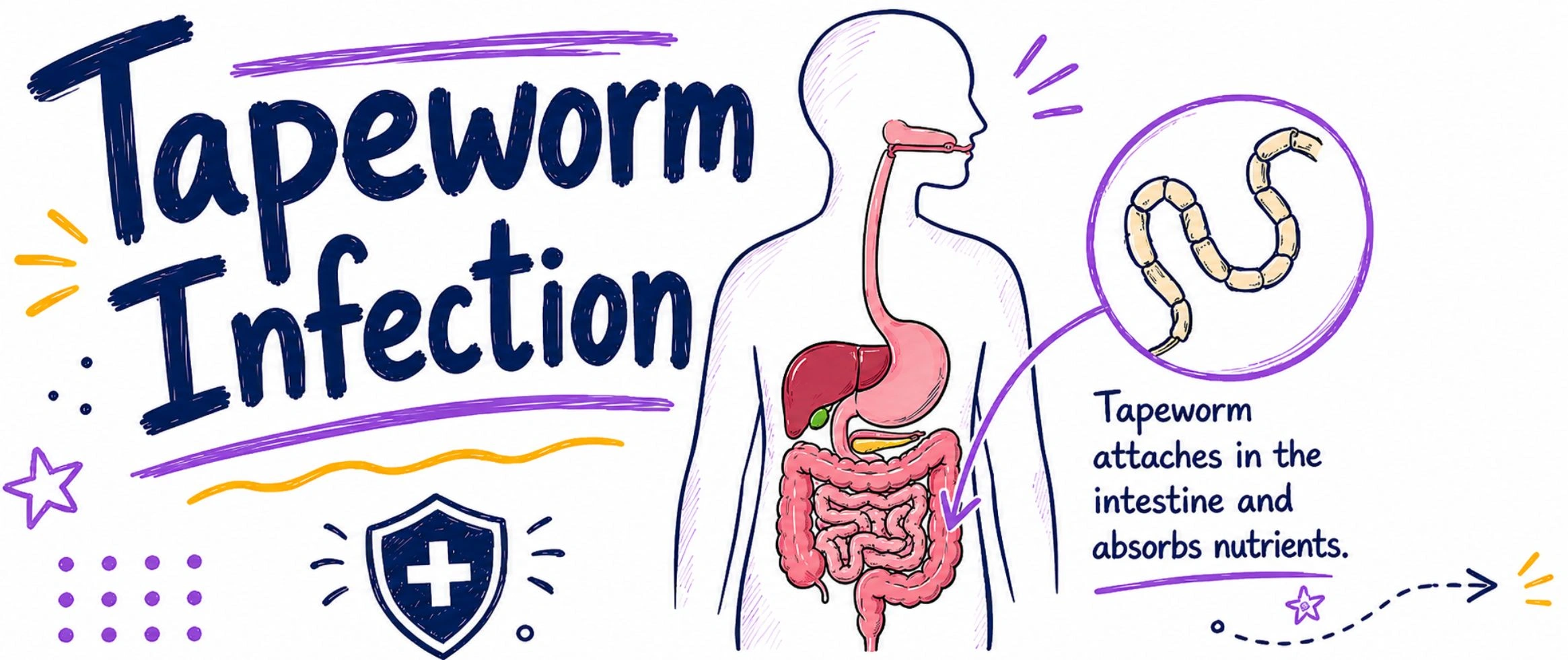
A tapeworm is a long, flat parasite that can live inside the human intestine. The medical term for an intestinal tapeworm infection is taeniasis. Many people with a tapeworm infection have no symptoms or only mild digestive problems, which is why the condition may go unnoticed.
Humans can develop taeniasis after eating raw or undercooked beef or pork containing tapeworm larvae. The adult worm attaches to the wall of the small intestine and grows there. It produces small segments, called proglottids, which may pass out of the body in stool.
The most common human-infecting species include:
It is important to understand the difference between taeniasis and cysticercosis. Taeniasis occurs when an adult tapeworm lives in the intestine. Cysticercosis happens when a person swallows T. solium eggs, allowing larvae to develop in tissues such as the muscles, eyes or brain. Cysticercosis can be serious and may cause seizures.
Many people do not experience clear tapeworm symptoms. When symptoms occur, they are often mild and may look like other digestive problems.
Common symptoms may include:
Passing worm segments in the stool or noticing them around the anus is one of the most visible signs of a tapeworm infection. Some people may see moving, rice-like or flat pieces in their bowel movement or underwear.
However, abdominal pain alone does not mean you have a tapeworm. Indigestion, irritable bowel syndrome, food intolerance, stomach infections and several other conditions can cause similar symptoms. Testing is the best way to confirm the cause.
In rare cases, tapeworm segments may move into the appendix, bile duct or pancreatic duct and cause complications. These problems are uncommon but may lead to severe pain, jaundice or other serious symptoms.
People often search for “tapeworm in stomach” when they have stomach pain, bloating or a feeling of movement in the abdomen. In most cases, an adult tapeworm does not live in the stomach. It usually attaches to the upper part of the small intestine.
The discomfort may be felt in the upper abdomen and may therefore be described as stomach pain. But the feeling of movement is not enough to identify a tapeworm. Gas, intestinal contractions and other digestive conditions can create similar sensations.
If you suspect a tapeworm in the stomach or intestine, avoid taking random deworming medicine. A healthcare professional may recommend a stool test and ask about your recent food intake, travel history and whether you have seen worm segments in your stool.
The main tapeworm causes are linked to food, sanitation and hygiene.
Eating Raw or Undercooked Meat
A person may develop taeniasis after eating beef or pork that contains tapeworm larvae and has not been cooked properly. The larvae can survive in meat that is raw, partly cooked or not heated evenly.
Proper cooking kills the parasite. Do not taste meat before it is fully cooked, especially minced meat or meat prepared in large portions.
Poor Hand Hygiene
People with intestinal tapeworms can pass eggs or segments in their stool. If hands are not washed properly after using the toilet, eggs can spread to food, surfaces or other people.
Washing hands with soap and water is especially important before preparing food and eating.
Contaminated Food or Water
Tapeworm eggs can contaminate soil, water, vegetables and other food in places where sanitation is poor. Eating food handled by an infected person without proper hygiene can increase the risk of exposure.
Poor Sanitation
When human waste contaminates the environment, cattle and pigs may consume food or water containing tapeworm eggs. The parasite can then develop inside the animal’s muscles and infect people who eat undercooked meat.
Intestinal taeniasis is not usually spread through casual contact such as sitting beside someone or sharing a room. However, an infected person can pass tapeworm eggs in their stool. If hygiene and sanitation are poor, those eggs may contaminate food, water or surfaces.
This is particularly important with Taenia solium. Swallowing its eggs can lead to cysticercosis, even if the person does not have an adult tapeworm in the intestine.
For this reason, a confirmed infection should be treated promptly. Household members may also need medical advice if there is a history of poor sanitation, shared food preparation or suspected cysticercosis.
A healthcare professional usually diagnoses intestinal tapeworm infection through a stool examination. The sample is checked under a microscope for tapeworm eggs or segments.
Doctors may ask:
One stool sample may not always detect the infection. The CDC recommends testing three stool samples collected on different days to improve the chance of detection. Tapeworm eggs may not appear in stool until about two to three months after the adult worm becomes established in the intestine.
Depending on the situation, a doctor may recommend:
Blood tests are generally not the main method used to diagnose an adult intestinal tapeworm. If a person has seizures, severe headaches, vision problems or unusual neurological symptoms, the doctor may investigate cysticercosis using imaging and specialist tests.
If your doctor recommends a stool examination, you may contact Pathkind Labs to ask about the appropriate test, sample container and collection instructions. Test availability and preparation requirements can vary by location.
Tapeworm treatment usually involves a prescription anti-parasitic medicine. The choice of medicine depends on the suspected species, the person’s age, medical history and whether cysticercosis is possible.
Common medicines used by doctors include:
Praziquantel is commonly preferred for active taeniasis, while albendazole may be used as another option. Niclosamide may be considered in some cases and is not available in every country.
Do not self-medicate. A medicine that is suitable for one type of worm may not be appropriate for another infection. Medicines should also be used carefully when cysticercosis is suspected because treatment may trigger inflammation around tissue cysts and, in some cases, seizures.
After treatment, the doctor may recommend repeat stool testing to confirm that the infection has cleared. The CDC notes that stool may be re-examined one and three months after treatment.
Pregnant women, young children, older adults and people with liver disease should speak to a doctor before taking anti-parasitic medicine. Complete the treatment exactly as prescribed, even if symptoms improve quickly.
Contact a healthcare professional if you:
Seek urgent medical care if you develop:
These symptoms may indicate a complication or a condition other than a simple intestinal tapeworm infection.
A few practical habits can significantly reduce your risk.
Cook Meat Thoroughly
Cook beef and pork completely. Use a food thermometer when possible, especially for minced meat and thick cuts. Avoid tasting meat before it is fully cooked.
Wash Your Hands
Wash your hands with soap and clean water:
Hand sanitiser may not remove all types of dirt and parasites, so soap and water are preferable.
Wash Fruits and Vegetables
Rinse fresh produce carefully under clean running water. Keep raw meat separate from vegetables and cooked food to prevent cross-contamination.
Use Safe Water
Drink treated or boiled water when travelling or when the safety of the water supply is uncertain.
Maintain Good Sanitation
Use toilets and avoid open defecation. Proper sanitation reduces the chance that tapeworm eggs will contaminate soil, food and water.
Treat Confirmed Infections
A person may have few or no symptoms and still pass eggs in stool. Prompt diagnosis and treatment help protect both the individual and the community.
Tapeworm infection may cause few symptoms, but passing worm segments, unexplained digestive problems or weight loss should not be ignored. A stool examination is commonly used to confirm the infection, and prescription medicines are usually effective when taken under medical supervision.
Good hand hygiene, safe water, proper sanitation and thoroughly cooked meat can help prevent tapeworm infection. If you notice symptoms or suspect a tapeworm in the stomach or intestine, speak with a healthcare professional and arrange the appropriate diagnostic test.
Discover precision diagnostics with Pathkind Labs, a trusted name in diagnostic services in India. Our NABL accredited labs, equipped with advanced technology, are staffed by a certified team of over 200+ senior pathologists and 2000+ technicians. From tailored health check-ups to specialized tests in Oncology, Neurology, Gynaecology, Nephrology, and more, we've got your health covered. Skip the hassle with online booking for tests or check-ups, available for both lab visits and at-home blood collection. For a seamless experience and early detection, choose Pathkind Labs in Gurugram. Book your appointment today and experience diagnostics made easy.
© 2026 Pathkind Diagnostics Pvt. Ltd. All Rights Reserved | Unsubscribe











 Track Sample
 Upload Prescription