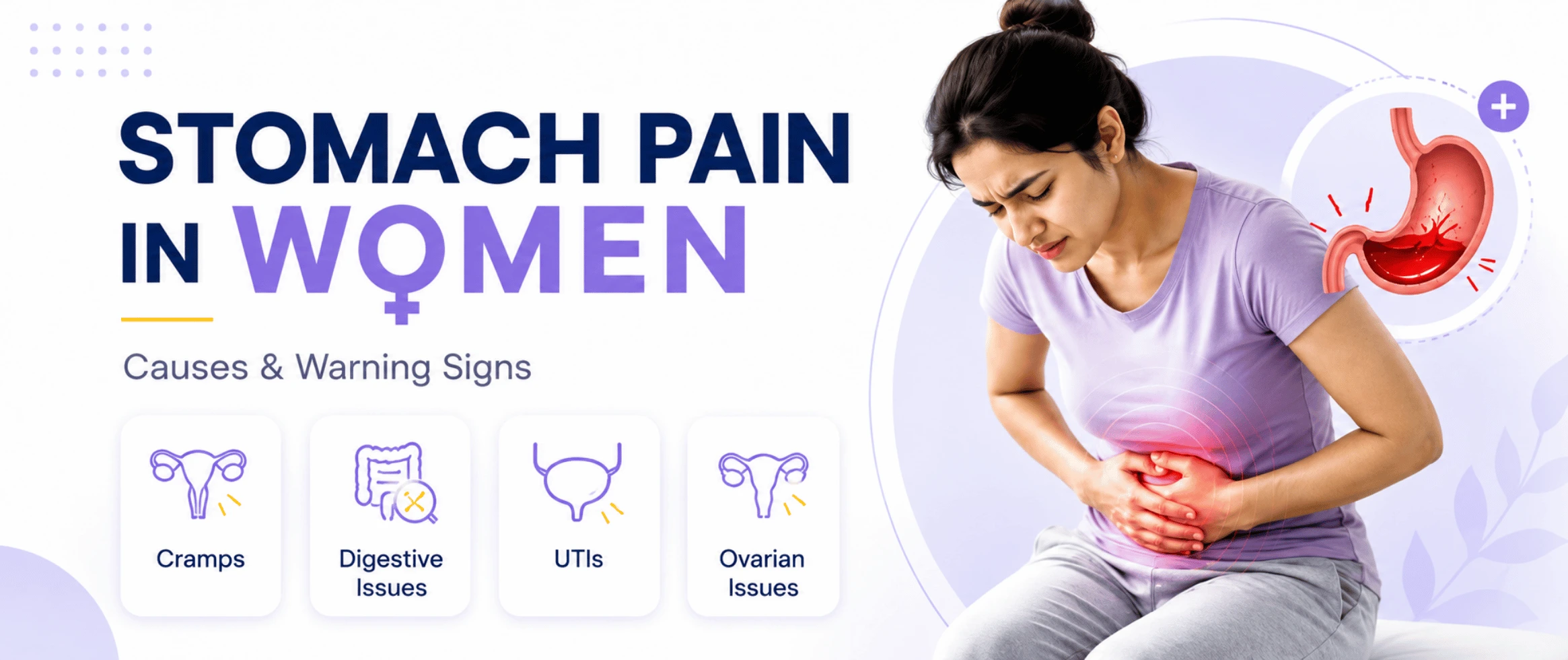
Stomach pain is one of those health problems many women try to “manage” at home. Maybe it feels like gas after a heavy meal. Maybe it comes before periods. Maybe it starts suddenly on one side and makes you stop whatever you are doing.
The tricky part is this: stomach pain in women can come from many places. It may be linked to digestion, periods, pregnancy, urinary infection, gallbladder trouble, appendix pain, or even the muscles around the abdomen and pelvis. Pelvic pain can begin in the digestive, urinary, or reproductive organs, and sometimes more than one cause may be involved.
That is why understanding the types of stomach pain - female is important. It does not mean you should self-diagnose. It simply helps you notice patterns, explain your symptoms better to a doctor, and know when pain needs quick medical attention.
Women may feel stomach pain due to common digestive causes like acidity, constipation, food infection, or IBS. But women can also have pain related to menstrual cramps, ovarian cysts, endometriosis, pelvic inflammatory disease, pregnancy-related concerns, or ectopic pregnancy. ACOG notes that pelvic pain may be linked to conditions such as pelvic inflammatory disease, which can cause lower pelvic pain, fever, and abnormal vaginal discharge, though some cases may have few or no symptoms.
So, when we talk about different types of stomach pain, we must look at three things:
For example, upper right stomach pain after a heavy meal may point toward gallbladder trouble, while lower belly pain with burning urination may suggest a urinary tract infection. Gallbladder attacks commonly cause upper right abdominal pain and may happen after heavy meals, while bladder infection symptoms can include burning urination, frequent urination, bloody urine, and pressure or cramping in the lower abdomen.
1. Cramp-Like Stomach Pain
Cramp-like pain often feels like the stomach is tightening and relaxing again and again. Many women feel this during periods. Mild menstrual cramps are common, but very painful cramps that get worse over time should not be ignored.
Endometriosis can cause very painful menstrual cramps, long-term pain in the lower back and pelvis, pain during or after sex, and intestinal pain. The World Health Organization also lists severe menstrual pain, heavy bleeding, chronic pelvic pain, bloating, nausea, and infertility among possible symptoms of endometriosis.
Possible causes of cramp-like stomach pain in women include:
A simple way to understand it is this: occasional cramps around periods may be normal, but cramps that disturb work, sleep, sex life, digestion, or daily routine need medical review.
2. Burning Pain in the Upper Stomach
Burning pain usually appears in the upper middle part of the stomach, often between the chest and belly button. Many people call it acidity, gas, or heartburn. It may worsen after spicy food, tea, coffee, late-night meals, or painkiller use.
Peptic ulcers can cause dull or burning abdominal pain that may come and go. In some people, the pain may happen when the stomach is empty or at night, and food may give short relief; in others, eating may make the pain worse. H. pylori infection and regular use of NSAID painkillers are among the common causes of peptic ulcers.
Possible causes include:
This type of pain is often ignored because people assume it is “just acidity.” But if burning pain keeps coming back, needs frequent antacids, or comes with vomiting, black stools, weight loss, or poor appetite, it needs proper testing and medical advice.
3. Sharp Pain on One Side of the Lower Abdomen
Sharp pain on one side of the lower abdomen can feel scary, and rightly so. In women, this pain may be linked to the appendix, ovaries, fallopian tubes, urinary system, or intestines.
Lower right abdominal pain may be due to appendicitis, which can become serious if the appendix bursts and infection spreads. The NIDDK lists appendicitis symptoms such as abdominal pain, loss of appetite, vomiting, constipation, or diarrhoea, and advises urgent medical care if appendicitis is suspected.
Sharp one-sided pain may also be seen with ovarian cysts. A ruptured ovarian cyst can cause sudden, sharp pelvic pain, usually lower and off to one side, and may be associated with nausea, vomiting, bloating, or vaginal bleeding.
Possible causes include:
This is one of the types of stomach pain female patients should take seriously, especially if the pain is sudden, severe, or linked with fever, vomiting, dizziness, or pregnancy.
4. Lower Stomach Pain with Urine Symptoms
If lower stomach pain comes with burning while passing urine, frequent urination, pressure in the lower belly, cloudy urine, or blood in urine, a urinary tract infection may be the cause.
The CDC states that bladder infection symptoms can include pain or burning during urination, frequent urination, feeling the need to urinate even when the bladder is empty, bloody urine, and pressure or cramping in the groin or lower abdomen. Kidney infection symptoms may include fever, chills, lower back or side pain, nausea, or vomiting.
Common signs to watch for:
Women are more prone to UTIs than men due to anatomy, and untreated infection can sometimes move upward toward the kidneys. So, do not keep taking random medicines or home remedies if symptoms last more than a day or keep coming back.
5. Pain That Comes and Goes with Bloating
Pain with bloating, gas, constipation, or loose stools may be linked to digestive issues. It may happen after eating outside food, during travel, after too much fried food, or during stressful weeks.
IBS commonly causes abdominal pain related to bowel movements along with changes in bowel habits, such as constipation, diarrhoea, or both. NIDDK explains that IBS is related to gut-brain interaction, where the gut may become more sensitive and bowel muscle movement may change.
Possible causes include:
A relatable example: many women notice stomach pain during busy workdays, travel, or before important meetings. The pain may reduce after passing stool or gas. Still, if bloating is new, persistent, severe, or comes with weight loss or blood in stool, it needs medical review.
6. Upper Right Stomach Pain After Heavy Meals
Pain in the upper right side of the abdomen, especially after oily or heavy meals, may be linked to the gallbladder. The pain can sometimes spread to the back or right shoulder.
Gallstone pain can appear in the upper right abdomen or the center of the abdomen below the breastbone and may also spread to the back between the shoulder blades or right shoulder. It can last from minutes to hours. NIDDK notes that gallbladder attacks often follow heavy meals and commonly happen in the evening or at night.
Possible causes include:
This pain should not be brushed aside as “gas” if it repeats after meals or comes with fever, vomiting, yellow eyes, dark urine, or pale stool.
7. Pelvic Pain Around Periods or During Sex
Pelvic pain is pain felt below the belly button and above the thighs. It may be dull, heavy, sharp, or pressure-like. Some women feel it during periods, during sex, while passing stool, or while urinating.
Endometriosis may cause pelvic pain and cramping that starts before periods and continues for days into the period. It may also cause lower back and stomach pain, pain during sex, pain with bowel movements or urination, and heavy bleeding.
Possible causes include:
Pelvic pain should be checked if it is new, getting worse, affecting daily life, or becoming a regular part of every cycle. Mayo Clinic advises medical evaluation if pelvic pain is new, disrupts daily life, or worsens over time.
8. Stomach Pain During Pregnancy
Stomach pain during pregnancy can happen due to gas, constipation, stretching muscles, or pressure from the growing baby. But some types of pain can be warning signs.
Ectopic pregnancy symptoms may include a missed period, low one-sided tummy pain, vaginal bleeding or brown watery discharge, shoulder tip pain, and discomfort while urinating or passing stool. Symptoms often develop between the 4th and 12th week of pregnancy. A rupture can cause sharp, sudden, intense tummy pain with dizziness, fainting, and sickness, and needs urgent care.
Pregnant women should seek medical help if pain is:
Do not wait at home if pregnancy is possible and the pain is sharp, one-sided, or linked with bleeding.
Some stomach pain can wait for a routine doctor visit. Some cannot. Seek urgent medical care if stomach pain is severe or comes with chest pressure, injury, bloody stool, severe tenderness, persistent vomiting, or other serious symptoms.
Get help quickly if you have:
A doctor will usually ask:
Based on symptoms, the doctor may suggest tests such as CBC, urine routine examination, urine culture, pregnancy test, beta-hCG, liver function tests, stool test, ultrasound, or other tests.
For example, Pathkind Labs offers tests such as Complete Blood Count, which checks red blood cells, white blood cells, and platelets; Urine Pregnancy Test; Beta HCG; Stool Culture for digestive tract infections; Amylase for pancreas-related concerns; and USG Whole Abdomen for abdominal pain, swelling, gallstones, liver disease, or kidney abnormalities.
If pain is mild and clearly linked to gas, overeating, constipation, or periods, simple care may help. But these tips are not a replacement for medical care.
You may try:
A small pain diary can be surprisingly useful. Write down when the pain started, where it hurt, what you ate, your period date, urine symptoms, stool changes, and any medicine taken. This helps your doctor see the pattern faster.
For digestion-related stomach pain, food habits matter. Many women notice pain after long gaps between meals, eating too fast, drinking too much tea or coffee, or having fried snacks late at night.
Helpful habits include:
If milk, wheat, fried food, or certain vegetables repeatedly trigger bloating and pain, note it and discuss it with a doctor or dietitian. Do not remove major food groups for long without guidance.
Myth 1: All stomach pain in women is gas
Gas is common, but not all pain is gas. Appendicitis, ovarian cysts, UTI, gallstones, ulcers, and pregnancy-related complications can also cause abdominal pain.
Myth 2: Period pain is always normal
Mild cramps can be common. But severe pain that worsens, causes vomiting, affects work, or needs strong painkillers every cycle may need evaluation for conditions like endometriosis.
Myth 3: If pain comes and goes, it is not serious
Some serious conditions can cause pain that comes and goes. Gallbladder attacks, ovarian cyst pain, IBS, ulcers, and early appendicitis may not be constant in the beginning.
Myth 4: Home remedies are enough for UTI pain
Drinking water may support urinary health, but burning urine, frequent urination, fever, back pain, or blood in urine needs medical evaluation and possibly antibiotics.
Understanding the types of stomach pain - female can help you make better health decisions. Some pain may be mild and temporary, like gas or regular period cramps. But some pain may point toward infection, ulcers, gallbladder disease, ovarian cysts, endometriosis, appendicitis, or pregnancy-related complications.
The most important rule is simple: do not ignore pain that is sudden, severe, repeated, one-sided, worsening, or linked with fever, vomiting, bleeding, fainting, pregnancy, urine symptoms, or black stools.
When in doubt, speak to a doctor. With the right examination, lab tests, and imaging, the cause of stomach pain can often be found earlier, and treatment can begin before complications develop.
Discover precision diagnostics with Pathkind Labs, a trusted name in diagnostic services in India. Our NABL accredited labs, equipped with advanced technology, are staffed by a certified team of over 200+ senior pathologists and 2000+ technicians. From tailored health check-ups to specialized tests in Oncology, Neurology, Gynaecology, Nephrology, and more, we've got your health covered. Skip the hassle with online booking for tests or check-ups, available for both lab visits and at-home blood collection. For a seamless experience and early detection, choose Pathkind Labs in Gurugram. Book your appointment today and experience diagnostics made easy.
© 2026 Pathkind Diagnostics Pvt. Ltd. All Rights Reserved | Unsubscribe











 Track Sample
 Upload Prescription