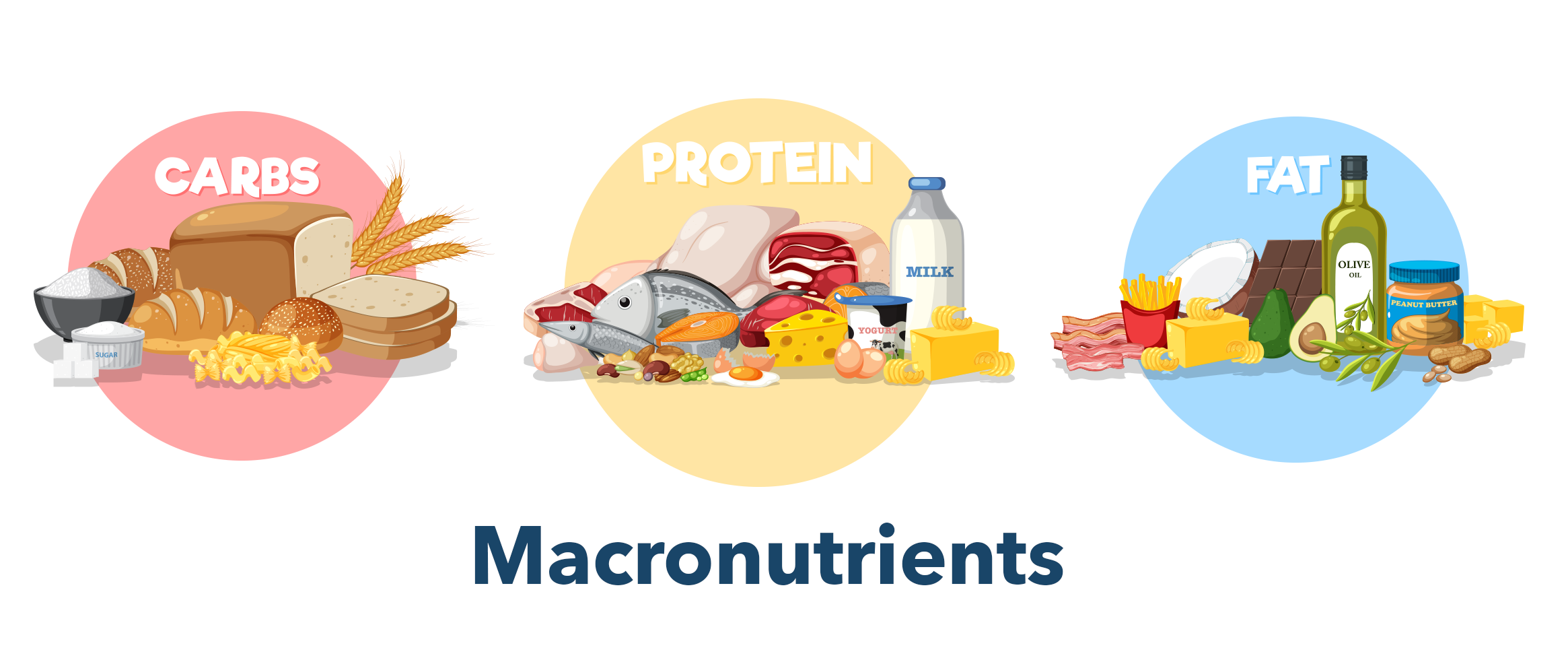
When someone asks “what are macronutrients?” or “macronutrients and micronutrients - what’s the difference?”, it means they want to understand the “big three” nutrients that our body needs in significant amounts. In this article, we’ll explain:
The word macro means “large” - so macronutrients are nutrients that our body requires in large quantities (in grams) to function. These include carbohydrates, proteins, and fats.
They differ from micronutrients - vitamins, minerals, and trace elements - which the body needs in much smaller amounts (milligrams or micrograms).
So when you see food labels showing “grams of protein, fat, carbohydrate,” those are your macronutrients.
Here’s a breakdown of each macronutrient:
1. Carbohydrates (Carbs)
Role / Function
Carbohydrates are our body’s favorite fuel. They break down into glucose, which powers the brain, red blood cells, and supports intense physical activity.
Even when resting, your body uses glucose for essential functions like maintaining your heartbeat, breathing, digestion, and nerve signaling.
Types & Sources
Tips
Prefer whole, unprocessed sources (brown rice, oats, legumes) over refined sugars.
Balance simple carbs with fiber to control blood sugar.
2. Protein
Role / Function
Proteins are made of amino acids. They help build, repair, and maintain body tissues - muscles, organs, enzymes, hormones, immune cells.
Proteins are essential for growth, healing, and maintaining lean body mass.
Sources
Notes
3. Fats
Role / Function
Dietary fats are energy-dense (9 kcal per gram). They also:
Types & Sources
There’s no one-size-fits-all ratio, but general guidelines (known as the Acceptable Macronutrient Distribution Ranges, AMDR) suggest:
These ranges can shift depending on your goals (weight loss, muscle gain, sports performance) or medical conditions.
For example, someone needing 2,000 kcal per day might aim for:
But individual needs differ - age, metabolic rate, activity, health all matter.
An imbalance in either can harm health. You need both, in the right amounts.
Discover precision diagnostics with Pathkind Labs, a trusted name in diagnostic services in India. Our NABL accredited labs, equipped with advanced technology, are staffed by a certified team of over 200+ senior pathologists and 2000+ technicians. From tailored health check-ups to specialized tests in Oncology, Neurology, Gynaecology, Nephrology, and more, we've got your health covered. Skip the hassle with online booking for tests or check-ups, available for both lab visits and at-home blood collection. For a seamless experience and early detection, choose Pathkind Labs in Gurugram. Book your appointment today and experience diagnostics made easy.
© 2026 Pathkind Diagnostics Pvt. Ltd. All Rights Reserved | Unsubscribe











 Track Sample
 Upload Prescription