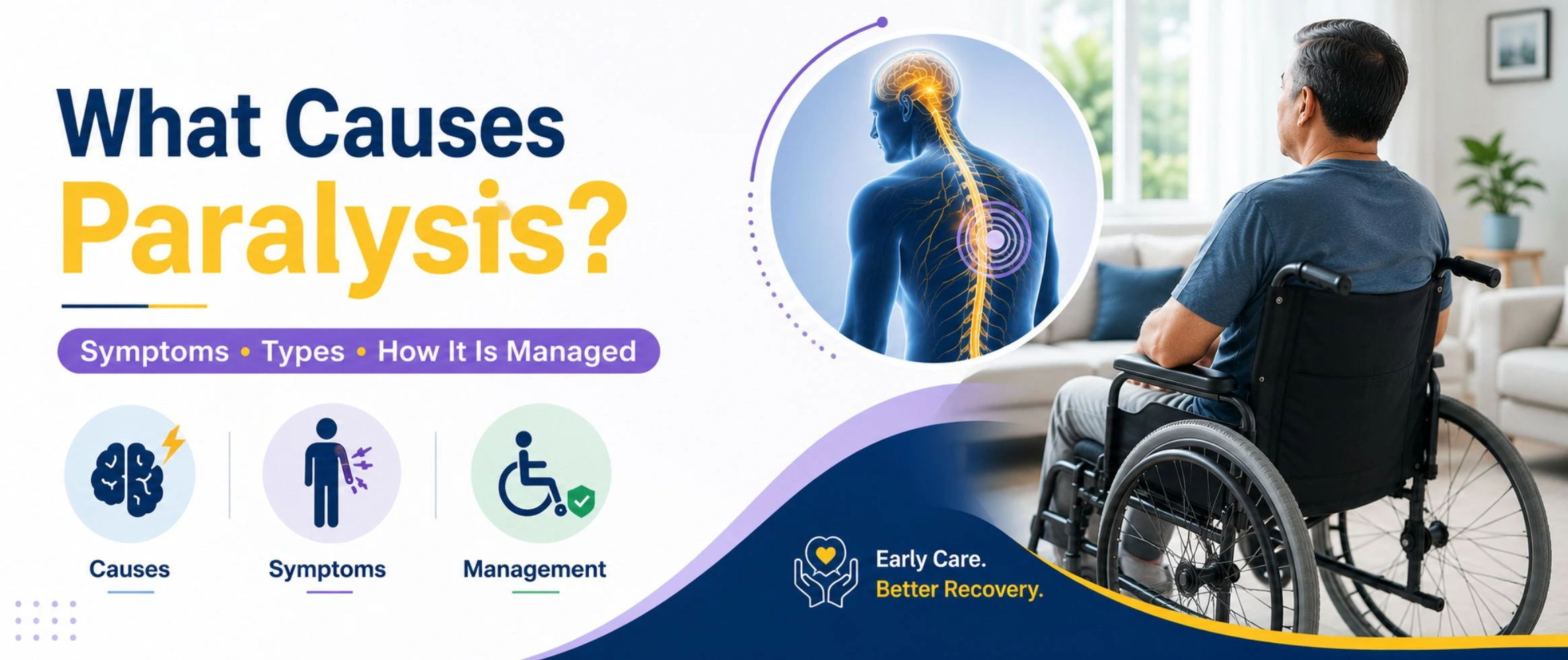
Paralysis is the loss of muscle movement in one or more parts of the body. It happens when communication between the brain, spinal cord, nerves and muscles is interrupted. Paralysis may be complete or partial. It can affect one limb, one side of the body, both legs, all four limbs or even specific muscles such as those of the face.
Some people develop paralysis suddenly, while others notice a gradual loss of strength or movement. In certain conditions, weakness may come and go. Paralysis may also be temporary or permanent, depending on its cause and how quickly treatment begins.
Paralysis is not a disease by itself. It is a symptom of an underlying problem affecting the nervous system, muscles or the connection between them. According to MedlinePlus, common causes include stroke, spinal cord injury, nerve disorders, autoimmune conditions and facial nerve problems.
The answer to “what causes paralysis?” depends on which part of the nervous system is affected. The most common paralysis causes include the following.
1. Stroke
A stroke occurs when blood flow to part of the brain is blocked or when a blood vessel bursts. Since the affected area of the brain may control movement, a stroke can cause sudden weakness or paralysis, usually on one side of the body.
Stroke-related paralysis may affect the face, arm or leg. It may occur along with slurred speech, confusion, vision problems, dizziness or difficulty walking.
2. Spinal Cord Injury
The spinal cord carries messages between the brain and the rest of the body. A serious injury caused by a road accident, fall, sports injury or violence can damage these communication pathways.
The location of the injury often affects the pattern of paralysis. An injury in the neck may affect the arms and legs, while an injury lower down may mainly affect the legs.
A suspected spinal injury should always be treated as an emergency. Do not move the person unnecessarily unless there is immediate danger.
3. Brain or Spinal Tumours
A tumour may press on areas of the brain, spinal cord or nearby nerves. This pressure can interfere with movement, sensation, balance or speech. Symptoms may develop slowly and become worse over time.
4. Nerve Disorders
Diseases that damage nerves can cause weakness, numbness or paralysis. Examples include:
In Guillain-Barré syndrome, weakness often begins in the legs and moves upward. Rapidly worsening weakness may affect breathing and requires immediate medical care.
5. Autoimmune and Inflammatory Conditions
In some autoimmune diseases, the immune system mistakenly attacks nerves, muscles or the spinal cord. Conditions such as transverse myelitis, multiple sclerosis and Guillain-Barré syndrome may cause weakness or paralysis.
Inflammation of the brain or spinal cord can also affect movement, sensation, bladder control and coordination.
6. Bell’s Palsy and Facial Nerve Problems
Bell’s palsy causes sudden weakness or paralysis on one side of the face. A person may notice a drooping mouth, difficulty closing one eye, drooling, changes in taste or facial discomfort.
Facial weakness can sometimes be a sign of stroke, especially when it occurs with arm weakness or speech difficulty. Therefore, sudden facial paralysis should be assessed urgently.
7. Infections
Certain infections can affect the brain, spinal cord, nerves or muscles. Depending on the infection, paralysis may develop suddenly or gradually. Examples include viral infections that cause inflammation of the nervous system and, in some areas, polio.
Vaccination, safe food and water practices, insect protection and timely treatment of infections can reduce the risk of some infectious causes.
8. Electrolyte or Metabolic Problems
Very low or high levels of minerals such as potassium can occasionally cause episodes of muscle weakness or paralysis. Some people have inherited conditions known as periodic paralysis, where weakness occurs in attacks.
Diabetes may also damage nerves over time, leading to reduced sensation and weakness in the feet or legs.
9. Congenital or Childhood Conditions
Some children develop movement problems because of conditions affecting brain development before, during or soon after birth. Cerebral palsy is one example. It may cause muscle stiffness, weakness, poor coordination or involuntary movements.
The types of paralysis are usually described by the parts of the body affected.
Monoplegia
Monoplegia affects one limb, such as one arm or one leg. It may result from a brain or spinal cord problem, nerve injury, infection or another neurological condition.
Hemiplegia
Hemiplegia affects one side of the body. It may involve the face, arm and leg on the same side. Stroke is one of the most common causes of hemiplegia.
Paraplegia
Paraplegia affects both legs and may also affect parts of the lower body. Spinal cord injury is a common cause, although other neurological conditions can also lead to paraplegia.
Quadriplegia or Tetraplegia
Quadriplegia, also called tetraplegia, affects both arms and both legs. It often occurs after a spinal cord injury in the neck region. Depending on the injury, breathing and trunk control may also be affected.
Diplegia
Diplegia usually affects both legs more than the arms. It is often discussed in relation to certain forms of cerebral palsy, although the term may be used in other neurological situations.
Facial Paralysis
Facial paralysis affects the muscles used for smiling, blinking, speaking, eating and facial expression. Bell’s palsy and stroke are important causes.
Paralysis can also be described as flaccid, when muscles become loose and weak, or spastic, when muscles become stiff and tight. These descriptions help doctors understand how the nervous system has been affected.
Paralysis symptoms can vary depending on the cause, location and severity of nerve or muscle damage. Common symptoms include:
Paralysis does not always mean a person has lost all sensation. Some people can feel touch, pressure, temperature or pain even when they cannot move the affected area.
Sudden paralysis or weakness must be treated as a medical emergency. It may be caused by a stroke, spinal cord injury, severe infection or another serious condition.
Use the B.E. F.A.S.T. warning signs for stroke:
Seek immediate help if paralysis:
Even if weakness disappears after a few minutes, medical attention is important. Temporary symptoms may be caused by a transient ischaemic attack, or TIA, which can warn of a future stroke.
Doctors first ask when the symptoms began, how quickly they developed and which areas are affected. They may also ask about recent infections, injuries, medical conditions, medicines and family history.
A neurological examination may include checking:
Depending on the findings, the doctor may recommend:
If blood tests are advised, Pathkind Labs can support physician-directed investigations such as blood glucose, HbA1c, lipid profile, electrolytes, vitamin B12, complete blood count and other tests where clinically appropriate. The exact tests depend on the patient’s symptoms and the doctor’s assessment. A blood test alone cannot identify every cause of paralysis.
Paralysis treatment depends entirely on the underlying cause. There is no single treatment that works for every patient.
Emergency Treatment
For stroke, doctors may use clot-dissolving medicines or procedures to remove a clot in carefully selected patients. Bleeding in the brain may require medicines, monitoring, surgery or other procedures. The CDC explains that fast assessment and treatment are essential because early care may reduce brain damage and disability.
For spinal cord injury, emergency care focuses on protecting the spine, supporting breathing and blood pressure, treating the injury and preventing further damage.
Medicines and Cause-Specific Care
Treatment may include:
These treatments must be prescribed by a qualified healthcare professional. Self-medication, unverified supplements or forceful massage may delay proper treatment or worsen an injury.
Rehabilitation
Rehabilitation is an important part of paralysis management. It may begin in the hospital and continue at home or in a specialised centre.
A rehabilitation plan may include:
Recovery differs from person to person. Some people regain movement over days or months, while others need long-term support. The goal of treatment is not only to restore movement but also to improve independence, safety and quality of life.
Long-term paralysis can increase the risk of pressure sores, blood clots, muscle stiffness, constipation, urinary problems, respiratory infections and emotional distress.
Helpful steps may include:
Family members should encourage independence wherever possible. Support should be offered respectfully rather than assuming that the person cannot participate in decisions or daily activities.
Not every case of paralysis can be prevented. However, some risks can be reduced by:
Paralysis can affect movement, sensation, speech, breathing and daily independence. Its causes range from stroke and spinal cord injury to nerve diseases, autoimmune conditions, infections and metabolic problems. Recognising paralysis symptoms early is essential, especially when weakness begins suddenly.
Prompt medical care, accurate diagnosis and personalised paralysis treatment can improve outcomes. Rehabilitation, assistive devices, emotional support and regular follow-up also play an important role in helping a person live as independently and safely as possible.
Discover precision diagnostics with Pathkind Labs, a trusted name in diagnostic services in India. Our NABL accredited labs, equipped with advanced technology, are staffed by a certified team of over 200+ senior pathologists and 2000+ technicians. From tailored health check-ups to specialized tests in Oncology, Neurology, Gynaecology, Nephrology, and more, we've got your health covered. Skip the hassle with online booking for tests or check-ups, available for both lab visits and at-home blood collection. For a seamless experience and early detection, choose Pathkind Labs in Gurugram. Book your appointment today and experience diagnostics made easy.
© 2026 Pathkind Diagnostics Pvt. Ltd. All Rights Reserved | Unsubscribe











 Track Sample
 Upload Prescription