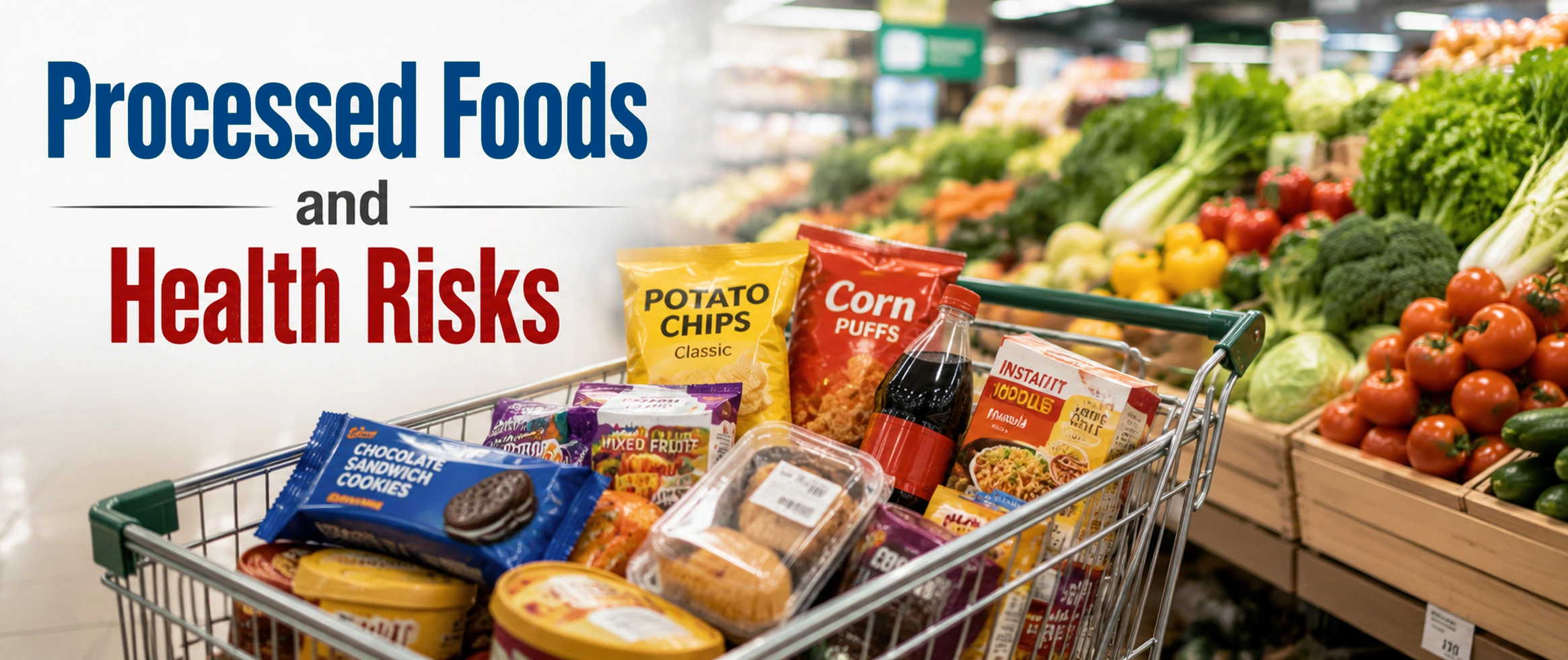
Processed foods have become a regular part of modern diets because they are convenient, affordable, and have a longer shelf life. While not all processed foods are unhealthy, some are high in added sugar, salt, unhealthy fats, and artificial ingredients, which may negatively affect health when consumed frequently.
Understanding what is processed food and identifying highly processed foods can help you make healthier food choices. In this blog, we'll explain the different types of processed foods, their health effects, and healthier alternatives you can include in your daily diet.
A processed food is any food that has been changed from its natural state before it reaches your plate. Processing may include:
So, if you're wondering what are processed food, the answer is that processing ranges from minimal changes to extensive industrial processing.
Not all processed foods are unhealthy. The level of processing determines whether they are a healthy choice.
1. Minimally Processed Foods
These foods undergo simple processing to improve safety or convenience while retaining most of their nutrients.
Examples include:
These can be part of a healthy diet.
2. Moderately Processed Foods
These foods contain a few added ingredients but still provide nutritional value.
Examples include:
Consume these in moderation as part of balanced meals.
3. Highly Processed Foods
Highly processed foods undergo multiple manufacturing steps and often contain additives to improve taste, texture, colour, or shelf life.
Examples include:
These foods are often high in calories but low in essential nutrients.
The table below shows common examples of processed foods.
This comparison shows that processing itself is not harmful. The concern is excessive processing and unhealthy added ingredients.
No. This is one of the biggest misconceptions about processed foods.
Many nutritious foods are processed to improve safety and shelf life.
Healthy processed foods include:
The key is to check the ingredient list and nutrition label rather than avoiding all processed foods.
Eating highly processed foods occasionally is unlikely to cause harm. However, frequent consumption may increase the risk of several health problems.
1. Weight Gain
Highly processed foods are often:
This combination can contribute to excess calorie intake and weight gain.
2. Increased Risk of Heart Disease
Many packaged foods contain:
Excess intake may affect heart health over time.
3. Higher Risk of Type 2 Diabetes
Foods high in refined carbohydrates and added sugars may lead to frequent blood sugar spikes.
Replacing sugary snacks with whole foods supports better blood sugar management.
4. Poor Digestive Health
Many ultra-processed foods contain very little fibre.
A low-fibre diet may contribute to:
5. Lower Nutrient Intake
People who consume large amounts of processed foods may eat fewer fruits, vegetables, whole grains, and legumes, resulting in lower intake of essential vitamins and minerals.
Before buying packaged foods, check the label.
Signs include:
Choosing foods with simple, recognisable ingredients is often a better option.
Healthier Alternatives
Instead of highly processed foods, choose nutrient-rich alternatives.
Small changes can make a significant difference over time.
You don't have to eliminate processed foods completely. Instead:
These habits make it easier to reduce dependence on highly processed foods.
Understanding what is processed food helps you make smarter food choices. Processing itself is not harmful, but frequent consumption of highly processed foods that are high in sugar, salt, and unhealthy fats may increase the risk of lifestyle-related diseases.
Instead of avoiding all processed foods, focus on choosing minimally processed options and limiting ultra-processed products. A balanced diet rich in fruits, vegetables, whole grains, legumes, dairy, and lean protein remains the best approach for maintaining long-term health.
Discover precision diagnostics with Pathkind Labs, a trusted name in diagnostic services in India. Our NABL accredited labs, equipped with advanced technology, are staffed by a certified team of over 200+ senior pathologists and 2000+ technicians. From tailored health check-ups to specialized tests in Oncology, Neurology, Gynaecology, Nephrology, and more, we've got your health covered. Skip the hassle with online booking for tests or check-ups, available for both lab visits and at-home blood collection. For a seamless experience and early detection, choose Pathkind Labs in Gurugram. Book your appointment today and experience diagnostics made easy.
© 2026 Pathkind Diagnostics Pvt. Ltd. All Rights Reserved | Unsubscribe











 Track Sample
 Upload Prescription