An upset stomach can make even the thought of food feel tiring. One moment you are craving your usual meal, and the next, even a spicy snack or cup of tea feels like a bad idea. This is when many people hear about the brat diet.
But what is the brat diet, and is it really the best choice for diarrhea, vomiting, or stomach infection?
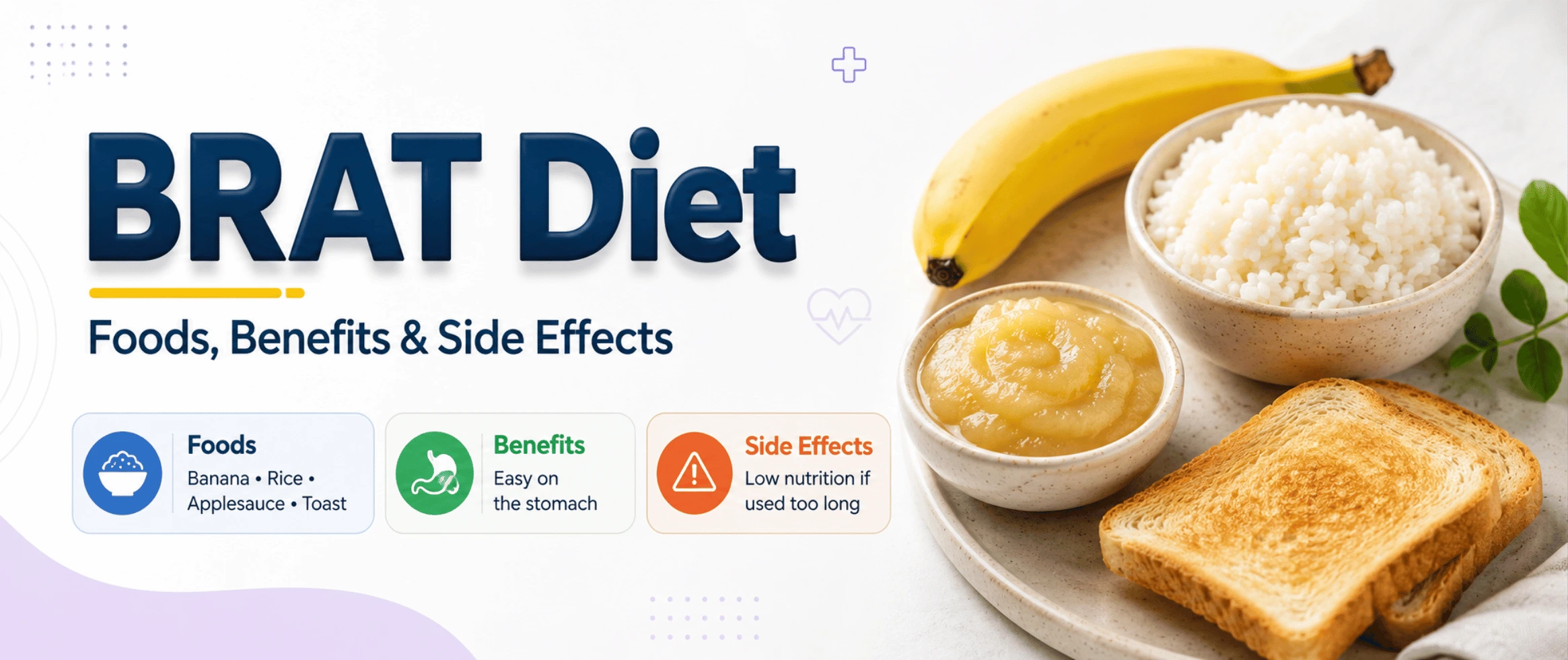
The BRAT diet is a simple, short-term eating pattern that includes four bland foods: bananas, rice, applesauce, and toast. These foods are soft, low in fiber, and usually easy to digest. For years, people used the BRAT diet during stomach flu, loose motions, food poisoning, or vomiting because it felt light on the stomach.
However, doctors today do not recommend using the BRAT diet as a full treatment or following it for many days. It may help for a short time, but it does not provide enough protein, healthy fats, vitamins, and minerals for proper recovery, especially in children. The American Academy of Pediatrics notes that the BRAT diet is no longer considered very useful for children recovering from diarrhea because it is low in fiber, protein, and fat.
So, should you follow it or avoid it completely? Let’s understand it in a simple, practical way.
The brat diet is a bland-food diet often used for short-term relief during stomach upset. BRAT stands for:
These foods are gentle, mild in taste, and less likely to irritate the stomach. Cleveland Clinic explains that these foods may be easy on the digestive system for a day or two, but they do not give enough nutrients for longer use.
In simple words, the BRAT diet is not a cure. It is more like a temporary food support when your stomach says, “Please keep it simple today.”
People usually follow the brat diet during:
The idea is simple. When the stomach is irritated, bland foods may be easier to tolerate than oily, spicy, or heavy meals. For example, plain rice may feel better than biryani, and toast may feel safer than paratha with pickle.
But here is the important part: hydration matters more than the BRAT diet. During diarrhea and vomiting, the body loses water and electrolytes. NIDDK recommends replacing lost fluids and electrolytes through water, broths, electrolyte drinks, or oral rehydration solutions.
The basic brat diet foods list includes only four foods. But many people also include other bland foods once the stomach starts settling.
Other Bland Foods You Can Add Slowly
Once vomiting reduces or your appetite comes back, you may add:
The goal is not to eat only bananas, rice, applesauce, and toast. The goal is to restart eating gently and then return to a balanced diet as soon as you can.
When your stomach is already irritated, some foods can make symptoms worse. Try to avoid:
A simple rule: if the food is oily, very spicy, very sweet, or hard to digest, keep it aside until your stomach settles.
The brat diet may offer some short-term comfort, especially when you do not feel like eating much.
1. It Is Easy to Digest
BRAT diet foods are soft, bland, and low in fiber. This may make them easier to digest during stomach upset.
2. It May Help You Restart Eating
After vomiting or nausea, many people cannot jump straight into a full meal. A small portion of rice, banana, or toast may feel manageable.
3. It Is Simple and Easy to Prepare
You do not need special ingredients. Most Indian homes already have rice, bananas, bread, or apples.
4. It May Feel Gentle on the Stomach
Bland foods do not contain strong spices, excess oil, or heavy sauces. This can be helpful when your stomach is sensitive.
5. Bananas Provide Potassium
Bananas contain potassium, an electrolyte that may be lost during diarrhea. Still, bananas alone cannot replace all lost fluids and electrolytes. Oral rehydration is more important during active diarrhea. WHO states that oral rehydration salts help replace water and electrolytes lost in stool.
The BRAT diet sounds harmless, but following it too strictly or for too long can create problems.
1. It Is Low in Protein
Your body needs protein to repair tissues and regain strength. The basic BRAT diet has very little protein.
2. It Is Low in Healthy Fats
Healthy fats support energy and nutrient absorption. A strict BRAT diet does not provide enough fat.
3. It Lacks Many Vitamins and Minerals
Banana, rice, applesauce, and toast do not give complete nutrition. If followed for more than a short period, the diet may leave you weak.
4. It May Slow Recovery in Children
For children, a strict BRAT diet is not ideal. HealthyChildren.org, from the American Academy of Pediatrics, says children can usually return to a normal, balanced diet suitable for their age within 24 hours of getting sick, as tolerated.
5. It Can Cause Constipation
Since the diet is low in fiber, some people may feel constipated after following it.
6. It May Not Be Suitable for Everyone
People with diabetes, kidney disease, older adults, and those with weak immunity should be careful with diarrhea and hydration plans. NIDDK advises that people with diabetes, kidney disease, weak immunity, and older adults should speak with a doctor before using oral rehydration solutions, as the right amount and type of fluid may vary.
The BRAT diet may be okay for a short time in mild diarrhea, especially in adults. But it should not be your only treatment.
The most important step in diarrhea is replacing lost fluids. WHO lists ORS, zinc supplementation for children, IV fluids in severe dehydration, nutrient-rich foods, and medical consultation for persistent diarrhea or blood in stool as key treatment measures.
So, if you have diarrhea, think in this order:
The BRAT diet can be part of step 2, not the whole plan.
This is where parents need to be extra careful.
Earlier, many parents were told to give only bananas, rice, applesauce, and toast to children with diarrhea. Today, this advice has changed. A strict BRAT diet is no longer recommended for children because it does not give enough nutrition to support recovery.
Children should continue fluids, breast milk or formula if applicable, and age-appropriate balanced foods as tolerated. NIDDK also states that infants should continue breast milk or formula as usual during diarrhea.
For children with diarrhea, consult a pediatrician, especially if there is:
For adults, the BRAT diet may be used for about 24 to 48 hours if you are recovering from mild stomach upset. Cleveland Clinic notes that adults may use it for a day or two, but should not follow it longer because it lacks important nutrients.
As soon as your appetite improves, slowly return to a balanced diet. Add foods like:
Your stomach may not be ready for chole bhature on day one, but it also does not need only toast for three days.
This is only a sample for mild stomach upset. It is not meant for severe diarrhea, children, pregnancy, chronic illness, or long-term use.
Morning
Mid-Morning
Lunch
Evening
Dinner
Do not force food if you are actively vomiting. Start with fluids and small sips. If vomiting and diarrhea continue, seek medical advice.
A common mistake is focusing only on food. But in diarrhea and vomiting, water loss is the bigger concern.
You should watch for signs of dehydration, such as:
WHO recommends ORS to replace water and electrolytes lost in stool, and medical care in cases of severe dehydration, shock, persistent diarrhea, blood in stool, or signs of dehydration.
Do not wait too long if symptoms are not improving. Speak to a doctor if you have:
NIDDK recommends seeing a doctor if diarrhea worsens or lasts more than 2 days while using over-the-counter treatment.
Most mild diarrhea improves with fluids, rest, and light food. But if symptoms are severe, repeated, or long-lasting, your doctor may suggest tests to understand the cause.
Depending on symptoms, tests may include:
For persistent diarrhea, vomiting, dehydration signs, fever, or blood in stool, timely testing can help identify infections or other health concerns. Pathkind Labs offers diagnostic testing support that can help doctors evaluate stomach infections, dehydration impact, and related health issues. Always follow your doctor’s advice on which test is right for your condition.
The brat diet can be useful for a short time when your stomach feels upset and you need simple foods. The basic brat diet foods are bananas, rice, applesauce, and toast. These foods are bland and may be easier to digest.
But the BRAT diet is not a complete treatment for diarrhea or vomiting. It should not replace fluids, ORS, medical care, or a balanced diet. It is also not recommended as a strict diet for children.
The safest approach is simple: drink enough fluids, use ORS when needed, eat light foods as tolerated, and return to a balanced diet as soon as possible. If symptoms are severe or continue, consult a doctor instead of relying only on home remedies.
Discover precision diagnostics with Pathkind Labs, a trusted name in diagnostic services in India. Our NABL accredited labs, equipped with advanced technology, are staffed by a certified team of over 200+ senior pathologists and 2000+ technicians. From tailored health check-ups to specialized tests in Oncology, Neurology, Gynaecology, Nephrology, and more, we've got your health covered. Skip the hassle with online booking for tests or check-ups, available for both lab visits and at-home blood collection. For a seamless experience and early detection, choose Pathkind Labs in Gurugram. Book your appointment today and experience diagnostics made easy.
© 2026 Pathkind Diagnostics Pvt. Ltd. All Rights Reserved | Unsubscribe











 Track Sample
 Upload Prescription