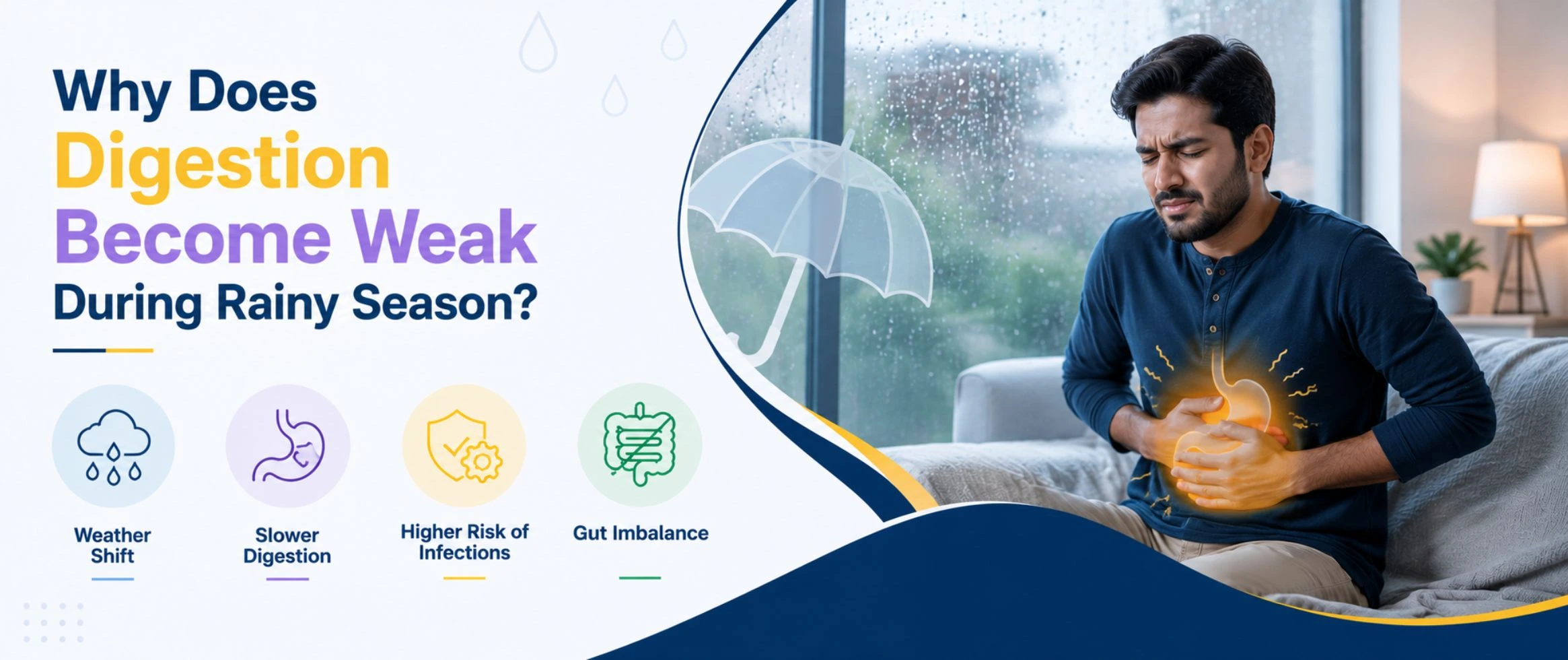
The first rain after a long summer often feels refreshing. The weather becomes cooler, the smell of wet soil fills the air, and a hot plate of pakoras suddenly seems impossible to resist.
But a few days into the rainy season, many people begin complaining about bloating, gas, acidity, loose motions, constipation or a heavy feeling after meals. You may even hear someone say, “My digestion becomes weak every monsoon.”
But does rainfall actually slow down the digestive system?
Not necessarily. Rainy weather does not automatically weaken the stomach or reduce digestive enzymes in every person. What usually changes during the monsoon is our food, water quality, activity level and exposure to germs. Together, these factors can disturb normal digestion and increase the risk of stomach infections.
Understanding the actual weak digestion causes can help you enjoy the rainy season without spending it dealing with stomach discomfort.
Digestion may feel weak during the rainy season because:
In many cases, what people call weak digestion is actually indigestion, food intolerance, acidity or a mild gastrointestinal infection.
“Weak digestion” is not a specific medical diagnosis. It is a common phrase used to describe digestive symptoms such as:
Doctors may use terms such as indigestion or dyspepsia when someone has upper abdominal discomfort, burning, early fullness, bloating, nausea or belching.
An occasional heavy feeling after a large meal is usually not serious. However, repeated symptoms should not simply be blamed on the season. They may point to an infection, food intolerance, gastritis, acid reflux or another digestive condition.
Several everyday changes during the monsoon can affect the stomach. Here are the most common reasons.
1. Contaminated Drinking Water
Heavy rain may cause dirty water, sewage and surface runoff to enter water sources, particularly in areas with damaged pipelines, poor drainage or waterlogging.
Microbiologically contaminated drinking water can spread diarrhoeal diseases and other infections. The World Health Organization states that contaminated water can transmit conditions such as diarrhoea, cholera, dysentery, typhoid and polio.
The risk does not come only from drinking visibly dirty water. Contaminated water may also be used to:
This is why a glass of juice containing unsafe ice can sometimes cause illness even when the juice itself appears fresh.
2. Increased Risk of Food Contamination
Warmth, moisture and poor food storage can allow harmful microorganisms to multiply in food. Cooked rice, dairy products, gravies, cut fruit and street food may become unsafe when left outside for long periods.
Unsafe food contaminated with harmful bacteria, viruses, parasites or chemicals can cause more than 200 diseases. Symptoms may range from mild diarrhoea to serious illness.
Food may also become contaminated when:
After a power cut, refrigerated food can become unsafe if it stays warm for too long. The CDC notes that a closed refrigerator generally keeps food cold for about four hours during a power outage.
3. Frequent Consumption of Fried Monsoon Snacks
Rainy evenings and fried snacks often go together. Samosas, kachoris, bread pakoras and spicy noodles may taste comforting, but eating them too often can make the stomach feel heavy.
High-fat foods usually take longer to leave the stomach than lighter meals. Spicy and oily foods can also trigger heartburn, bloating or discomfort in people who already have a sensitive digestive system.
The problem becomes greater when fried food is:
You do not have to completely avoid your favourite rainy-day snack. The safer approach is to choose freshly cooked food, eat a small portion and avoid making fried snacks an everyday habit.
4. Reduced Physical Activity
Rain, traffic and waterlogged roads often keep people indoors. Morning walks become less regular, children play outside less often, and working adults may spend most of the day sitting.
Low physical activity can contribute to constipation, sluggish bowel movements and bloating. A short indoor walk after meals may help many people feel lighter.
Try simple activities such as:
You do not need intense exercise. Consistent movement is more important.
5. Drinking Less Water
Because the weather feels cooler, many people do not feel as thirsty as they do during summer. However, the body still needs adequate fluid.
Low water intake may make stools harder and worsen constipation. At the same time, drinking untreated water may increase the risk of infection. The goal is not just to drink more water, but to drink water that is safe.
Use water that is properly filtered, boiled or treated when the safety of the local supply is uncertain. Bottled, boiled or appropriately treated water is recommended when regular water may be unsafe.
6. Raw and Uncovered Food
Cut fruit, raw salads, sprouts, pani puri water and fresh chutneys can become contaminated if they are washed or prepared with unsafe water.
During the rainy season, it is safer to:
Raw foods are not unhealthy by nature. The concern is how they are washed, stored and handled.
7. Sudden Changes in Eating Habits
Many people change their diet during the monsoon without realising it. Tea consumption increases, meal timings become irregular, and rainy-day cravings lead to extra snacks between meals.
Eating a heavy dinner late at night or lying down soon after eating may worsen acidity and heartburn.
A simple routine can support better digestion:
8. Stomach and Intestinal Infections
Diarrhoea is often a symptom of an infection caused by bacteria, viruses or parasites. Such infections can spread through contaminated food, unsafe drinking water or poor hygiene.
Possible symptoms include:
Not every case of diarrhoea requires antibiotics. Some infections are viral, and unnecessary antibiotic use can cause side effects and contribute to antibiotic resistance. A doctor should decide whether medicine or testing is needed.
9. Existing Digestive Conditions
People with acid reflux, gastritis, lactose intolerance, food allergies or irritable bowel syndrome may notice more symptoms during the rainy season.
The weather itself may not be the direct cause. Changes in diet, reduced activity, stress, infections or frequent outside food may trigger an existing condition.
Keeping a simple food-and-symptom diary can help identify patterns. Write down:
Common signs of disturbed or weak digestion include:
These symptoms may improve with food and lifestyle changes. However, persistent or severe symptoms need medical attention.
Eat Freshly Cooked Food
Fresh, hot meals are generally safer than food that has been sitting at room temperature for several hours.
Prepare only the quantity your family is likely to eat. Refrigerate leftovers promptly and reheat them thoroughly before eating.
Do not eat food that:
When in doubt, throw it out. Tasting suspicious food is not a safe way to check it.
Choose Light, Balanced Meals
During days when the stomach feels sensitive, choose simple meals such as:
A light meal does not have to mean eating only plain rice for several days. Your body still needs protein, carbohydrates, vitamins and minerals.
Include dal, pulses, eggs, curd or other suitable protein sources as tolerated.
Add Fibre Carefully
Fibre supports regular bowel movements, but suddenly eating very large amounts can increase gas.
Good fibre sources include:
Increase fibre gradually and drink enough safe water.
During active diarrhoea or severe stomach discomfort, ask a healthcare professional which foods are suitable for you.
Limit Oily and Very Spicy Food
You may not need to give up pakoras for the entire season, but moderation matters.
Try these practical swaps:
The aim is not a perfect diet. It is reducing repeated irritation and infection risk.
Wash Hands Properly
Wash your hands with soap and safe water:
Hand hygiene is one of the simplest ways to prevent infections that spread through contaminated food and water.
Store Food Safely
Keep raw meat, eggs and seafood separate from cooked food. Use different utensils or wash them properly between uses.
Cover food to protect it from flies. Check the refrigerator during long power cuts, and discard food that may no longer be safe.
Keep Moving
Take a gentle walk after meals instead of lying down immediately. Even indoor movement can support bowel regularity and help reduce post-meal heaviness.
Avoid Self-Medicating
Repeated use of antacids, antibiotics, anti-diarrhoeal medicines or digestive enzyme products without medical advice can hide symptoms or cause side effects.
Seek professional advice when symptoms are frequent, severe or unusual.
Seek medical care if digestive symptoms keep returning or do not improve.
Medical attention is especially important if you have:
Persistent indigestion, severe pain, unintended weight loss, difficulty swallowing, repeated vomiting, anaemia, bloody vomit or bloody stool may indicate a more serious condition.
Children, older adults, pregnant women and people with chronic illnesses can become dehydrated more quickly. They should be assessed early if vomiting or diarrhoea is frequent.
There is no single test for “weak digestion.” Testing depends on the symptoms, their duration and the doctor’s clinical assessment.
A healthcare professional may recommend:
Stool Routine and Microscopic Examination
This test may help look for parasites, pus cells, blood, mucus or other findings linked with intestinal problems. Pathkind Labs offers a Stool Routine and Microscopic Examination test.
Stool Culture
A stool culture may be advised in selected cases of persistent diarrhoea, fever, blood in stool or suspected bacterial infection. It can help identify certain disease-causing bacteria and guide treatment decisions. Pathkind Labs provides a Culture, Stool test for investigating digestive tract infections when prescribed by a doctor.
Complete Blood Count
A Complete Blood Count may help a doctor assess signs of infection, anaemia or inflammation. It does not diagnose every digestive condition on its own.
Liver Function Test
A Liver Function Test may be considered when symptoms include jaundice, dark urine, persistent nausea, loss of appetite or suspected liver involvement. Pathkind Labs offers Liver Function Testing as part of its diagnostic services.
These tests should be selected based on medical advice. Routine testing is not necessary for every mild episode of gas or indigestion.
Before eating or drinking, ask yourself:
These small checks can prevent many rainy-season stomach problems.
Rainy weather can make us crave hot, spicy comfort food, but it can also increase our exposure to unsafe food and water. What feels like weak digestion is often the result of contaminated food, irregular eating, reduced movement, low fluid intake or an underlying digestive condition.
The best protection is simple: drink safe water, eat freshly prepared food, wash your hands, stay active and pay attention to persistent symptoms.
Most mild digestive discomfort improves with basic care. But repeated diarrhoea, severe pain, vomiting, blood in stool, jaundice or signs of dehydration should never be ignored. A timely medical consultation and the right diagnostic tests can help identify the actual cause instead of guessing.
Discover precision diagnostics with Pathkind Labs, a trusted name in diagnostic services in India. Our NABL accredited labs, equipped with advanced technology, are staffed by a certified team of over 200+ senior pathologists and 2000+ technicians. From tailored health check-ups to specialized tests in Oncology, Neurology, Gynaecology, Nephrology, and more, we've got your health covered. Skip the hassle with online booking for tests or check-ups, available for both lab visits and at-home blood collection. For a seamless experience and early detection, choose Pathkind Labs in Gurugram. Book your appointment today and experience diagnostics made easy.
© 2026 Pathkind Diagnostics Pvt. Ltd. All Rights Reserved | Unsubscribe











 Track Sample
 Upload Prescription