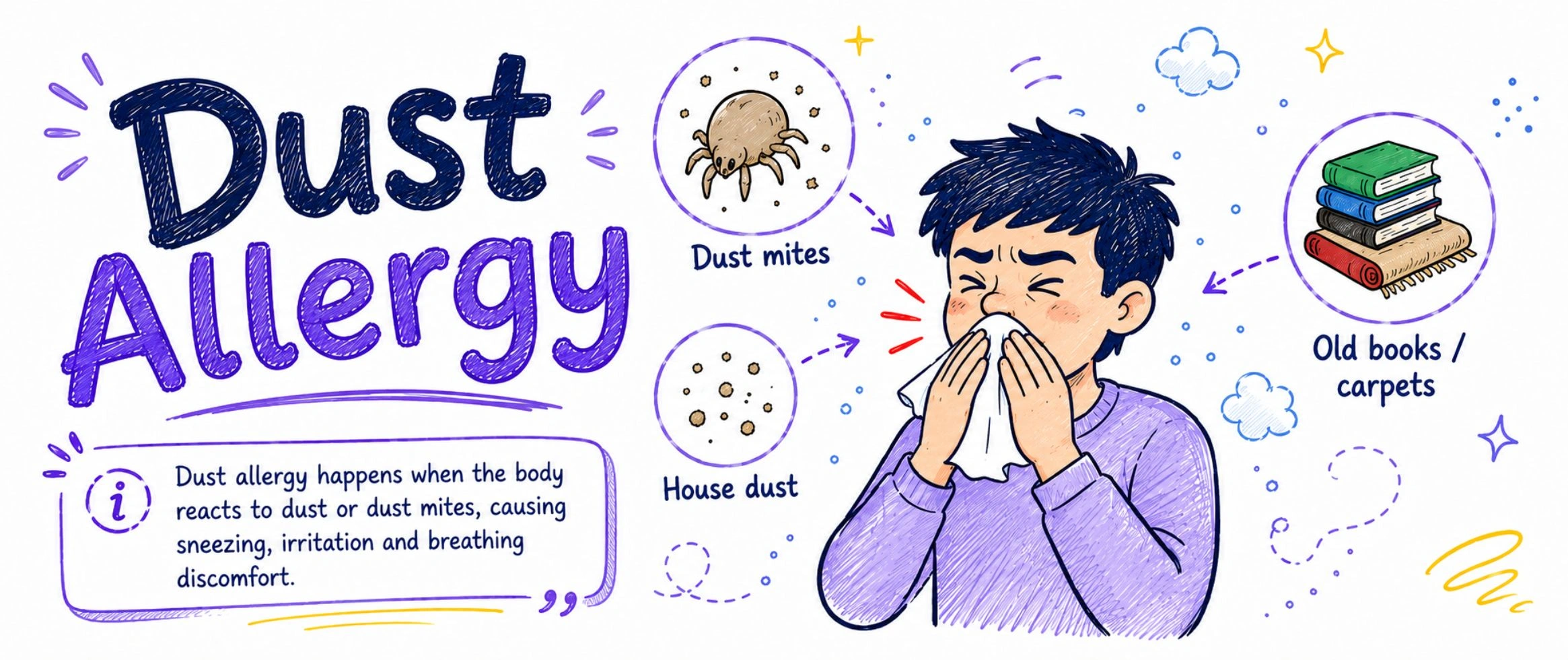
Do you start sneezing when someone sweeps the floor? Does your nose become blocked after cleaning an old cupboard? Some people notice itchy eyes, a runny nose or coughing whenever they are around dust. These symptoms may be caused by a dust allergy.
However, household dust itself is not always the problem. Dust can contain several substances, including dust mites, mould spores, pet dander, cockroach particles and pollen. In sensitive people, the immune system mistakenly treats these substances as harmful and releases chemicals such as histamine. This leads to sneezing, itching, swelling and other allergy symptoms.
Dust allergy is common and can affect children and adults. The symptoms may be mild at first but can disturb sleep, reduce concentration and worsen asthma. Understanding the trigger is the first step towards better control.
A dust allergy is an immune reaction to allergens found in household dust. The most common cause is the house dust mite. These tiny organisms are too small to see without a microscope and commonly live in mattresses, pillows, carpets, upholstered furniture, curtains and soft toys.
Dust mites do not usually cause symptoms by biting. Instead, proteins in their body particles and waste can trigger allergic reactions in sensitive people. Dust mites prefer warm and humid surroundings, which is why bedrooms and fabric-covered furniture can be common sources of exposure.
The term “dust allergy” may also refer to sensitivity to other substances mixed into dust. Therefore, two people may react to the same room for different reasons.
Household dust is a mixture of many particles. Common dust allergy triggers include:
1. House dust mites
Dust mites are among the most frequent indoor allergens. They are often found in:
Mite allergens can become airborne when bedding is shaken, carpets are cleaned or furniture is disturbed.
2. Mould spores
Mould grows in damp areas such as bathrooms, kitchens, basements, walls and air-conditioning units. When mould releases spores into the air, some people may experience sneezing, nasal congestion, coughing or wheezing.
Poor ventilation and excess indoor moisture can encourage mould growth. If you notice a musty smell or dark patches on walls, the area should be cleaned safely and the source of moisture should be addressed.
3. Pet dander
Pet dander consists of tiny flakes of skin. Proteins found in a pet’s skin, saliva or urine may also trigger allergies. These particles can settle in household dust and remain on carpets, sofas and clothing.
A person may experience symptoms even when the animal is not in the same room.
4. Cockroach particles
Cockroach droppings, saliva and body fragments can mix with dust and trigger allergic symptoms. This is especially relevant in damp or poorly ventilated areas. Cockroach allergens may also worsen asthma in some people.
5. Pollen and outdoor particles
Pollen, soil particles and pollution can enter the home through open windows, footwear and clothing. During high-pollen periods, these particles may contribute to dust-related symptoms.
6. Irritants mistaken for allergens
Smoke, room fresheners, perfumes, cleaning products and construction dust can irritate the nose and airways. These substances may cause coughing or burning sensations without causing a true allergic reaction.
This distinction matters. Not every reaction to dust is an allergy, and the right treatment depends on the cause.
Dust allergy symptoms may begin soon after exposure or become worse after repeated contact. Common symptoms include:
For a person with asthma, dust mite or mould exposure may trigger airway inflammation. This can cause wheezing, chest tightness, coughing or difficulty breathing. Symptoms may be worse at night, early in the morning or while cleaning.
If a doctor has prescribed an inhaler, it should be used exactly as directed. Do not stop asthma medication simply because symptoms improve.
Dust allergy and a cold can look similar, especially when the main complaint is a runny nose. However, some differences may help:
This comparison is only a general guide. A doctor should evaluate symptoms that are persistent, severe or difficult to explain.
Speak to a healthcare professional if:
Seek urgent medical care if there is severe difficulty breathing, swelling of the lips or tongue, bluish lips, fainting, confusion or rapidly worsening wheezing. These symptoms may indicate a serious reaction or severe asthma attack.
Diagnosis usually begins with a detailed discussion about symptoms, timing and possible triggers. Your doctor may ask:
Skin-prick testing
In a skin-prick test, a small amount of selected allergen is placed on the skin. The area is then observed for a small, localised reaction. This test should be performed and interpreted by a trained healthcare professional.
Specific IgE blood testing
A specific IgE blood test checks whether the immune system has produced IgE antibodies against particular allergens, such as dust mites, mould, cockroach or animal dander.
Pathkind Labs offers an Allergy: Dust Panel (Phadia) that lists testing for four dust-related allergens: Dermatophagoides pteronyssinus, Dermatophagoides farinae, cockroach and house dust. You can view the Pathkind Labs Dust Panel details here. Test selection should be based on symptoms and medical advice.
A total IgE test alone cannot identify the exact allergen causing symptoms. An elevated result may support an allergic tendency, but it must be interpreted along with the person’s symptoms and medical history.
There may not be a permanent cure for every dust allergy, but symptoms can often be controlled effectively.
1. Reduce exposure to dust mites
The bedroom is an important area to manage because people spend many hours there. Helpful steps include:
2. Clean without spreading allergens
Dry dusting and vigorous sweeping can send particles into the air. Instead:
Cleaning should be regular rather than occasional and intense. A short weekly cleaning routine may be easier on the nose and lungs than allowing dust to build up for months.
3. Medicines for symptom relief
Depending on the symptoms, a doctor or pharmacist may recommend:
Antihistamines may help with sneezing, itching and a runny nose. Steroid nasal sprays can reduce swelling and inflammation inside the nose but may require regular use for the best effect.
Do not use decongestant nasal sprays for longer than recommended, as overuse can cause rebound nasal blockage. Children, pregnant people, older adults and people with high blood pressure should ask a healthcare professional before starting allergy medicines.
4. Allergy immunotherapy
If symptoms are severe, persistent and clearly linked to a specific allergen, an allergist may consider immunotherapy. This treatment exposes the immune system to carefully controlled amounts of an allergen over time. It may be given through injections or, for selected allergens, tablets placed under the tongue.
You cannot remove every dust particle from your surroundings, but you can reduce exposure. Prevention is particularly important for people with asthma, eczema or frequent allergic rhinitis.
A practical prevention routine includes:
Dust allergy is often caused by allergens hidden in household dust, especially dust mites, mould, pet dander and cockroach particles. Repeated sneezing, nasal blockage, itchy eyes, coughing or wheezing should not be ignored if these symptoms affect daily life.
The most useful approach is to identify the trigger, reduce exposure and follow a treatment plan suited to your symptoms. If you are unsure what causes your allergic reactions to dust, speak with a healthcare professional about allergy testing. Knowing the specific allergen can make cleaning, treatment and prevention more focused and effective.
Medical note: This article is for general information only. It does not replace consultation, diagnosis or treatment from a qualified healthcare professional.
Discover precision diagnostics with Pathkind Labs, a trusted name in diagnostic services in India. Our NABL accredited labs, equipped with advanced technology, are staffed by a certified team of over 200+ senior pathologists and 2000+ technicians. From tailored health check-ups to specialized tests in Oncology, Neurology, Gynaecology, Nephrology, and more, we've got your health covered. Skip the hassle with online booking for tests or check-ups, available for both lab visits and at-home blood collection. For a seamless experience and early detection, choose Pathkind Labs in Gurugram. Book your appointment today and experience diagnostics made easy.
© 2026 Pathkind Diagnostics Pvt. Ltd. All Rights Reserved | Unsubscribe











 Track Sample
 Upload Prescription